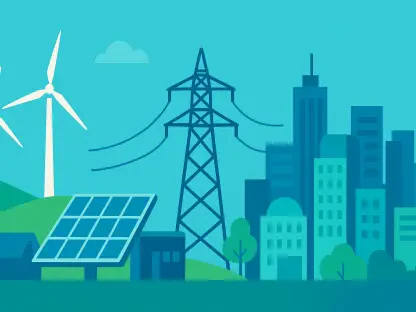

Grid operators often resort to intentional power cuts to save the system during peak demand, but new AI models could reduce these incidents by over fifty percent. As the global energy landscape undergoes a radical shift towards intermittent renewables, the traditional methods of managing load are becoming dangerously obsolete. Today, the integration of massive solar farms and localized wind generation has introduced a level of volatility that legacy software simply cannot track in real time. The complexity is further compounded by the surge in electric vehicle adoption, which creates unpredictable spikes in residential areas. AI foundation models have emerged as a critical solution, moving beyond the limitations of narrow machine learning to provide a comprehensive understanding of grid dynamics. By processing vast datasets including weather and sensor telemetry, these models can anticipate fluctuations with precision. This shift marks a transition toward a proactive strategy for stability.
Scaling Analytics
The evolution of artificial intelligence from task-specific algorithms to broad foundation models represents a pivotal moment for utility providers. Unlike previous iterations of machine learning that required separate models for weather forecasting and demand response, foundation models utilize a unified architecture capable of synthesizing disparate data types. These systems are trained on massive amounts of unlabeled data, allowing them to internalize the complex relationships between atmospheric pressure, ambient temperature, and human behavior. When a sudden heatwave strikes an urban center, these models do not merely react to the rising thermometer; they anticipate the resulting demand spike minutes before it hits the substation. By leveraging transformer architectures, the grid’s digital brain can prioritize resources across a vast network. This reduces the reliance on manual intervention, which is often too slow to prevent a cascading failure when a transmission line trips under thermal stress.
Integrating these models into existing Supervisory Control and Data Acquisition systems has allowed for the creation of high-fidelity digital twins of regional power grids. These virtual representations act as a testing ground where AI can simulate millions of ‘what-if’ scenarios per second, identifying vulnerabilities that human engineers might overlook. For instance, the model might detect a subtle correlation between low wind speeds in one territory and a simultaneous peak in industrial cooling needs in another. By recognizing these patterns, the system can autonomously adjust the flow of power from battery storage facilities or adjust the output of hydroelectric plants to compensate for the deficit. This autonomous orchestration is essential for maintaining the frequency required for grid health. Without such granular control, the rapid fluctuations in renewables would lead to frequent brownouts, forcing businesses to rely on expensive diesel backup generators for basic continuity across the grid.
Infrastructure Needs
While the potential for preventing blackouts is significant, the deployment of foundation models across national grids requires a massive overhaul of computational infrastructure. These models demand immense processing power, which has led to the adoption of decentralized edge computing at the substation level. By moving the inference process closer to the physical assets, grid operators can achieve sub-millisecond response times, which are necessary for stabilizing the system during a lightning strike or a physical line break. However, this shift toward a more intelligent grid also increases the surface area for cyberattacks. Securing these AI models against adversarial prompts or data poisoning is now a top priority for national security agencies. Engineers are currently developing hardened AI architectures that utilize federated learning, allowing models to improve accuracy without exposing sensitive data. This balance between computing power and robust security defines the current era for utilities.
Strategic investments in specialized AI hardware and inter-agency data sharing became the primary drivers for grid stability over the past few years. Utilities that successfully integrated foundation models saw a marked decline in unplanned outages and a significant improvement in customer satisfaction scores. Moving forward, the focus shifted toward standardizing the communication protocols between different AI vendors to ensure that regional grids could communicate seamlessly during cross-border energy transfers. Experts recommended that grid operators prioritize the recruitment of dual-discipline engineers who possessed expertise in both power systems and large-scale model optimization. By treating the power grid as a living, learning ecosystem, the industry moved away from the fragile infrastructure of the past. These technological advancements proved that the key to a resilient energy future resided in the ability to process information as efficiently as the electricity delivered to every modern home.