
The massive electrical appetite of artificial intelligence has moved beyond a simple utility challenge, evolving into a fundamental redesign of how power is generated, distributed, and consumed across the modern landscape. Historically, data centers functioned as passive digital warehouses, requiring steady, uninterrupted streams of electricity while offering little back to the infrastructure that sustained them. However, the current era has seen the rise of “AI factories”—gigawatt-scale facilities that process high-intensity training workloads. This shift has necessitated a move from a one-way consumption model to a dynamic, integrated partnership with the electrical grid. As the industry moves from 2026 toward 2030, the ability of these facilities to interact with power systems is no longer a luxury but a requirement for regional stability.
This evolution is driven by the sheer density of modern computing clusters. Unlike traditional enterprise servers, AI clusters engage in massive, simultaneous computations that create significant thermal and electrical spikes. This intensity has forced developers to reconsider the context of energy usage, moving toward infrastructure that treats electricity as a fluid resource. By integrating deeply with the grid, AI factories can mitigate the risks associated with their immense scale, effectively turning a potential system liability into a flexible asset that supports the broader technological landscape.
Core Technical Pillars of Integrated Infrastructure
The technical foundation of this integration rests on a move away from “islanded” power designs toward systems that are inherently grid-aware. In the past, data center operators focused primarily on isolating their equipment from grid fluctuations using massive uninterruptible power supplies. Today, the focus has shifted toward bidirectional engagement. The primary goal is to ensure that when the grid experiences stress, the data center does not simply disconnect and switch to backup diesel generators, which can cause sudden voltage drops and destabilize neighboring communities.
Power Electronics and Grid Ride-Through Capabilities
Advanced inverters and grid-scale battery systems now serve as the primary interface between the AI factory and the utility. These components enable “ride-through” capabilities, allowing a facility to remain synchronized with the grid even during minor frequency or voltage disturbances. Instead of being a source of volatility, the data center acts as a shock absorber. When the local voltage dips, the facility’s power electronics can inject reactive power into the system almost instantaneously, stabilizing the local network. This capability is unique to modern integrated designs; traditional industrial loads simply shut down, whereas grid-aware AI facilities actively support the recovery of the electrical backbone.
This implementation is significantly more sophisticated than standard backup systems because it operates on a millisecond timescale. By utilizing the same high-speed power electronics found in utility-scale solar farms, AI centers can mimic the inertia provided by traditional spinning turbines. This “synthetic inertia” is vital as the grid transitions away from fossil fuels. It provides the necessary stabilization that keeps the lights on for everyone, proving that the scale of AI demand can actually enhance the reliability of the modern energy system rather than undermining it.
Software-Defined Demand Flexibility
Beyond the hardware layer, the integration relies on sophisticated software orchestration to manage computing workloads as a “virtual power plant.” AI training, which involves processing enormous datasets over weeks or months, is often non-time-sensitive. This characteristic allows software-defined systems to throttle power consumption during peak hours when the grid is most strained. For example, if a heat wave pushes residential cooling demand to the limit, an AI factory can automatically reduce its processing speed or pause specific non-critical training runs.
This flexibility represents a radical departure from the “always-on” mandate of the previous decade. By treating computing power as a dispatchable resource, operators can sell their capacity to reduce load back to the utility. This creates a more efficient market where demand follows supply. This implementation is unique because it leverages the inherent nature of AI training—where individual packets of data are not as urgent as a live web transaction—to provide a massive, flexible buffer for the electrical grid. Such software-defined agility allows the grid to accommodate more renewable energy, as the AI load can “ramp up” when wind and solar are abundant and “ramp down” when they are scarce.
Emerging Trends in Grid-Aware Computing
A significant shift is occurring in how these facilities are regulated and certified within the industry. We are seeing a move toward performance-based regulation, where data centers are no longer just billed for the energy they use, but rewarded for the flexibility they provide. “Good grid citizen” certifications have emerged as a benchmark for excellence, prioritizing facilities that can provide verified evidence of their ability to shed load or stabilize voltage on demand. This trend is pushing developers to compete on their grid-integration metrics just as fiercely as they compete on their processing speeds.
Furthermore, industry leaders are adopting a “transparency first” approach to energy consumption. Real-time data sharing between data center operators and grid dispatchers has become the new standard. This allows utilities to see exactly how much load is available for curtailment at any given second, reducing the uncertainty that previously led to emergency rolling blackouts. By aligning corporate sustainability goals with operational grid support, the industry is creating a new paradigm where technological progress directly correlates with environmental and infrastructure resilience.
Real-World Applications and Industrial Deployment
The practical application of these integrated strategies is most visible in large-scale transmission projects. AI-anchored initiatives, such as the Grain Belt Express, demonstrate how the high demand of a single facility can provide the necessary financial backing for interregional transmission lines. These projects bring vast amounts of clean energy from wind-rich plains to urban centers, with the AI factory acting as the “anchor tenant” that ensures the project’s economic viability. This creates a ripple effect, where the energy infrastructure built to serve AI also provides cheaper, cleaner power to millions of residential customers.
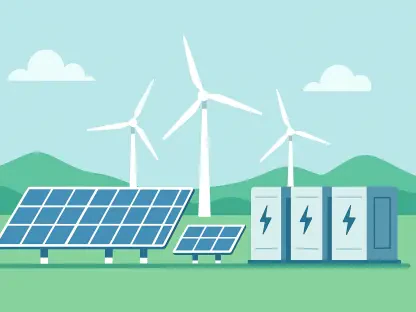
In addition to transmission, co-located carbon-free generation has become a preferred deployment model. Large clusters are increasingly being built directly alongside nuclear or geothermal plants. This “behind-the-meter” integration reduces the stress on public transmission lines while ensuring a zero-carbon footprint for the computing load. By combining massive storage with local generation, these facilities operate as self-contained microgrids that can export surplus energy during times of regional need, showcasing a level of industrial-utility synergy that was once thought impossible.
Technical Hurdles and Market Obstacles
Despite the clear benefits, the integration process faces substantial technical hurdles, particularly the risk of “power swings.” When a facility with gigawatt-scale demand suddenly drops its load due to an internal fault or an automated response, it creates a massive vacuum in the grid. This can lead to frequency spikes that threaten to damage sensitive equipment elsewhere in the network. Managing these rapid changes in demand requires a level of coordination between software and hardware that is still being refined, as current grid protection systems were not designed to handle such sudden, massive shifts in concentrated load.
Market obstacles also persist, particularly regarding the equitable distribution of infrastructure costs. There is a delicate balance between encouraging AI investment and ensuring that local ratepayers do not foot the bill for the massive grid upgrades these facilities require. Regulatory bodies are currently grappling with how to structure interconnection fees and “flexibility credits” to ensure that the relationship remains mutually beneficial. Without clear, standardized rules across different jurisdictions, the adoption of these grid-friendly technologies may remain inconsistent, leaving some regions more vulnerable to the systemic risks of high-density computing.
Future Outlook and Infrastructure Transformation
Looking ahead, the transformation of the electrical grid will be characterized by a shift toward optimized utilization. As AI loads become more flexible, the need for expensive peaking power plants—which only run a few hours a year—will diminish. This will lead to a more efficient use of existing assets, potentially lowering electricity rates for all consumers. The grid of the future will not be a static network of wires but a dynamic marketplace of energy and data, where AI factories serve as the primary stabilizers of a renewable-heavy power system.
Potential breakthroughs in long-duration energy storage and advanced modular reactors will further solidify this integration. These technologies will allow AI facilities to operate independently for longer periods while still providing essential services to the public grid. The long-term impact will be a national energy backbone that is more resilient to both natural disasters and technological disruptions. As the partnership between high-tech and high-voltage continues to mature, the data center will no longer be seen as a consumer of resources, but as a critical provider of infrastructure stability.
Final Assessment of AI-Grid Synergy
The transition toward integrated AI infrastructure represented a pivotal moment in the technological and energy sectors. This review observed that the evolution from passive loads to grid-aware factories was necessitated by the unprecedented scale of modern computing. The industry successfully moved beyond simple isolation, adopting power electronics that provided synthetic inertia and software that enabled demand flexibility. These advancements proved that massive data centers could function as virtual power plants, stabilizing the very networks they relied upon. The integration efforts demonstrated that the most effective path forward involved a synthesis of hardware resilience and operational agility.
The analysis of these developments revealed that the initial risks of power swings and grid instability were mitigated through standardized “good citizen” protocols. Stakeholders shifted their focus toward performance-based regulations, which incentivized the deployment of ride-through technologies and long-term storage. The conclusion of this review identified that the most critical next step involved the federal standardization of these flexibility metrics to ensure a uniform national response to energy demand. Ultimately, the integration of AI data centers into the grid acted as a catalyst for a more robust and efficient electrical system, proving that technological ambition and infrastructure responsibility could coexist for the benefit of the entire society.