
The aggressive expansion of Prosopis juliflora across the arid landscapes of Gujarat has transitioned from a purely ecological crisis into a cornerstone of India’s renewable energy strategy. By leveraging the Deendayal Port Authority’s (DPA) new Rs 100 crore demonstration plant, the maritime sector is successfully converting this invasive shrub, known locally as “gando bawal,” into high-grade bio-methanol. This shift does more than just mitigate an environmental nuisance; it creates a domestic supply chain for clean marine fuels that aligns with the Harit Sagar Guidelines and the ambitious Maritime India Vision 2030.
The Evolution: From Ecological Burden to Strategic Resource
Historically, Prosopis juliflora was introduced to halt desertification, but it quickly became an invasive threat that depleted groundwater and stifled native biodiversity. For decades, the plant remained an untapped liability with no clear industrial value. However, the global maritime industry’s pivot toward decarbonization has created a desperate need for sustainable, non-food-based feedstocks. This necessity has transformed the perception of the shrub from a waste product into a valuable biomass source capable of powering the next generation of cargo vessels.
This industrial evolution is deeply rooted in the need for energy security. As traditional heavy fuel oils face increasing regulatory scrutiny and carbon taxes, the maritime sector must find alternatives that do not compete with food crops. By utilizing an invasive species that thrives on marginal land, India is establishing a model for biofuel production that avoids the ethical and economic pitfalls of first-generation biofuels. This background sets the stage for a broader transformation of port infrastructure into energy production hubs.
Market Dynamics: Analyzing the Bio-Methanol Production Framework
Technological Synergy: Gasification and Chemical Synthesis
The technical viability of this project rests on a sophisticated partnership between Ankur Scientific Energy Technology Limited and Thermax Limited. The production process utilizes a four-stage gasification sequence—drying, pyrolysis, oxidation, and reduction—to break down the fibrous biomass into raw syngas. Once cleaned and compressed, this gas enters a synthesis reactor that yields five tonnes of fuel-grade methanol daily. This modular approach allows for a “production-to-bunker” system that significantly reduces the logistical overhead typically associated with fuel transportation.
Economic Impact: Community Integration and Cost Scaling
The project introduces a unique socio-economic layer by involving local communities in the collection of the feedstock. This decentralized harvesting model provides new revenue streams for rural populations while ensuring a steady supply for the DPA facility. Economically, while bio-methanol currently commands a higher price than conventional fossils, it remains a far more affordable alternative than hydrogen-based electro-methanol. As the technology matures and processing volumes increase from 2026 to 2030, economies of scale are expected to drive production costs toward market parity.
Strategic Infrastructure: The Kandla Bunkering Advantage
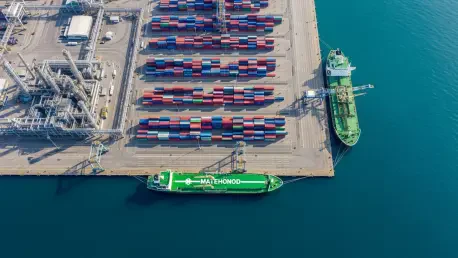
Geographically, the Deendayal Port at Kandla occupies a premier position on the high-traffic shipping lane between Rotterdam and Singapore. By integrating fuel production directly within the port’s footprint, India is effectively shortening the supply chain for international shipping companies. The successful completion of shore-to-ship bunkering trials has already validated the infrastructure’s capability to serve modern methanol-fueled fleets. This strategic placement ensures that the port is not merely a transit point but a vital node in the global green energy network.
The Roadmap: Future Trends in Maritime Decarbonization
The current bio-methanol pilot serves as a foundational step toward even larger industrial ventures, including a proposed Rs 3,500 crore electro-methanol facility. This expansion reflects a broader trend where ports are evolving into integrated energy complexes. By 2030, the Indian maritime sector anticipates servicing nearly 200 methanol-fueled vessels, signaling a massive departure from traditional fuel reliance. Regulatory pressures from international maritime bodies will likely accelerate this transition, making sustainable fuels a requirement rather than a choice.
Emerging trends suggest a hybrid future where bio-methanol acts as a bridge fuel, providing an immediate solution while e-methanol and hydrogen technologies continue to scale. The shift toward these cleaner alternatives is being supported by a maturing carbon credit market, which helps offset the initial capital intensity of green infrastructure. Furthermore, as more nations look to replicate the “invasive species to energy” model, India’s early adoption positions it as a primary exporter of both the technology and the fuel itself.
Strategic Insights: Leveraging Local Biomass for Global Trade
The transformation of Prosopis juliflora provides a repeatable blueprint for other regions grappling with invasive species and energy insecurity. Policymakers and industrial leaders should recognize that the most effective climate solutions are often those that address local environmental imbalances. By de-risking these technologies through public-private partnerships, the DPA has shown that ecological restoration can be profitably linked to industrial decarbonization. This approach offers a way to build resilient supply chains that are less susceptible to international market volatility.
For businesses in the energy sector, the primary takeaway is the importance of modularity and at-source production. Reducing the distance between the feedstock and the end-user is critical for maintaining the carbon-negative status of the fuel. Organizations should evaluate their own geographical landscapes for underutilized biomass that could serve as a sustainable feedstock. Investing in gasification technology now provides a competitive edge as the global shipping industry moves toward a mandatory zero-emission standard.
Summary: A Blueprint for Industrial and Ecological Synergy
The Deendayal Port Authority successfully integrated environmental management with maritime energy needs. By converting a harmful plant into a high-value marine fuel, the project demonstrated that industrial growth and ecological health are not mutually exclusive. The initiative effectively utilized local resources to meet international shipping demands, providing a tangible path toward the nation’s 2030 decarbonization targets.
The success of this pilot underscored the necessity of looking beyond traditional energy sources to solve modern climate challenges. This model provided a clear strategy for other ports to follow, emphasizing that the future of trade relies on the ability to innovate within local constraints. Ultimately, the transformation of “gando bawal” proved that the most sustainable fuels of the future were already growing in the backyard, waiting for the right technology to unlock their potential.