
The South Korean economy is currently navigating a period of unprecedented divergence as the explosive growth of the artificial intelligence sector clashes with persistent instability across global energy markets. The current economic climate in Seoul serves as a bellwether for how advanced manufacturing nations must adapt when their primary growth drivers are decoupled from the stability of global resource chains. While the skyline of the capital remains illuminated by the profits of the semiconductor boom, the undercurrent of energy insecurity creates a palpable tension within the broader fiscal framework. Policymakers are finding that the traditional tools of economic management are being stretched by the sheer velocity of the AI revolution, which demands constant reinvestment even as external pressures threaten to drain national reserves. This duality has led to a scenario where the nation’s success is increasingly tied to its ability to outpace inflation through sheer innovation, making the semiconductor fab not just a factory, but a primary instrument of national security. As the global community watches, the South Korean model is proving that a high-tech export engine can provide a buffer against energy shocks, provided that the government remains agile enough to redistribute the gains across a straining domestic economy. This transition is not merely a cyclical phase but a permanent reorientation toward a digital-first economy that must survive in a volatile, fossil-fuel-dependent world.
The Dominance of High-Tech Exports in a Global Market
By mid-2026, the semiconductor industry has solidified its role as the undisputed backbone of the South Korean economy, with high-performance memory chips now accounting for nearly forty percent of the total export volume. This unprecedented concentration of trade activity is the direct result of a global race to build out generative AI infrastructure, a movement that has transformed South Korea into a critical node for international data centers and cloud providers. The demand for specialized hardware, such as High Bandwidth Memory and advanced computing equipment, has reached a point where the major chipmakers are reporting order books that are fully committed through the end of 2027. This surge has provided Korean firms with immense pricing power, allowing them to dictate terms in a market where supply remains perpetually tight. Consequently, while many other sectors are struggling with the logistical nightmares of global trade, the technology sector is enjoying a period of historic expansion that is effectively pulling the national gross domestic product upward. This export resilience acts as a vital counterweight to the fluctuating costs of raw materials, proving that technological leadership is the most effective defense against the instability of traditional commodity markets.
While traditional manufacturing sectors like automotive assembly and consumer appliances have experienced a moderate cooling due to shifting global preferences and higher borrowing costs, the explosive growth in the high-tech sector has more than compensated for these losses. The current economic data suggests that the “price effect” of high-value electronics is reshaping the national trade balance, as the premiums paid for next-generation AI components far outweigh the volume-based declines in older industrial categories. This structural shift is also influencing the labor market, with a significant reallocation of capital and human resources toward research and development in the semiconductor and robotics sectors. As a result, the national growth forecast for the current year remains strong, driven by the fact that global technology giants are willing to absorb higher costs to secure the components necessary for their own digital transformations. This dynamic creates a favorable trade environment where the terms of trade are improving despite the rising costs of energy imports, as the value of what the nation sells is increasing much faster than the cost of what it must buy. This concentration of wealth in the tech sector, however, necessitates careful management to ensure that the benefits are felt across the wider economy.
Managing Energy Shocks Through Strategic Capital Expenditure
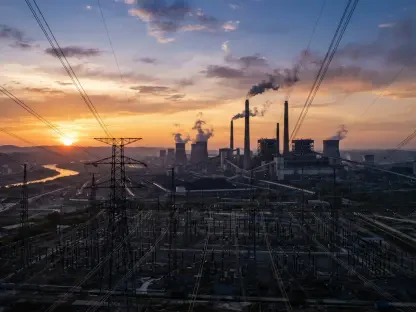
Despite the overwhelming success of the tech export engine, South Korea remains acutely vulnerable to the energy volatility stemming from prolonged conflicts in the Middle East and shifting geopolitical alliances. The rising cost of crude oil and refined petroleum products has naturally inflated the national import bill, placing significant upward pressure on the producer price index for heavy industry and transportation. However, the response from the corporate sector has been characterized by an aggressive commitment to expansion rather than a retreat into austerity. Instead of scaling back operations to save on energy costs, South Korean firms have dramatically increased their imports of capital goods, specifically the specialized machinery required for the next generation of semiconductor fabrication. This surge in facility investment, which has grown by over one hundred percent in recent months, indicates that the private sector is prioritizing long-term market dominance over short-term inflationary concerns. By doubling down on production capacity, these companies are betting that the revenue generated by the AI revolution will easily outpace the temporary burden of expensive energy.
This aggressive investment strategy represents a strategic pivot toward securing future production capacity in a world where supply chain reliability is no longer guaranteed. The massive influx of high-tech machinery is not just about increasing volume; it is about refining the manufacturing process to be more energy-efficient and technologically superior to global competitors. This forward-looking approach is expected to be the primary engine of recovery for the domestic economy, as the construction of new fabrication plants and research centers creates localized demand for services and labor. By maintaining a high level of capital expenditure during a period of global uncertainty, South Korea is effectively insulating its industrial core from the worst effects of energy price spikes. This resilience is further supported by the government’s strategic push to diversify energy sources, including a renewed focus on nuclear power and renewable energy infrastructure. The goal is to create a more self-sufficient industrial ecosystem that can sustain the high electricity demands of AI and chip manufacturing without being entirely beholden to the fluctuations of the global oil market.
Balancing Monetary Tightening with Domestic Fiscal Support
The domestic economic landscape is currently defined by a complex struggle to manage “pipeline” inflation, where rising producer costs are slowly trickling down to affect the average consumer. While the tech giants are thriving, the internal market is dealing with elevated prices for basic materials, electronics, and energy, which has kept the Consumer Price Index at a stubborn level near three percent. A particularly challenging factor in this inflationary environment is the housing market, where a decrease in new supply has led to a steady increase in rental costs, making core inflation difficult to bring down. To address these internal pressures, the Bank of Korea has maintained a hawkish monetary policy, signaling that interest rates will likely stay elevated through the first half of 2027. This strategy is designed to prevent long-term inflation expectations from becoming unanchored, especially as the cost of living remains a primary concern for the general population. The central bank’s focus on stability is a necessary cooling mechanism for an economy that is simultaneously being heated by the massive inflows of capital from the semiconductor boom.
In contrast to the central bank’s restrictive stance, the national government has deployed an expansionary fiscal policy to provide a safety net for the segments of the population most affected by rising costs. Utilizing the robust tax revenues generated by record-breaking tech exports, policymakers have authorized a twenty-six trillion KRW support package aimed at small businesses and lower-income households. This intervention includes direct cash payouts and the extension of fuel tax cuts to mitigate the impact of energy volatility on the domestic transportation sector. By using fiscal tools to support demand while the central bank uses monetary tools to control prices, the government is attempting a delicate balancing act that aims to sustain social stability without fueling further inflation. This bifurcated approach reflects the unique challenges of the current era, where the wealth generated by a specific high-tech sector must be strategically redistributed to prevent a widening economic gap. The success of this policy mix will determine whether the current boom can lead to a more equitable form of long-term prosperity or if it will simply exacerbate existing social and economic divisions.
Building a Resilient and Diversified Economic Foundation
Looking toward the horizon of 2027, the South Korean economy was positioned to transition from a period of high-intensity crisis management to a more diversified and sustainable growth model. The focus shifted away from a singular reliance on memory chips as the nation began to capitalize on emerging opportunities in global defense, shipbuilding, and green energy infrastructure. This strategic diversification was essential for reducing the economy’s sensitivity to the specific boom-and-bust cycles of the semiconductor market, which had long been a source of volatility. The global demand for energy-efficient tankers and liquefied natural gas carriers provided a steady stream of orders for the maritime sector, while the expansion of international defense spending opened new markets for South Korean aerospace and munitions technology. By broadening the export base, the nation established a more resilient economic foundation that was better equipped to handle the shifting winds of global geopolitics. This period was also marked by a significant increase in international cooperation on post-war reconstruction projects, where Korean expertise in high-tech infrastructure and smart city development became a highly sought-after commodity.
The long-term success of this economic transformation was ultimately secured through a combination of private sector innovation and proactive government policy. To ensure continued growth, it was recommended that the nation prioritize the development of domestic AI software and services to complement its existing hardware dominance. Furthermore, the stabilization of the domestic housing market and the continued transition toward a nuclear-heavy energy mix were identified as critical steps for maintaining social and economic order. The government remained committed to fostering an environment where small and medium-sized enterprises could thrive alongside the large conglomerates, ensuring that the benefits of the digital revolution were widely shared. As the nation moved through the final phases of this transition, the emphasis was placed on human capital development and the reskilling of the workforce for an automated future. This comprehensive approach allowed South Korea to emerge from a period of global energy volatility and technological disruption not just as a survivor, but as a global leader with a more balanced and robust economic structure. High-level planning ensured that the lessons learned from the energy shocks were integrated into future national security strategies.