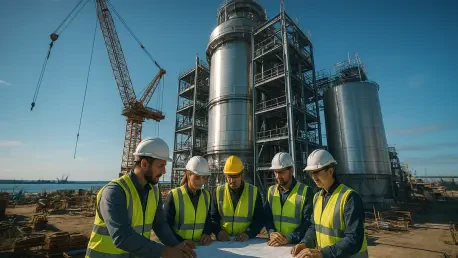

The Strategic Rebirth: Global Nuclear Power in Focus
The global industrial sector is currently witnessing a massive transformation as the demand for carbon-free, high-density power drives a strategic return to nuclear energy solutions. After decades characterized by a slow retreat from fission, the international community has reached a pivotal realization that intermittent renewable sources alone cannot sustain the heavy electrical loads of a modern, digitized civilization. This resurgence represents a fundamental realignment of national priorities, where the need for a stable and predictable power supply now outweighs the historical hesitation that once defined the industry. Governments across North America, Europe, and Asia are no longer viewing nuclear power as a legacy technology but as the primary engine for a stable and decarbonized future.
This revitalization is being accelerated by a unique convergence of global events that have reshaped how leaders perceive energy risk. The shift is not merely about environmental stewardship; it is a calculated effort to fortify national infrastructures against an increasingly volatile global landscape. By integrating advanced nuclear capabilities into their industrial strategies, nations aim to create a resilient energy foundation that can withstand both ecological crises and geopolitical disruptions. This article explores the core drivers of this nuclear comeback, analyzing the market trends, technological innovations, and strategic shifts that are positioning nuclear fission at the center of the global energy transition.
Historical Context: The Long Road to Rebirth
To appreciate the scale of the current movement, it is essential to examine the factors that led to the prolonged stagnation of the nuclear sector. For years, the memory of high-profile accidents and the resulting public anxiety created a regulatory environment that favored fossil fuels and, eventually, subsidized wind and solar projects. This period of caution led many Western nations to decommission aging reactors without a clear plan for replacement, inadvertently increasing their reliance on imported natural gas. This historical trajectory created a structural vulnerability that remained hidden as long as global fuel prices were low and political relations remained relatively stable.
However, the foundational necessity for “baseload” power—electricity that is available regardless of weather conditions—never truly diminished. As coal-fired plants were phased out to meet environmental goals, the resulting gaps in the grid highlighted the limitations of a purely renewable strategy. The current era of growth is essentially a strategic correction to those decades of underinvestment. The industry has spent the intervening years refining safety protocols and developing more efficient cooling technologies, ensuring that the new generation of reactors is far more resilient than those designed in the mid-20th century. This transition marks a departure from a reactive policy of containment to a proactive policy of expansion.
The Pillars of Growth: Security, Climate, and Technology
Geopolitical Stability: A Path Toward Energy Independence
In the current global climate, energy policy has evolved into a critical branch of national defense. Recent regional conflicts and supply chain weaponization have demonstrated that a reliance on foreign fossil fuels is a profound strategic liability. Nations that were previously content with importing liquefied natural gas have found themselves vulnerable to price manipulation and sudden supply cutoffs. Nuclear power offers a solution to this dependency by providing a concentrated energy source that requires relatively small amounts of fuel, which can be stockpiled for years of continuous operation. This autonomy allows nations to decouple their economic health from the fluctuations of international oil and gas markets.
Furthermore, the expansion of domestic nuclear capacity serves as a stabilizing force for national economies. By securing a fixed-cost energy source, governments can provide businesses and citizens with long-term price certainty, which is a rare commodity in the current market. This trend is particularly evident in Central and Eastern Europe, where countries are aggressively pursuing new reactor projects to sever their ties to external energy providers. The move toward nuclear energy is therefore a declaration of energy sovereignty, signaling a shift in the global balance of power where domestic production capabilities define national strength.
The Decarbonization Mandate: Baseload Reliability in a Green Grid
The global push for net-zero emissions has reached a stage where rhetoric must be replaced by high-output technical solutions. While solar panels and wind turbines have seen massive deployment, their inherent variability necessitates a massive and expensive backup infrastructure, often in the form of natural gas or unproven battery technology. Nuclear energy stands alone in its ability to generate massive quantities of carbon-free electricity on a constant basis. This reliability makes it the essential partner for a green grid, providing the steady floor upon which intermittent renewables can be layered.
More than twenty countries have committed to a plan that would triple their nuclear capacity by 2050, recognizing that any realistic path to climate stabilization must include a massive expansion of fission. This commitment has fundamentally changed the investment landscape, as nuclear power is now being classified as a “green” or “sustainable” asset in major financial taxonomies. This reclassification has unlocked billions in capital that was previously restricted to wind and solar, allowing for the development of large-scale infrastructure projects that were once considered financially unfeasible. The mandate for clean air and a stable climate has finally aligned with the practical requirements of grid management.
The Digital Driver: Powering the Artificial Intelligence Revolution
An unexpected but powerful catalyst for the nuclear resurgence is the explosive growth of the artificial intelligence sector. Modern data centers require an unprecedented amount of electricity to train and run complex AI models, and these facilities operate 24/7 with zero tolerance for power fluctuations. This demand has overwhelmed existing grid projections and forced technology giants to seek out dedicated energy sources. In the United States and other tech-heavy regions, these corporations are no longer just consumers of power; they are becoming active partners in the nuclear industry by signing long-term agreements to restart dormant reactors or fund the development of new ones.
This corporate involvement has injected a level of private capital and urgency into the sector that has not been seen in decades. Tech companies are drawn to nuclear energy because it offers the only scalable way to meet their massive energy needs while still honoring their public commitments to carbon neutrality. This synergy between the oldest form of carbon-free power and the newest frontier of technology has created a unique market dynamic where the demand for AI is directly subsidizing the expansion of the nuclear fleet. Consequently, the nuclear sector is being transformed into a high-tech utility, essential for the maintenance of the digital economy.
Navigating the Horizon: Nuclear Innovation and Policy Trends
The future of the industry is being defined by a transition away from “one-size-fits-all” reactors toward a more diverse array of technological solutions. While traditional large-scale reactors remain the backbone of the industry, particularly in China and France, there is a growing movement toward Small Modular Reactors (SMRs). These smaller units are designed to be manufactured in factories and shipped to sites, significantly reducing the massive upfront costs and construction timelines that have historically plagued the industry. This innovation allows for nuclear power to be deployed in a more decentralized manner, providing power to remote industrial sites or smaller municipal grids that cannot support a full-sized plant.
Regulatory frameworks are also evolving to keep pace with these technical advancements. Policy makers are working to streamline the permitting process for new designs while maintaining the highest possible safety standards. However, the industry still faces significant challenges, particularly regarding the long-term management of spent fuel and the need for a more robust global supply chain for uranium enrichment. The geopolitical nature of fuel sourcing remains a point of concern, leading to a push for domestic enrichment capabilities in Western nations. For the industry to sustain its current momentum, it must demonstrate that it can build these new reactors on budget and on time, overcoming the economic hurdles that have traditionally hindered its growth.
Market Strategies: Actionable Insights for a Transitioning Energy Sector
For market participants and policymakers, the current nuclear renaissance necessitates a comprehensive shift in strategy. It is no longer sufficient to treat nuclear energy as a separate or “alternative” category; it must be integrated into the core of any long-term energy portfolio. Diversification is the most effective hedge against market volatility, and a strategy that combines the rapid deployment of renewables with the steady baseload of nuclear power is the most resilient approach. Stakeholders should focus on modernizing grid infrastructure to handle the high-voltage output of nuclear plants while also accommodating the decentralized nature of modern green energy.
In the private sector, specifically for energy-intensive industries like manufacturing and high-tech, securing direct access to nuclear power through power purchase agreements can provide a significant competitive advantage. These agreements offer protection against future carbon taxes and the rising costs of fossil fuels. Furthermore, fostering international collaboration on safety standards and modular design will be essential for creating a global market for nuclear technology. Businesses that invest in the nuclear supply chain now—from specialized engineering to uranium mining—are likely to find themselves at the center of the next great industrial expansion.
Final Reflections: Sustaining the Momentum of the Nuclear Comeback
The global community shifted its perspective on nuclear energy as the limitations of other carbon-free technologies became apparent. The market recognized that the pursuit of climate goals and the demand for digital innovation required a density of power that only atomic fission could provide. Policy makers moved away from the hesitation of the past and prioritized the development of a secure, domestic energy base. This transition was marked by a newfound collaboration between the public sector and private industry, ensuring that the financial burden of large-scale infrastructure was shared more equitably.
Investors and engineers also addressed the historical issues of waste and cost by pivoting toward modular designs and more efficient fuel cycles. The industry fostered a new generation of talent, rebuilding a workforce that had been neglected for nearly thirty years. As these strategic steps were taken, the global energy landscape became more stable, and the threat of energy-driven economic collapses began to recede. The commitment to nuclear power ultimately proved to be a decisive factor in achieving a balanced and resilient global economy, demonstrating that the modernization of this technology was the most effective solution for the complex challenges of the 21st century.