
Transitioning the global aviation sector toward a net-zero future requires more than just high-level policy promises; it demands an immediate and substantial capital injection into essential green technologies. The European Commission recently approved a €290 million Dutch aid package, which serves as a major milestone for the regional ReFuelEU Aviation mandates. This financial commitment signals a shift from theoretical planning to industrial execution, positioning the Netherlands as a critical hub for sustainable fuel production and technological scaling.
By providing targeted support, the initiative addresses the urgent need to decarbonize a sector that has long been considered one of the most difficult to transition. This package not only supports the European Green Deal but also bridges the financial gap for fuel producers facing high entry costs. The collaboration between the Dutch government and the European Commission ensures that the aviation industry has a viable pathway to reduce its carbon footprint without sacrificing global connectivity.
Decarbonizing the Skies: The Strategic Role of Sustainable Aviation Fuels in Europe
Sustainable Aviation Fuel (SAF) has emerged as the primary lever for cleaning up long-haul aviation, where battery and hydrogen solutions remain years away from commercial viability. This Dutch package specifically targets the replacement of traditional kerosene with fuels derived from captured carbon or waste biomass, significantly lowering life-cycle emissions. By aligning with the ReFuelEU Aviation Regulation, the program creates a predictable regulatory environment for key industrial players.
The involvement of the European Commission reinforces the importance of a harmonized approach to green energy across the continent. Instead of fragmented national efforts, this aid package represents a coordinated move to establish a robust supply chain for carbon-neutral alternatives. This strategic alignment is essential for meeting the stringent decarbonization targets set by the Clean Industrial Deal.
Catalyzing Innovation: Market Trends and Growth Projections for Green Energy
Shifting Pathways: The Rise of Synthetic E-Fuels and Advanced Bio-Based Solutions
The market is currently witnessing a transition away from traditional Hydroprocessed Esters and Fatty Acids (HEFA) toward more advanced, non-biological solutions. Synthetic e-fuels, often referred to as e-SAF, are gaining traction because they offer a more scalable and sustainable alternative to crop-based fuels. This shift is driven by both regulatory pressure and a growing demand from corporate travelers seeking authentic carbon-neutral flight options.
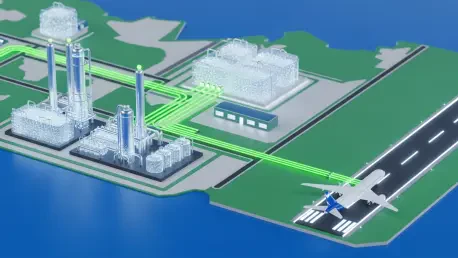
Furthermore, technological breakthroughs in fuel synthesis are making these advanced pathways more cost-competitive. The emergence of specialized production facilities highlights a broader industrial trend toward energy diversification. By focusing on non-biological origins, the industry avoids the common pitfalls of land-use competition and biodiversity loss associated with older biofuel generations.
Scaling Production: Quantifying the Impact on Global Flight Capacity
The projected output of 285 kilotonnes of SAF annually under this scheme marks a substantial increase in regional fuel availability. This volume is equivalent to roughly 350 million liters of kerosene, providing enough energy to power approximately 3,500 intercontinental flights every year. Such figures illustrate how state aid can transform small-scale pilot projects into massive industrial operations that influence global flight capacity.
Grants awarded between 2026 and 2031 follow a first-come, first-served model, which encourages developers to accelerate their project timelines. This competitive structure ensures that the most efficient and ready-to-deploy technologies receive the necessary funding first. These growth indicators suggest that SAF adoption rates across the European Union will likely exceed previous forecasts as infrastructure matures.
Navigating the Turbulence: Overcoming Economic and Technical Barriers
Constructing state-of-the-art SAF production facilities requires immense capital expenditure, which often deter private investors in the early stages. To mitigate this risk, the Dutch program includes specific grants for Front-End Engineering Design (FEED) studies, allowing nascent projects to reach maturity. This approach ensures that technical hurdles are identified and addressed before the bulk of the financial aid is disbursed.
Managing the complexity of hard-to-abate sectors requires a flexible yet disciplined funding strategy. The use of milestone-based disbursements ensures project accountability and protects public funds from being wasted on unviable ventures. By focusing on the hardest segments of the industry to electrify, the Dutch government is tackling the most significant sources of aviation emissions head-on.
A Framework for Green Growth: Aligning State Aid with Climate Objectives
The 2022 Guidelines on State aid for climate and energy (CEEAG) provide the necessary legal framework to ensure these subsidies do not distort market competition. Every funded project must adhere to rigorous sustainability criteria for Renewable Fuels of Non-Biological Origin (RFNBO), ensuring that the fuels produced are truly green. This level of oversight maintains the integrity of the European energy market while fostering a race to the top for environmental standards.
The 2025 Clean Industrial Deal has further de-risked green investments by providing a stable policy backdrop for long-term industrial planning. Balancing the need for rapid decarbonization with the principles of a fair market remains a central challenge for the European Commission. However, the Dutch package demonstrates that government intervention can be both surgical and effective when aligned with clear climate objectives.
The Horizon of Flight: Energy Independence and the Future of Aviation
Accelerated state aid programs serve as a blueprint for other global industries looking to solve the problem of carbon-intensive transport. This initiative contributes directly to the EU target of sourcing 42.5% of its energy from renewables by 2030, reinforcing the narrative of European energy independence. By fostering a local SAF industry, the region reduces its reliance on imported fossil fuels and the volatile price fluctuations associated with them.
Technological diversification will eventually lead to a more stabilized energy market, where synthetic and advanced biofuels complement one another. As these technologies scale, the costs associated with carbon-neutral flight are expected to drop, making sustainable travel more accessible to the mainstream public. The innovation fostered by this aid package creates a foundation for a resilient and self-sufficient aviation ecosystem.
Charting the Course: Final Implications of the Dutch Sustainability Package
The authorization of the Dutch aid package solidified the synergy between high-level financial backing and strict regulatory mandates. It proved that national initiatives could effectively de-risk the most volatile stages of green industrial development. Stakeholders recognized that public-private partnerships were the only realistic way to bridge the cost gap between traditional kerosene and advanced synthetic fuels. This move shifted the industry focus toward building permanent infrastructure rather than relying on short-term fixes.
Investors found new opportunities in the synthetic fuel sector as the Netherlands emerged as a frontrunner in industrial decarbonization. The success of the program provided a clear signal that the transition to sustainable flight was no longer a distant goal but a current industrial priority. Ultimately, the package ensured that the aviation sector remained a pillar of global trade while adapting to the demands of a low-carbon economy.