
The architectural blueprint for South Korea’s economic engine is undergoing a radical redesign as the nation prepares for a future where electricity consumption is no longer tied to human population but to the relentless hunger of silicon and machine learning. This seismic shift in energy strategy, articulated through the latest deliberations for the 12th Basic Plan for Electricity Supply and Demand, marks a departure from conservative growth models that have governed the country for decades. By revising the long-term peak demand forecast for 2040 upward by approximately 26.8 gigawatts in just a single quarter, the government has acknowledged a reality where high-tech industrial hubs require the equivalent power of nineteen additional large-scale nuclear reactors. This transformation is not merely a technical adjustment; it represents a comprehensive market pivot intended to secure national competitiveness in a world where energy security and semiconductor dominance are inextricably linked.
As of 2026, the administrative focus has shifted toward a proactive, preventative posture that anticipates the massive energy requirements of the next decade and beyond. The government has signaled that the intersection of industrial policy and grid reliability is the most critical challenge for the 2030 to 2040 period. While previous energy plans focused on managing the decline of coal and the incremental rise of renewables, the current strategy must now account for a “high-intensity” era of electricity reliance. This revised outlook reflects a sophisticated understanding of how the global technology race is reshaping local infrastructure needs, moving away from a reactive model toward one that builds capacity years before the peak load is actually realized by the market.
The Evolution of South Korea’s Power Infrastructure and Policy
Tracing the history of the national grid reveals a landscape that was once defined by the rapid industrialization of heavy manufacturing and shipbuilding. Historically, the energy infrastructure relied on a robust combination of coal and nuclear power to provide cheap, stable electricity to a growing population. However, the paradigm began to shift as decarbonization targets became more stringent and the focus moved toward liquefied natural gas and solar expansion. The foundational concepts of energy planning have now transitioned again, moving from a period of general economic growth to a specialized era of computational and industrial expansion. Understanding this historical progression is vital because it explains the current urgency to diversify and expand the generation mix to accommodate unprecedented load profiles.
The significance of this evolution lies in the decoupling of energy demand from traditional socioeconomic metrics. For most of the past century, power planning was a function of population growth and Gross Domestic Product projections. Today, the relationship is dictated by corporate investment cycles and the speed of technological breakthroughs. The current policy landscape is consequently characterized by a move toward a more resilient and flexible grid that can handle the massive “concentrated” loads typical of semiconductor clusters. By studying these shifts, it becomes clear that the current pivot is a necessary reaction to a global environment where energy-intensive industries are the primary drivers of national wealth and security.
The Structural Drivers Behind the Energy Explosion
The Semiconductor Megaprojects and Industrial Reshaping
A primary factor driving the upward revision of power demand is the formal commitment to localized “advanced industry” ecosystems. The semiconductor industry has emerged as the single most demanding consumer in the updated forecast, with projected electricity usage for this sector jumping from a modest initial estimate to a massive 170 TWh. This surge is directly tied to the development of the Yongin Semiconductor Cluster and new industrial projects planned for the Honam region. These clusters represent some of the most energy-intensive manufacturing environments on the planet, requiring a constant and ultra-stable supply of “baseload” power to maintain the precision and yield of advanced chip fabrication.
The challenge of powering these megaprojects extends beyond simple generation capacity to the physical reality of transmission. These industrial hubs require 24/7 reliability, a demand that places immense pressure on a national grid that was not originally designed to funnel such high volumes of power into concentrated geographic areas. While some critics suggest that these projections are overly reliant on corporate investment plans, the government argues that underestimating these needs would lead to a catastrophic shortage that could paralyze the nation’s most vital industry. The current analysis suggests that the stability of the power supply has become a decisive factor in whether global tech giants continue to invest in South Korean manufacturing.
The Rise of Gigawatt-Scale AI Data Centers
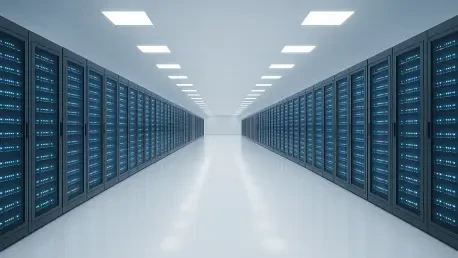
Following the industrial expansion is the meteoric rise of Artificial Intelligence and its corresponding infrastructure. The global shift toward AI-driven economies has triggered a secondary explosion in data center demand, with power requirements for these facilities revised upward by 58.4 TWh to a total of 84.9 TWh. The South Korean government is now planning for the emergence of gigawatt-scale data center developments, reflecting a global trend where computational capacity is viewed as a strategic asset. These facilities operate differently from traditional offices or factories, consuming vast amounts of power consistently throughout the year, which necessitates a significant rethink of how peak load is calculated.
This trend toward massive AI infrastructure illustrates a clear market reality: computational power is the new currency of national competitiveness. The logistical risks associated with this surge are substantial, as data centers must be located near reliable power sources and high-speed communication lines. As the market moves toward 2040, the concentration of these centers in specific regions will likely create localized energy bottlenecks. This expansion demonstrates that the future of South Korean energy is no longer about lighting homes or powering appliances, but about fueling the massive processors that will define the next generation of global innovation.
Balancing Extreme Load with Aggressive Efficiency
Managing a projected baseline demand that could have exceeded 1,000 TWh requires more than just building new power plants; it necessitates a sophisticated approach to efficiency. The government has integrated the Energy Efficiency Resource Standard and expanded demand response programs to mitigate the total load by nearly 141.5 TWh. This strategy attempts to balance the explosive growth of the tech sector with mandatory savings and technological upgrades in other areas. However, there are lingering misconceptions regarding the viability of these efficiency targets, as some experts wonder if behavioral changes can truly offset the sheer physical energy required by a semiconductor fab.
The regional disparities in energy production and consumption add another layer of complexity to this strategy. While efficiency measures are applied nationally, the demand is heavily concentrated in the capital region and southern industrial hubs. Misunderstandings often arise when the public views efficiency as a substitute for new generation; in reality, even with aggressive savings, the net increase in demand remains staggering. The current planning process must therefore navigate the fine line between promoting sustainable consumption and ensuring that the industrial sector has the raw power it needs to compete on the world stage.
Emerging Trends and the Future of the Generation Mix
Looking forward, the “Great Energy Debate” between nuclear and renewable sources is expected to intensify as the 2040 deadline approaches. The 12th Basic Plan is likely to feature a hybrid approach, combining large-scale nuclear reactors with the deployment of Small Modular Reactors to provide localized, carbon-free baseload power. Simultaneously, the commitment to renewable energy remains a core pillar, with goals to reach 100 GW of capacity by 2030. However, the emerging consensus among market analysts is that renewables alone cannot provide the high-voltage stability required by semiconductor and AI hubs without significant advancements in long-duration battery storage technology.
Regulatory shifts regarding transmission infrastructure will also become a major trend in the coming years. The government is expected to introduce new laws to streamline the construction of high-voltage transmission lines, addressing the current bottleneck where power generated in coastal areas cannot easily reach the inland industrial clusters. We can also anticipate a shift toward decentralized energy systems, where localized micro-grids allow industrial complexes to operate independently of the national grid during periods of high stress. These technological and regulatory evolutions will define the efficiency and resilience of the market as South Korea attempts to harmonize its green energy goals with its industrial ambitions.
Strategic Takeaways for Stakeholders and Industry Leaders
The transition to a high-intensity energy model provides several vital takeaways for those operating in the South Korean market. First, the decoupling of power demand from population metrics means that policy will be increasingly dictated by the needs of the corporate and technology sectors. For business leaders, this implies that securing long-term energy contracts and investing in localized energy storage will be essential for operational stability. Professional energy managers should focus on high-efficiency hardware and participation in demand response programs to align with government mandates while reducing long-term costs.
Furthermore, investors should view grid modernization and nuclear technology as the two most critical sectors for the next decade. The massive investment required to upgrade the national transmission network and build new reactors represents a significant opportunity for companies involved in infrastructure and smart grid solutions. Actionable strategies for tech companies include moving toward “energy-aware” software and hardware that can adjust workloads based on grid availability. By prioritizing energy resilience now, stakeholders can insulate themselves from the potential volatility of a market that is undergoing a historic and rapid transformation.
Securing a High-Tech Future Through Energy Resilience
The analysis of the 12th Basic Plan confirmed that South Korea’s energy trajectory was fundamentally altered by the global race for semiconductor and AI supremacy. The revision of the peak demand forecast from 130 GW to 165 GW served as a powerful signal that the nation was prioritizing its industrial future over cautious planning. The core themes of industrial megaprojects, the nuclear-renewable balance, and mandatory efficiency highlighted the scale of the logistical challenge that planners faced. It was clear that meeting the surging 2040 demand required more than just an increase in generation capacity; it demanded a total reimagining of the national grid.
This transition proved that the ability to solve the energy equation was the most important factor in determining the economic trajectory for the next half-century. The government and the private sector recognized that powering the high-tech ambition of the nation was a strategic imperative that could not be delayed. The focus moved toward building a resilient, high-capacity infrastructure that could sustain growth regardless of global market volatility. Ultimately, the lessons learned during this period of rapid planning provided a roadmap for other nations facing similar pressures, showing that energy resilience was the foundation upon which all modern high-tech success was built.