
Christopher Hailstone is a seasoned authority in the utilities sector, possessing a career defined by the successful navigation of complex energy management and grid security challenges. As an expert in renewable energy delivery, he has spent years advising on the integration of decentralized assets into a cohesive, reliable power system. Today, he joins us to discuss the transformative potential of Virtual Power Plants (VPPs) and how they are reshaped from experimental pilots into essential pillars of modern infrastructure.
In this conversation, we explore the shifting value proposition of VPPs, which now prioritize affordability and resilience alongside carbon reduction. We dive into the specific mechanics of how utilities like National Grid and Xcel Energy are managing distributed resources, the massive economic potential of bidirectional electric vehicle charging, and the critical importance of customer compensation frameworks. Christopher also explains the operational nuances of modern grid management, from alleviating reverse power flow to meeting the specific demands of weekend load peaks.
Utilities are increasingly turning toward distributed resources as a primary strategy to manage high wholesale prices and reduce transmission costs. From your perspective, how has the core value proposition of these virtual power plants evolved beyond simple demand response?
The shift we are seeing in 2026 is a move toward VPPs being viewed as essential “affordability levers” for the entire system. In the past, we looked at these aggregations primarily as a way to avoid blackouts, but now we are focusing on the granular economic benefits they offer to both the bulk power grid and local distribution networks. On the bulk system, these resources are being deployed to slash power demand precisely when wholesale prices are peaking, which directly lowers capacity and transmission costs that would otherwise be passed on to every ratepayer. On the distribution side, well-managed VPPs create what we call “load interconnection headroom,” allowing us to integrate more technology without the immediate need for massive, expensive system investments. It is a tactical approach where we use existing customer-sited assets to defer or even completely avoid the kind of incremental infrastructure spending that has historically driven up utility bills.
We are seeing a noticeable surge in VPPs centered around residential batteries and managed electric vehicle charging, even as older thermostat-based programs begin to level off. What is driving this shift toward more complex, high-capacity assets, and how are the operational models adapting?
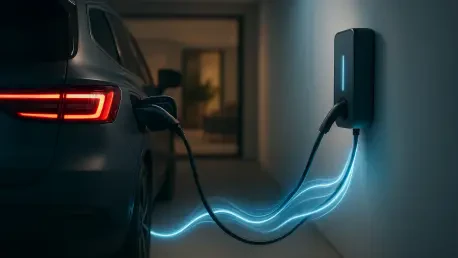
The growth in residential batteries and electric vehicle (EV) charging is explosive because these assets offer a level of “dispatchability” that simple smart thermostats cannot match. We are seeing a move away from just turning things off and toward actively injecting power back into the grid, particularly through emerging models like “market participant” VPPs where these aggregations compete directly in energy and ancillary markets. There is also a fascinating hybrid model gaining traction, often called “bring your own capacity,” which bridges the gap between utility-run programs and third-party aggregators. The real “holy grail” here is bidirectional EV charging; recent data suggests that vehicle-to-grid integration can deliver up to 15 times more value per vehicle than simple one-way managed charging. You can feel the tension in the industry as auto manufacturers get restless, advocating for more participation because they realize their vehicles are essentially mobile power stations that can stabilize the entire grid.
To reach a scale where these programs truly move the needle, utilities must convince thousands of individual customers to participate. What are the essential safeguards and incentives needed to ensure that consumers feel their contributions are valued and protected?
Transparency and predictability are the cornerstones of customer trust in this new energy economy. We have moved past the era of vague promises; today’s participants require “revenue-grade metering” to ensure their performance is measured with absolute precision, leading to robust and predictable compensation. It is vital that we embed customer protections into the very fabric of these programs, such as penalty-free opt-outs, so homeowners never feel like they have lost control of their own equipment during a heatwave or a storm. When a utility or an aggregator can show a customer a clear, reliable payment for their battery’s service, the psychological barrier to participation drops significantly. We are essentially asking to borrow their private property for the public good, and that requires a level of financial and operational respect that wasn’t always present in early pilot programs.
In regions like Massachusetts and Colorado, utilities are facing very specific localized challenges, from weekend demand peaks to voltage swings caused by high solar penetration. How are programs like National Grid’s ConnectedSolutions+ or Xcel’s active VPPs tailored to solve these distinct engineering hurdles?
Regionality is everything when it comes to grid stability, and we see that clearly with National Grid’s use of distributed resource aggregations in 19 different “non-wires alternatives” projects. Their ConnectedSolutions+ program is particularly clever because it targets areas of high need, paying participants higher rates in exchange for the right to dispatch resources more frequently, even during local demand peaks on Friday or Saturday evenings. Meanwhile, in Colorado, Xcel is dealing with the “blessing and curse” of having over 1 GW of solar on a 7-GW system, which has led to significant voltage swings and reverse power flow during the day. To counter this, they are moving toward a direct-participant model that treats these resources like a “four-hour battery” rather than just a source of renewable energy credits. They are aiming to enroll 25 MW of behind-the-meter resources annually over the next five years to ensure that distributed solar becomes a capacity asset that serves all customers, rather than an operational headache.
What is your forecast for the future of virtual power plants as they become more integrated into our daily infrastructure?
Over the next few years, I expect VPPs to transition from a “niche utility program” to a standard feature of homeownership and vehicle leasing. We will see a seamless integration where your electric vehicle and home battery are automatically enrolled in a local grid-balancing market the moment they are activated, providing a passive income stream for the owner while acting as a massive, distributed shield against outages. The complexity of managing these millions of endpoints will be handled by sophisticated third-party aggregators, making the grid more resilient to the weather-related load shedding we have seen in places like Puerto Rico. Ultimately, the grid of the future won’t just be something we draw power from; it will be a two-way ecosystem where every plugged-in device plays a small but vital role in keeping the lights on for the entire community.