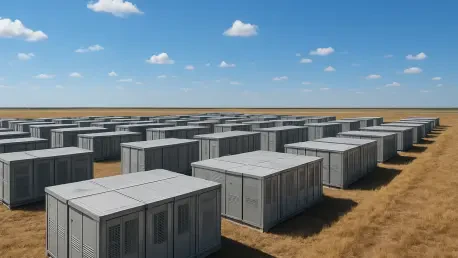

Thousands of retired lithium-ion cells that once propelled autonomous vehicles across city streets are now finding a second, more stationary purpose beneath the expansive Texas sky. As the energy landscape shifts toward renewable sources, the question of what to do with “expired” electric vehicle batteries has transformed from a waste management dilemma into a multi-megawatt opportunity. This evolution is most visible in the Bexar Martinez project, a 28-MWh site that bridges the gap between automotive history and grid reliability.
The project, spearheaded by B2U Storage Solutions, represents a critical pivot in the circular economy by proving that retired batteries retain significant value. By integrating these assets into the Electric Reliability Council of Texas (ERCOT) territory, developers are demonstrating that the transition to a sustainable grid does not always require the carbon-intensive extraction of new raw materials. This shift marks a transition from experimental technology to a viable commercial reality for the modern energy sector.
The 28-MWh Milestone: Giving Retired Batteries a Second Act
The launch of the Bexar Martinez facility near San Antonio signals a major expansion for B2U Storage Solutions as it scales its operations within the competitive ERCOT market. This site is not merely a pilot; it is a fully operational 28-MWh installation that utilizes used cells to balance supply and demand on the power grid. By breathing new life into hardware that would otherwise be destined for recycling, the project confirms that second-life technology is ready for large-scale application.
This facility marks the company’s second major venture in Texas, contributing to a total operational capacity that now exceeds 100 MWh across both Texas and California. The core innovation lies in the ability to aggregate thousands of individual battery modules into a cohesive, high-capacity system. This demonstration of scale provides a clear answer to skeptics who doubted whether heterogeneous used batteries could ever perform with the precision required for grid-level frequency response.
The Circular Economy Meets Grid Reliability
Modern energy infrastructure faces a profound challenge: the need for massive storage capacity to support intermittent wind and solar power. Choosing between mining fresh lithium or tapping into the gigawatt-hours of existing capacity in aging EV fleets is becoming a defining economic decision. Repurposing these batteries effectively creates a massive, untapped reservoir of energy that can be deployed faster and more sustainably than traditional storage assets.
As global demand for minerals continues to rise, the circular model offers a way to decouple grid expansion from volatile supply chains. This approach essentially turns every retired electric vehicle into a potential grid asset, ensuring that the environmental benefits of the transportation sector extend long after a car is removed from the road. This strategy is increasingly seen as a necessity for maintaining a reliable and cost-effective power supply.
Breaking Down the Second-Life Advantage
Contrary to early skepticism regarding battery longevity, recent data has shown a remarkably slow degradation rate of only 1.8% per year for many lithium-ion cells. This means a battery retired after five years of driving still retains the vast majority of its original capacity, making it ideal for the less strenuous demands of stationary storage. By leveraging these existing assets, B2U achieves overhead costs up to 40% lower than those of competitors who rely exclusively on new battery manufacturing.
The “Texas 10” strategy further streamlines this process by focusing on 10-MW installations, which allow for rapid interconnection and faster entry into the energy market. This specific sizing reduces the bureaucratic hurdles associated with larger utility-scale projects while providing the flexibility to respond to localized grid stress. Speed of deployment is a significant competitive advantage in markets where energy demand is growing faster than new generation can be built.
A key driver of this model is a landmark partnership with Waymo, which ensures a consistent supply of high-quality retired cells from autonomous vehicle fleets. This steady pipeline is essential for scaling up to the projected 1,000 MWh of future capacity that the company aims to manage. By securing these streams, developers can maintain consistent pricing and avoid the supply shocks that often plague the market for new lithium cells.
Expert Insights into the Future of Repurposed Storage
Industry analysts, including B2U CEO Freeman Hall, suggest that second-life systems could account for 25% of all energy storage by 2030. Improved diagnostic tools have played a crucial role in this growth, effectively eliminating the safety and performance risks previously associated with used components. Federal investment tax credits and domestic content bonuses have further incentivized investors to back the circular model as a hedge against global price volatility.
These diagnostic advancements allow technicians to assess the health of individual cells with high precision before they are installed. This transparency builds confidence among utility operators and insurers, who previously viewed used batteries as a liability. Consequently, the financial community has begun to recognize these installations as bankable assets with predictable long-term returns, mirroring the maturation of the solar industry in previous years.
Strategies for Integrating Repurposed Batteries into Energy Portfolios
Integrating these systems requires a shift from merchant-based spot market sales toward stable tolling agreements with third-party utilities. Developers are increasingly using modular designs to overcome the physical differences in battery formats, creating standardized units that can be easily upgraded. This modularity, combined with advanced health certification processes, ensures that diverse battery streams can be managed safely within a single installation.
Maximizing federal incentives also involves utilizing local battery stock to qualify for domestic content bonuses. As more electric vehicles reach the end of their primary service life within the United States, the availability of these local resources will continue to grow. This domestic supply chain reduces the reliance on international shipping and further lowers the carbon footprint of the storage installations themselves, aligning with broader climate goals.
The successful integration of the Bexar Martinez project provided a tangible solution for the growing volume of retired electric vehicle components. Stakeholders realized that by prioritizing domestic content and advanced diagnostics, they could stabilize the power grid while lowering costs. This approach successfully shifted the focus toward a circular economy, ensuring that the legacy of the first generation of electric mobility contributed to a cleaner and more resilient energy landscape.