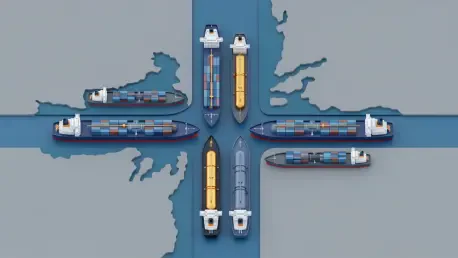

The tightening of the maritime choke point in the Strait of Hormuz represents a profound disruption to the delicate equilibrium that governs the international movement of energy resources. This strategic waterway facilitates the passage of nearly twenty percent of global oil consumption, making it a critical artery for international supply chains. Any persistent friction in this region translates directly into volatility for global markets and heightens the risk for energy dependent economies.
Geopolitical tensions involving the United States and Iran have introduced technical complexities for operating high-capacity tankers in these contested waters. The presence of naval assets and the constant threat of military interference force vessel operators to execute precise maneuvers under extreme pressure. Such conditions create a high-stakes environment where a single miscalculation could lead to significant environmental and economic repercussions.
The Strategic Significance of the Strait of Hormuz in Global Energy Markets
The Strait of Hormuz remains the single most critical artery for the global energy economy, necessitating a focus on the logistical flow of crude oil. Its geographical narrowness forces a concentration of high-capacity tankers into contested waters, where geopolitical friction translates directly into supply chain vulnerability. This reliance on a single waterway makes the international market susceptible to even minor shifts in regional stability.
Navigating these waters requires precision, yet the threat of military interference has turned routine logistics into a series of high-risk gambles. Consequently, the presence of naval assets from multiple nations has created a crowded and unpredictable environment for commercial freight. The technical difficulty of managing large-scale maritime traffic under these conditions continues to strain the operational capacity of international shipping firms.
Market Disruptions and the Trajectory of Global Crude Prices
Shifting Maritime Trends and the Impact of Heightened Regional Hostilities
Heightened regional hostilities led to a precipitous decline in vessel traffic as shipowners pivoted toward sanctioned or high-risk transit models to avoid potential targeting. The implementation of a U.S. blockade reshaped consumer behavior, forcing a total reassessment of maritime risk management across the industry. Many mainstream operators chose to bypass the Gulf entirely, favoring longer and more expensive routes to ensure asset safety.
This strategic pivot created a vacuum that was increasingly filled by vessels operating outside traditional regulatory frameworks. The resulting opacity in shipping movements has made it difficult for analysts to accurately track flow data, further complicating market predictions. As maritime security risks intensified, the cost of transit became a secondary concern to the preservation of cargo and crew.
Performance Indicators and Pricing Forecasts Amidst Restricted Supply
Current data from tracking firms like Kpler and Lloyd’s List Intelligence indicate that flows dropped to only fifteen percent of pre-war capacity. This significant reduction in supply serves as a primary indicator that global crude prices may soon push toward the hundred-dollar-per-barrel mark. The lack of an available buffer in the global inventory suggests that any further escalation will result in immediate price spikes.
Analysts are closely monitoring the depletion of offshore storage and the rising premiums for maritime insurance as harbingers of long-term market shifts. While some expected a rapid return to normalcy, the persistence of the blockade indicates a more structural change in energy security. Forward-looking projections now prioritize the development of alternative transit corridors to mitigate this reliance on the Strait.
Navigating Operational Challenges: Military Blockades and Maritime Security Risks
The logistical complexities of navigating the ebbs and flows of vessel transits remain a significant hurdle for global energy security. Mainstream international operators show a deep-seated reluctance to engage in the Gulf, citing the high probability of asset seizures and military strikes. This hesitation has created a bottleneck that limits the consistent flow of oil to global refineries.
Strategies for mitigating these risks include the use of advanced surveillance technology and the coordination of naval escorts for high-value cargo. However, maintaining supply continuity under the pressure of renewed military strikes requires a level of coordination that is often difficult to achieve. Stakeholders are forced to balance the necessity of energy delivery with the increasing costs of operational protection.
The Regulatory Framework: International Sanctions and Maritime Security Standards
The legal landscape of the Gulf region is heavily influenced by U.S. blockade regulations and a suite of international sanctions. These frameworks dictate shipping compliance and force global operators to adopt more rigorous security protocols. Adhering to these evolving standards is essential for maintaining insurance coverage and legal standing in the international community.
Heightened security protocols now include mandatory reporting and enhanced vetting of vessel ownership to prevent the bypass of sanctions. These regulatory shifts reflect a broader move toward a more transparent, yet heavily controlled, maritime environment. The influence of these laws is reshaping the operational practices of global shippers, who must navigate a maze of legal requirements to operate in the region.
Strategic Projections: Assessing Potential Market Disruptors and Global Supply Stability
The potential for direct targeting of regional energy infrastructure remains the most significant threat to long-term price stability. Such an escalation would move the conflict beyond the water, directly impacting production and storage facilities on land. This possibility forces energy firms to invest in innovative transit solutions and more resilient infrastructure to withstand potential strikes.
Global economic conditions, including inflationary pressures and changing demand patterns, also play a crucial role in the future utility of the Strait. A sustained move toward alternative energy sources may eventually reduce the strategic importance of the waterway, though it remains vital in the immediate term. Assessing these disruptors requires a holistic view of both geopolitical developments and economic trends.
Concluding Perspective: Assessing the Future of Global Energy Supply Chains
The analysis of the renewed escalatory phase in the Strait of Hormuz revealed that the global energy market entered a period of sustained high costs and structural uncertainty. Stakeholders moved to diversify their supply chains, recognizing that the previous reliance on a single maritime corridor was no longer a viable strategy for long-term stability. The resulting shift toward alternative energy hubs provided a necessary hedge against the volatility of the Persian Gulf.
Strategic recommendations centered on the adoption of advanced maritime security technologies and the formalization of new international shipping corridors. Efforts to stabilize the region were prioritized through diplomatic channels, though the legacy of the conflict necessitated a permanent reassessment of energy security protocols. Ultimately, the industry shifted toward a more resilient model that prioritized flexibility and diversified risk over traditional efficiency.