
Current market fundamentals are caught between immediate geopolitical supply threats and the cooling effects of rising U.S. inventories and softer long-term demand projections. This fragile balance has created a scenario where any single headline regarding the Middle East can trigger an immediate five percent swing in the price of West Texas Intermediate. The global energy sector is currently navigating a period of intense volatility that has sent crude futures on a rollercoaster ride, leaving analysts debating the likelihood of a triple-digit price point. While the immediate reaction to regional conflict often points toward a sharp spike, the underlying reality of 2026 involves a much more diversified energy mix than in previous decades. Investors are weighing the risk of a regional spillover against the backdrop of a resilient American shale sector that continues to surprise the world with its efficiency and output. Every cargo transit is now viewed through a lens of security.
Geopolitical Escalation and Supply Chain Vulnerabilities
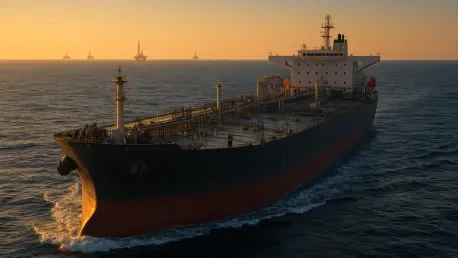
Geopolitical instability remains the primary driver for bullish sentiment in the oil markets, as any disruption in the Persian Gulf could theoretically remove millions of barrels from the daily supply. The threat of targeted strikes against energy infrastructure has shifted from a remote possibility to a persistent operational risk that necessitates a premium on Brent and WTI contracts. For instance, recent tensions involving the Bab el-Mandeb strait have underscored how easily global logistics can be strangled by localized skirmishes, forcing a pivot toward longer, more expensive routes around the Cape of Good Hope. This logistical friction acts as an indirect tax on energy, pushing prices higher even when actual production remains steady. Furthermore, the psychological impact of these tensions often leads to speculative buying, where traders bet on worst-case scenarios to hedge against future scarcity, creating a self-fulfilling prophecy of rising costs in an already tight market.
Beyond traditional military maneuvers, the rise of asymmetric warfare via autonomous systems and drone swarms has fundamentally changed the risk profile of major production hubs in the Middle East. Refineries that once felt secure behind conventional defenses are now vulnerable to low-cost aerial threats that can cause disproportionate damage to critical processing units. This technological shift means that even minor actors can influence global pricing by threatening the stability of key export terminals. Security analysts note that the cost of defending this infrastructure has skyrocketed, leading to higher operational expenditures for national oil companies across the region. Consequently, the fear of a sudden, catastrophic supply shock is keeping a floor under oil prices, preventing them from falling even during periods of sluggish global growth. The market is essentially pricing in a conflict premium that accounts for the potential of sudden outages in some of the world’s most productive fields.
Strategic Buffers and the Pathway to Market Stability
In direct opposition to the upward pressure from the Middle East, the surge in non-OPEC production serves as a powerful counterbalance that could prevent oil from breaking the $100 barrier. The United States has solidified its position as a dominant swing producer, with technological advancements in horizontal drilling and hydraulic fracturing allowing shale operators to maintain high output even in a fluctuating price environment. Concurrently, emerging offshore projects in Guyana and Brazil are coming online at a rapid pace, adding significant capacity to the global market throughout the 2026 to 2028 period. These regions are less susceptible to the geopolitical tremors affecting the Mediterranean and the Gulf, providing a stabilizing influence that reassures global buyers. This geographic diversification of supply sources makes the world less dependent on any single point of failure, which historically would have guaranteed a massive price surge when tensions flared in those regions.
Strategic planners and energy executives recognized that navigating the complexities of 2026 required a dual focus on immediate risk mitigation and long-term structural adaptation. Organizations successfully avoided the worst impacts of price volatility by diversifying their energy procurement strategies and investing in resilient supply chain technologies. Those who prioritized transparency in their logistics and maintained flexible hedging positions found themselves better equipped to handle the fluctuations caused by regional tensions. Moving forward, the focus shifted toward enhancing the efficiency of existing operations rather than relying on the discovery of new, high-cost reserves. Industry leaders emphasized that the most effective way to insulate an economy from the $100 oil threat was to accelerate the integration of alternative fuels and smart grid technologies. These proactive measures ensured that the global economy remained shielded from the most volatile swings in the crude market for a stable future.