
Christopher Hailstone joins us to navigate the turbulent waters of global energy markets and the geopolitical friction points that currently define them. As a seasoned expert in utility infrastructure and grid security, he understands how the invisible lines of diplomacy can directly impact the reliability of our energy supply chains. In this conversation, we delve into the “theater diplomacy” currently unfolding between the United States and Iran, exploring why the Dow Jones can hit record highs on mere whispers of a deal while the actual flow of oil remains restricted. We examine the shrinking safety nets of our petroleum reserves and the strategic impasse in the Strait of Hormuz that keeps the global economy in a state of “spiky muddle-through.”
How would you explain the phenomenon where global markets rally almost instantly on reports of diplomatic breakthroughs, even when those reports lack concrete evidence of a signed agreement?
It really comes down to a deeply entrenched optimism bias where investors are desperate to view any hint of a deal as a “time machine” that can reset the Middle East to its prewar status quo. When Treasury Secretary Scott Bessent suggested a deal for the Strait could be just hours away on a Tuesday morning, we saw the Dow Jones Industrial Average surge to record-high closes while oil prices tumbled, reflecting a collective, almost desperate sigh of relief from the trading floor. This emotional rollercoaster is fueled by the hope that the global energy supply shock, which has seen gas prices climb and inflation worsen over the last five months, might finally be behind us. Even as the war appears to be widening and progress on containing Iran’s nuclear ambitions remains at a standstill, the market remains trapped in this “spiky muddle-through” dynamic, clinging to every claim of a “normalized position” because the alternative is a military escalation that few are prepared to price in.
Given the strategic importance of the Strait of Hormuz as a global energy artery, what are the primary hurdles preventing a resolution that would restore normal vessel traffic?
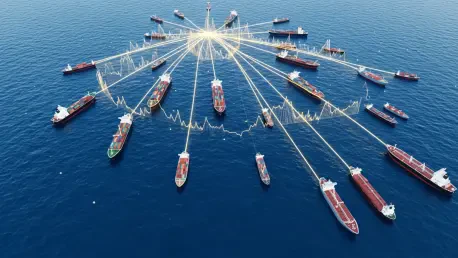
The impasse is rooted in a fundamental disagreement over the very nature of the Strait; the U.S. insists on the pre-war standard of international, free waters, while Iran seeks to impose a service fee, effectively turning an open waterway into a tolled asset. This conflict of interest has left vessel traffic far below the prewar averages, back when 20% of the world’s oil flowed freely through those lanes, creating a logistical bottleneck that has persisted for more than five months. While the administration has claimed that “the perimeters of a deal” have been agreed upon to stop a large-scale attack, Iran’s leadership has mocked this as “theater diplomacy,” preferring to negotiate separately with regional powers like Oman to hash out their own shipping agreements. This disconnect creates a dangerous environment where Washington claims to be in full control while reimposing naval blockades, yet the reality on the water is one of restricted movement and “duplicitous” claims that prevent any genuine return to normalization.
As the conflict drags into its sixth month, how does the depletion of global buffers, such as the U.S. Strategic Petroleum Reserve, change the stakes for both policymakers and energy markets?
The shrinking U.S. Strategic Petroleum Reserve is a glaring signal that our global buffers are waning, leaving the market incredibly vulnerable to any sudden, localized disruption in the Persian Gulf. As these stockpiles of oil and key munitions reportedly dwindle, the margin for error for energy managers disappears, meaning any failure in diplomacy could send prices shooting back up to the peak levels seen in April or even higher. Analysts are rightly concerned that the cycle of headline-driven price pullbacks is creating a false sense of security, masking the fact that the economic cost of the conflict is becoming less containable by the day. If the market’s optimism eventually dissipates and inventory de-stocking continues, we will likely see a forced curtailment of consumption, which is a painful economic reality that will be felt at every gas pump and utility company across the nation.
What role do regional intermediaries like Oman play in this crisis, and why does their involvement seem to complicate the messaging coming out of the White House?
Oman acts as a critical regional pivot, offering a channel for Iran to negotiate shipping agreements that pointedly exclude direct U.S. involvement, which directly contradicts the administration’s narrative of ongoing bilateral talks. While White House spokespeople maintain that the President’s preference is always diplomacy to ensure Iran never possesses a nuclear weapon, the Iranians are publicly stating they aren’t even speaking to Washington. This creates a confusing atmosphere of “fake news” and “theatre diplomacy” where the U.S. asserts that “a lot of progress has been made” on a Tuesday night, while Iranian state media releases draft plans on a Thursday that would explicitly block U.S. and Israeli ships from the Strait. This tactical maneuvering by Tehran allows them to maintain leverage over the 20% of global oil transit while dismissing American claims as a failed strategy of “bullying and broken promises.”
How should investors and utility operators interpret the “theater diplomacy” of threats followed by sudden pullbacks in military action?
Investors must recognize that these patterns—such as the President announcing he was aborting a large-scale attack because a deal was “close”—are often used as leverage rather than reflecting actual diplomatic progress. This “theater diplomacy on loop” has successfully pumped stocks and helped the Dow hit record highs, but it hasn’t solved the underlying issue of the naval blockade or the restricted vessel traffic in the Gulf. For those of us in the energy sector, we have to look past the “imminent deal” headlines and focus on the reality that any temporary routes proposed by the U.S. official are being dismissed as nonstarters by the other side. Until we see a draft that doesn’t involve “impediments” or “tolls,” the risk of a military escalation remains a very real threat that could evaporate market gains in a single afternoon.
What is your forecast for the stability of global oil prices and the security of the Strait of Hormuz over the coming months?
My forecast is one of continued high-stakes volatility where the “muddle-through” dynamic eventually gives way to a harsh reality check; unless both sides move their respective red lines toward the center, we are looking at a costly and protracted stalemate. I expect oil prices to remain highly elevated from their prewar levels, with sudden, sharp spikes whenever the “theater diplomacy” fails and the reality of the naval blockade or dwindling Iranian flows sets back in. The 20% of global oil that traditionally transits the Strait will likely continue to face restrictions, keeping energy markets on edge and ensuring that any record-high closes on the Dow remain fragile at best. Ultimately, without a durable settlement that addresses the core dispute over “international free waters” versus “service fees,” the risk of military escalation will remain the primary driver of market sentiment, potentially forcing a consumption curtailment that the global economy is currently ill-prepared to handle.