
The arrest of President Nicolás Maduro in the early months of this year has fundamentally reshaped the geopolitical landscape of South America, forcing a sudden and dramatic reevaluation of Venezuela’s role in the global energy market. Holding the world’s largest proven oil reserves at an estimated 303 billion barrels, the nation has spent more than a decade as a cautionary tale of mismanagement and diplomatic isolation, yet the current political transition has sparked intense speculation about a potential resurgence. For years, the global energy community watched as production plummeted from historical highs to mere fractions of its potential, primarily due to suffocating sanctions and systemic corruption within the state-run apparatus. Now, as a transitional government attempts to restore international legitimacy, the central question remains whether the country can truly revitalize its moribund industry or if the current optimism is merely a temporary reaction to the recent regime change.
Political Shifts and Investor Sentiment
The removal of the previous administration has triggered a wave of cautious optimism among Western energy executives who have long been sidelined by geopolitical tensions. The White House has actively signaled its support for a diplomatic pivot, encouraging American firms to explore the feasibility of returning to the Orinoco Belt to stabilize global supply chains. This shift in Washington’s stance has created a distinct divide in corporate strategy, as industry leaders weigh the rewards of first-mover advantage against the risks of a still-volatile environment. While Chevron has leveraged its existing presence to plan for an immediate output boost, other major players like ExxonMobil remain hesitant, waiting for evidence that the new leadership can maintain civil order and protect foreign assets from future expropriation. The transition from a state-controlled monopoly toward a more collaborative international framework represents the most significant shift in Venezuelan energy policy in a generation.
Despite the diplomatic thaw, the financial reality of the state-owned oil company, PDVSA, presents a formidable barrier to any rapid recovery of the sector. The organization is currently burdened by a massive debt load exceeding $150 billion, a figure that complicates every negotiation with potential international partners and creditors. This insolvency is exacerbated by a lack of clarity regarding the timeline for upcoming national elections, leaving many investors in a state of political limbo where long-term capital commitments feel premature. For a country that requires decades of sustained stability to fund and execute massive capital projects, the current uncertainty acts as a significant deterrent for those unwilling to gamble on a fragile peace. Without a transparent process for debt restructuring and a clear legal mandate for the interim government, the dream of a full energy restoration remains tethered to the resolution of these deep-seated financial and institutional crises.
Physical Decay and the Human Capital Crisis
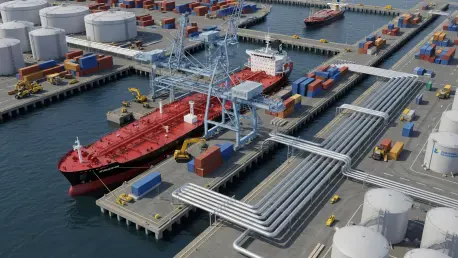
Technical hurdles across the Venezuelan landscape are proving to be just as daunting as the political obstacles that have historically hindered production. Years of chronic underinvestment and the absence of routine maintenance have left the nation’s network of refineries, pipelines, and storage facilities in a state of advanced decay. A significant portion of the country’s reserves consists of extra-heavy crude, a dense and viscous substance that is notoriously difficult to extract and transport without specialized equipment and chemical diluents. Currently, the domestic supply chain for these critical components is non-existent, forcing operators to rely on expensive imports that further squeeze profit margins in an already difficult operating environment. Without a comprehensive overhaul of the physical infrastructure, the mere existence of vast oil deposits beneath the surface provides little comfort, as the technical capacity to move that product to the global market has been effectively paralyzed by neglect.
Beyond the crumbling steel and rusted pipelines, the industry faces a profound human capital crisis that may take even longer to resolve than the physical damage. During the peak years of the previous crisis, thousands of highly skilled engineers, geologists, and technical specialists fled the country in search of better opportunities, creating a massive capability gap within the domestic workforce. This brain drain has left PDVSA and its remaining subsidiaries without the institutional knowledge required to manage complex, large-scale drilling operations or to implement modern digital oilfield technologies. Rebuilding this expert community is not simply a matter of funding; it requires convincing a skeptical diaspora that the nation is safe and prosperous enough to warrant their return. Consequently, even if massive infusions of foreign capital were to arrive tomorrow, the lack of local technical expertise would likely serve as a major bottleneck, slowing the pace of any projected operational ramp-up.
Legal Changes and Production Forecasts
To mitigate the fears of international investors, the National Assembly has begun a comprehensive effort to overhaul the nation’s foundational hydrocarbons law. These proposed reforms are specifically designed to offer more attractive fiscal terms and, perhaps more importantly, to grant private companies greater operational control over their joint ventures. One of the most critical elements of this legislative push is the inclusion of provisions that allow for the settlement of disputes in international arbitration courts, a move intended to prevent a repeat of the arbitrary asset seizures that defined the previous era. These legal maneuvers are being closely coordinated with ongoing sanctions relief efforts from the United States, signaling a concerted attempt to integrate Venezuela back into the Western energy fold. By creating a more predictable and legally sound environment, the transitional government hopes to transform the country from a high-risk gamble into a competitive destination for global energy investment.
While the current administration has publicly set ambitious production targets to demonstrate progress, independent analysts suggest a more measured and realistic outlook is necessary. Production has certainly climbed from the historic lows observed several years ago, but the goal of returning to the early 2000s highs of three million barrels per day remains a distant and perhaps unreachable milestone in the near term. Current projections indicate that reaching a steady output of 1.6 million barrels per day by 2030 is a more attainable objective, provided that the country can successfully accelerate its well-repair operations and secure new drilling contracts. This ramp-up depends on a delicate balance of continuous capital inflow and the successful implementation of the aforementioned legal reforms. Even under the best-case scenarios, the recovery will be a slow, incremental process rather than a sudden surge, reflecting the reality of the deep structural damage that must be repaired before the industry can operate at full throttle.
Rig Availability and Global Economic Pressure
A critical logistical bottleneck that threatens to stifle the projected growth of the sector is the dire state of the domestic drilling fleet. Although the government technically maintains dozens of rigs on its books, a vast majority of these units have been stripped for parts or left to rot in the tropical humidity, rendering them completely unusable in their current state. Replacing or repairing this fleet requires hundreds of millions of dollars in capital expenditure, a sum that the state-owned utility cannot currently provide without external assistance. To meet its 2030 production goals, the industry will likely need to rely on the importation of high-tech, automated rigs from the United States and Europe rather than attempting to salvage the aging and obsolete local inventory. This dependence on foreign equipment further ties the success of the Venezuelan oil revival to international diplomatic relations and the willingness of global service providers to re-engage with a market that has burned them in the past.
The ultimate success of this energy reawakening is also heavily contingent on external factors, specifically global crude prices and the rising production levels of regional competitors. Venezuela’s reliance on extra-heavy crude means its extraction costs are significantly higher than those of traditional light oil producers, making its projects particularly vulnerable to price volatility in the international market. Furthermore, the rapid growth of the oil sectors in neighboring Guyana and Brazil has created a more crowded and competitive environment for investment dollars in the Atlantic basin. If the global market becomes oversupplied or if prices face downward pressure due to a shift toward renewable energy sources, the cautious optimism currently surrounding the Venezuelan recovery could quickly evaporate. In such a scenario, the nation’s attempt to reclaim its status as a premier energy powerhouse would likely be remembered as a missed opportunity rather than a successful comeback, highlighting the precarious nature of its current trajectory.
Future Strategic Integration and Industry Sustainability
The path forward for the Venezuelan energy sector required a fundamental shift from speculative rhetoric toward the implementation of concrete, transparent regulatory frameworks. Industry leaders realized that simply possessing vast reserves was insufficient; success depended on the successful integration of modern technology and the restoration of a credible legal environment that protected private assets. Moving toward 2027 and beyond, the focus shifted to establishing regional partnerships and diversifying the energy mix to hedge against the inherent volatility of the heavy crude market. It became clear that the recovery was not just about restoring old production levels, but about building a more resilient and accountable industrial model from the ground up. To ensure long-term viability, stakeholders prioritized the development of local vocational programs to bridge the human capital gap and invested in modular infrastructure that could be scaled as political stability solidified. Ultimately, the transition demonstrated that a sustainable oil reawakening necessitated a holistic approach.