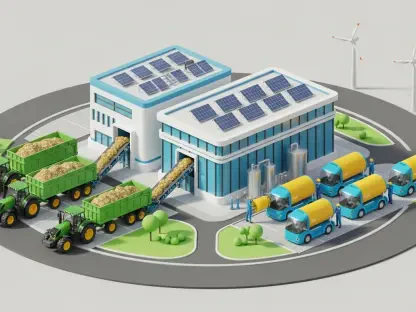

The delicate balance between American agricultural output and the energy demands of the national transportation sector has reached a critical tipping point. Currently, the biodiesel market serves as a primary consumer of domestic corn and soybean yields, creating a symbiotic relationship that sustains rural economies while powering the heavy-duty logistics network. Major stakeholders, such as NATSO and SIGMA, represent the truck stops and fuel retailers that bridge the gap between biofuel refineries and the consumers who rely on affordable diesel.
Historically, the $1-per-gallon Biodiesel Blenders’ Tax Credit acted as a cornerstone of this supply chain, providing a direct financial incentive for retailers to incorporate renewable volumes into their offerings. This mechanism did more than just promote green energy; it effectively subsidized the final price at the pump for commercial fleets and everyday drivers. Without this specific structural support, the economic bridge between the farm and the fuel station begins to fray, leaving retailers with fewer tools to manage rising costs.
Shifting Dynamics in Renewable Fuel Adoption and Economic Viability
Technological Shifts and the Transition from Blending to Production Incentives
The recent transition from the blenders’ credit to the 45Z Clean Fuel Production Tax Credit marks a fundamental change in how the federal government approaches biofuel support. While the 45Z credit focuses on rewarding the carbon intensity of the production process itself, it shifts the financial benefit away from the point of sale. This creates a disconnect where producers are incentivized to modernize their facilities, yet retailers find it increasingly difficult to pass those savings down to the consumers.
Furthermore, this policy pivot influences the technological priorities of the energy sector toward upstream efficiency rather than downstream accessibility. As the industry moves further into 2026, the absence of a retail-focused incentive may limit the expansion of renewable diesel infrastructure at local gas stations. This change impacts how quickly cleaner alternatives can be integrated into the existing fueling network, potentially slowing the transition for the broader American trucking industry.
Market Performance Indicators and the Correlation Between Credits and Pump Prices
Evaluating historical market data reveals that the presence of the blenders’ credit coincided with periods of greater price stability and higher renewable blending rates. When the credit is active, fuel retailers can offer biodiesel blends at a lower cost than traditional petroleum diesel, encouraging a natural market shift toward domestic renewables. In contrast, current market fluctuations suggest that without this buffer, pump prices become more vulnerable to the volatile swings of global crude oil markets.
Agricultural commodities like soybeans play a pivotal role in this equation, as they serve as the primary feedstock for renewable fuels. When the incentive structure favors the blender, the demand for these crops remains steady, providing a predictable revenue stream for American farmers. However, the current shift has introduced a layer of uncertainty that could impact long-term growth projections for the biodiesel sector, making it harder for the industry to reach its full economic potential.
Addressing the Friction in the Clean Energy Transition
The shift in legislative priorities has created unintended friction within the retail fuel market, where the demand for biofuels is often price-sensitive. As global oil prices face upward pressure, the lack of a downstream blending incentive leaves consumers exposed to the full weight of energy inflation. This disconnect between upstream production credits and downstream savings prevents the “trickle-down” effect that was once a hallmark of the American biofuel policy.
To overcome this hurdle, the industry must find ways to balance the high costs of low-carbon fuel adoption with the economic realities of the commercial trucking sector. Trucking companies operate on thin margins, and any increase in fuel costs is eventually passed on to the public through higher prices for consumer goods. Strategic alignment between policy and retail reality is necessary to ensure that the transition to cleaner energy does not come at the expense of national economic stability.
Navigating the Legislative Framework of Federal Fuel Tax Credits
The Inflation Reduction Act introduced complex layers of regulatory compliance that have fundamentally altered the landscape for fuel distributors. Under the 45Z framework, the burden of proving “clean fuel” status has intensified, requiring more rigorous tracking and reporting from both producers and federal agencies. This administrative overhead can sometimes stifle the very innovation the legislation was designed to promote, especially for smaller independent retailers.
Legislative bodies, including the U.S. Senate Committee on Agriculture, Nutrition, and Forestry, are now tasked with refining these policies to ensure they serve both environmental and economic goals. Intervention through the restoration of the blenders’ credit could provide an immediate mechanism for relief, allowing the federal government to use tax policy as a tool for price stabilization. Such a move would demonstrate a commitment to a multi-faceted energy strategy that values domestic production and consumer affordability equally.
Projecting the Path Forward for Domestic Biofuels and Consumer Costs
Reinstating the $1-per-gallon credit has the potential to reignite competition within the fuel market by making high-blend biodiesel more attractive to cost-conscious fleet managers. As feedstock efficiency improves through 2027 and 2028, the industry could see a surge in domestic production that reduces reliance on international energy imports. This path forward relies heavily on maintaining a policy environment that rewards the actual distribution and use of biofuels, not just their manufacturing.
Innovation will continue to play a role in bridging the gap between current infrastructure and future renewable energy standards, but technology alone cannot solve the pricing problem. The future sustainability of the American biodiesel industry is tied to the financial viability of the retail sector. By ensuring that retailers have a stake in the incentive structure, the U.S. can foster a more resilient energy economy that supports both the agricultural heartland and the logistics networks that keep the country moving.
Strategic Conclusions: Can Policy Restoration Stabilize the Energy Economy?
The coalition of fuel retailers and agricultural groups provided a compelling case for the immediate return to a blender-specific tax structure to mitigate the rising costs of transportation. Analysts observed that the 45Z credit, while beneficial for refinery upgrades, failed to deliver the same level of direct price relief to the consumer as the previous $1-per-gallon incentive. This led to a consensus that a unified approach, combining production excellence with retail incentives, was required to maintain a competitive domestic market.
Moving forward, policymakers were encouraged to look toward hybrid models that protect the profit margins of domestic farmers while ensuring fuel remains affordable for the trucking industry. The debate highlighted that energy independence and environmental progress were most effective when coupled with tangible economic benefits for the American household. Ultimately, the restoration of the blenders’ credit was viewed not as a step backward, but as a necessary recalibration to ensure the long-term resilience of the nation’s renewable energy infrastructure.