
Christopher Hailstone brings a wealth of knowledge in utility management and grid security to our discussion on the shifting Dutch energy landscape. As the Netherlands pivots away from biomass, his insights into how power grids handle such massive structural changes are invaluable for understanding the transition to a wind and solar-dominated future.
Our conversation explores the dramatic 36 percent collapse in wood pellet imports and the resulting operational shifts for utilities. We examine the logistical balancing act required as wind and solar take center stage, the government’s new preference for high-value bio-materials over energy, and how upcoming EU regulations will redefine the industry by 2027.
Imports of wood pellets recently plummeted from nearly 2.7 million tonnes to roughly 1.4 million tonnes. How are power utilities managing this 36 percent drop in a single year, and what specific operational adjustments must they make when shifting away from co-firing biomass?
The drop from nearly 2.7 million tonnes in 2021 to just 1.4 million tonnes in 2024 represents a massive shock to the utility infrastructure. Power utilities are having to rapidly retool their boilers and rethink their fueling strategies as co-firing becomes a smaller, less viable piece of the puzzle. It feels like a high-stakes race for these plants to maintain their output while the very foundation of their fuel supply shrank by 36 percent in a single year. These operators must now prioritize efficiency and revise maintenance schedules to ensure the transition away from biomass doesn’t result in unplanned outages or grid instability.
While biomass electricity generation fell by 12 percent, wind and solar power now account for over half of renewable generation. What logistical challenges arise when balancing the grid with these intermittent sources, and how does the phase-out of biomass impact the reliability of the overall energy mix?
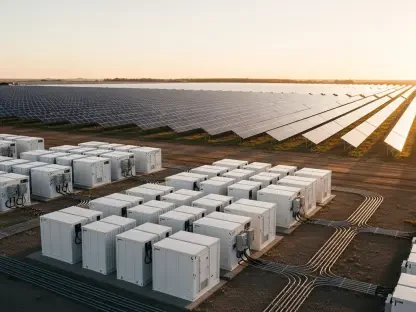
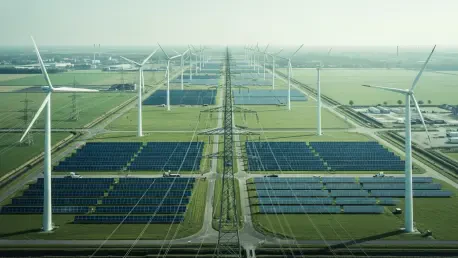
While biomass electricity generation fell by 12 percent in 2024, the grid is undergoing a profound transformation where wind and solar now represent 32 percent and 22 percent of renewable generation respectively. Managing this intermittency is like trying to solve a complex puzzle where the pieces keep moving, requiring a high level of technical precision from grid operators to match supply with demand. The phase-out of biomass, which historically provided a steady and predictable “baseload” feel, means we are relying more heavily on the inherent unpredictability of the weather. This shift demands significant investment in battery storage and smarter distribution systems to maintain the reliability that businesses and residents have come to expect.
Current frameworks now prioritize using bio-based raw materials for manufacturing rather than energy production. How does this shift affect the long-term profitability of the forestry sector, and what steps should domestic producers take to pivot toward these higher-value material applications?
The Sustainability Framework introduced in 2020 has fundamentally changed the game by prioritizing the use of bio-based raw materials for manufacturing instead of simply burning them for power. For the forestry sector, this means a pivot toward high-value applications like construction materials or biochemicals, which can be far more profitable in the long run than low-margin energy pellets. Domestic producers need to embrace this shift by investing in advanced processing technology that extracts the most value from every harvested log. It is a strategic move that treats wood as a precious, finite resource for innovation rather than just a fuel source to be exhausted.
Local pellet production has remained stable at approximately 233,000 tonnes, with half being sent abroad. Why has the domestic production volume been insulated from the sharp decline in national demand, and what are the specific economic benefits of maintaining an export-heavy strategy in this market?
Domestic production has remained remarkably steady at approximately 233,000 metric tonnes, showing almost no change from the previous year’s output of 231,000 tonnes. By sending roughly half of their output abroad, local producers have successfully insulated themselves from the volatility of the Dutch domestic market. This export-heavy strategy provides a crucial financial cushion, allowing these businesses to keep their doors open while the country transitions away from biomass power. It demonstrates a keen sense of market diversification that protects local jobs and ensures regional economic stability despite the falling national demand.
New European sustainability regulations for regulated biomass are expected to take effect in early 2027. What technical hurdles do energy companies face when aligning their supply chains with these stricter rules, and how might these standards permanently alter the feasibility of using pellets for large-scale heat or power?
Looking toward early 2027, the implementation of the European Union’s Renewable Energy Directive III presents a significant technical hurdle for anyone still using regulated biomass. Companies must overhaul their entire supply chain tracking systems to ensure every single pellet meets these rigorous new sustainability standards, which is an administrative and technical burden. These rules are likely to act as a permanent barrier, making large-scale pellet use for heat and power increasingly difficult to justify financially. It forces energy providers to look at the long-term feasibility of their physical assets and decide if the high cost of compliance outweighs the dwindling benefits of the fuel.
What is your forecast for the wood pellet industry?
My forecast for the wood pellet industry in the Netherlands is one of continued contraction in the energy sector but potential growth in specialized material markets. We are unlikely to ever see a return to the peak of 2.7 million tonnes of imports, as the policy landscape has shifted permanently toward wind, solar, and higher-value bio-applications. The industry will have to become leaner and more focused on rigorous sustainability to survive the strict regulatory environment of 2027 and beyond. It is a challenging road ahead, but those who can adapt to the “material-first” philosophy will find a sustainable niche in the new green economy.