
The silent hum of photovoltaic panels across Maharashtra has transformed from a quiet experiment into a massive industrial movement that powers nearly seven hundred thousand homes today. As these mini power plants generate more energy than families can consume, the question of financial compensation has moved to the forefront of economic discussions. For homeowners, the grid is no longer just a source of power but a potential buyer for their green contributions.
Every kilowatt-hour produced now becomes a calculated asset. The state has defined the price for this energy, ensuring that the transition to renewable sources remains sustainable for both the individual producer and the utility provider. This structure provides a clear path forward for those looking to offset their initial installation costs while contributing to regional energy security.
The FY 2026–27 Tariff Ruling Matters Today
The Maharashtra Electricity Regulatory Commission (MERC) finalized the purchase rates for the current 2026–27 fiscal year to provide long-term clarity for a rapidly expanding renewable sector. As the state moves toward aggressive green targets, these rates serve as the bedrock for investment decisions. They determine whether solar installations remain primarily a cost-saving tool or evolve into a secondary revenue stream for the average consumer.
With nearly 687,000 consumers already participating, the balance between incentivizing green energy and protecting the financial health of distribution companies (DISCOMs) has reached a pivotal junction. This ruling ensures that the infrastructure expansion continues without the burden of unpredictable pricing models. By setting these benchmarks, the Commission anchors the expectations of a sector that generates 300 million units of surplus power annually.
Breaking Down the New Rates for Solar and Renewable Sources
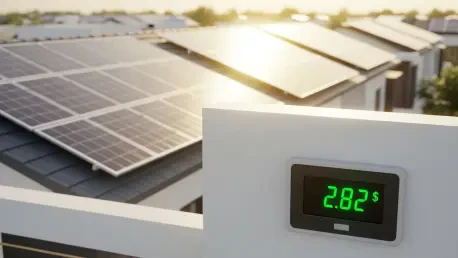
The core of the new mandate is the fixed purchase rate of Rs 2.82 per unit for surplus rooftop solar power. This figure was derived from a careful analysis of existing solar tariffs that recently ranged between Rs 2.82 and Rs 3.10. By standardizing this rate, the Commission provides a predictable return for the excess energy flowing back into the grid from residential and commercial rooftops across the state.
Beyond solar, the Commission established variable charges for other renewable technologies to diversify the energy mix. Biomass projects see a higher compensation of Rs 6.85 per unit, while non-fossil fuel-based co-generation projects are set at Rs 5.29 per unit. These variations reflect the different operational costs associated with these sources, ensuring that a wide variety of renewable energy projects remain financially viable.
The Regulatory Rationale: Why Requests for Higher Rates Were Denied
While many solar advocates campaigned for higher compensation to speed up the payback period for rooftop systems, MERC maintained a firm stance on the Rs 2.82 benchmark. The findings emphasize that rooftop systems are fundamentally designed for self-consumption rather than commercial profit. By rejecting higher rates, the regulator aimed to prevent an unfair increase in procurement costs for DISCOMs like MSEDCL, who noted that market rates dipped as low as Rs 2.24.
This decision ensures that while consumers benefit from lower bills, the broader public is not burdened by inflated utility costs. The Commission focused on creating a fair environment where the price of surplus energy reflects its actual market value. This approach maintained the integrity of the grid while still providing a reasonable incentive for citizens to install solar capacity on their private properties.
Navigating the Framework: How to Calculate Your Surplus Value
To maximize the benefits of the tariff structure, consumers distinguished between the different metering frameworks available in the market. For those utilizing net metering or net billing, the surplus power was credited at the approved Rs 2.82 rate. However, for gross metering projects, the compensation was tied to the average power purchase cost specifically fixed for the duration of the 2027 fiscal year.
The ruling ultimately encouraged residents to adopt smarter consumption habits and consider local storage solutions. By aligning individual production with state-wide grid requirements, the framework provided a clear roadmap for more efficient energy management. This regulatory step ensured that the growth of renewable energy remained balanced with the practical needs of the state’s power infrastructure.