
Christopher Hailstone joins us to discuss the volatility of the palm oil market and its intersection with global energy. With his deep background in utilities and renewable energy, he provides a unique lens on how geopolitical tensions and crude oil spikes ripple through the agricultural sector. Today, we explore the mechanisms driving palm oil futures to year-long highs and the strategic implications for the global biodiesel transition. We also discuss the competitive landscape of vegetable oils and the potential infrastructure shifts required for a greener energy future.
Palm oil futures recently spiked by nearly 5% in a single day, reaching levels not seen in over a year. How do these rapid price swings impact long-term procurement strategies for food manufacturers, and what specific metrics should they monitor to hedge against such volatility?
The suddenness of a 9% intraday surge, pushing prices toward 4,803 ringgit per tonne, creates a frantic environment for food manufacturers relying on stable input costs. To manage this, procurement teams must monitor the spread between crude oil and vegetable oil, as the 4.65% jump on the Bursa Malaysia illustrates how energy markets can hijack agricultural commodities. Manufacturers often feel the sting of these shifts in their margins, forcing them to consider shorter-term contracts to survive a market that can swing by over 200 ringgit in a single session. This volatility is a tangible risk to the shelf price of everyday goods, making the tracking of geopolitical tension as vital as monitoring crop yields.
Crude oil prices have surged past $119 a barrel due to supply cuts and regional tensions. Could you explain the economic threshold where palm oil becomes the preferred feedstock for biodiesel over traditional fuels, and how do rising freight rates alter the immediate demand for Asian shipments?
When crude oil surges past $119 a barrel, we hit a critical economic threshold where palm oil, even at $1,154 per tonne, becomes an incredibly attractive alternative for biodiesel production. The widening conflict involving major global players doesn’t just push up the cost of a barrel; it creates a sense of urgency that ripples through the entire supply chain. As freight rates climb due to Middle East tensions, Asian buyers are increasingly looking for immediate shipments to secure supply before logistics become even more prohibitively expensive. This physical scramble for product, combined with supply cuts from major oil producers, creates a high-pressure environment where demand is fueled as much by energy security as by traditional consumption.
Soy oil prices in both Asian and American markets are climbing alongside palm oil. What are the practical trade-offs for industrial buyers when switching between these competing vegetable oils, and how do these price shifts influence the seasonal planting decisions of farmers?
Industrial buyers face a complex puzzle when soy oil in Chicago climbs 2.34% and Dalian palm oil jumps 6.25%, as these competing oils are often interchangeable in many manufacturing processes. The practical trade-off is a balance between cost-efficiency and supply reliability, especially when the price gap between these commodities narrows or widens unexpectedly. For farmers, these shifts are a loud signal; seeing a 3.16% rise in soy oil futures on the Dalian exchange can dictate whether they dedicate more acreage to soybeans in the coming season. The interconnectedness of these markets means that a shock in the energy sector quickly translates into shifting crop patterns across the globe.
There is renewed interest in implementing a mandatory B50 biodiesel blend to offset high energy costs. What infrastructure challenges do nations face when transitioning to such high palm-oil concentrations, and how might this shift impact the global availability of palm oil for the food sector?
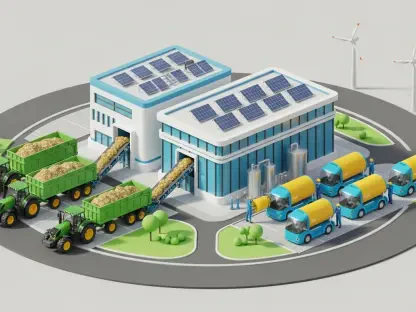
Moving toward a mandatory B50 biodiesel blend, as currently considered by Indonesian officials, presents a monumental infrastructure challenge that requires significant upgrades to refinery capabilities and engine compatibility. This ambitious shift is a direct response to high energy costs, but it threatens to tighten the global availability of palm oil for the food sector, potentially driving prices higher than the current 4,570 ringgit level. When a nation pivots so much of its agricultural output toward the fuel tank, the food-versus-fuel debate becomes a lived reality for global consumers who may see their edible oil supplies pinched. The logistical feat of distributing such high concentrations of palm-based fuel also requires robust storage networks that can handle the specific chemical properties of bio-based blends.
What is your forecast for palm oil prices and the global biodiesel market over the next twelve months?
My forecast for palm oil and the biodiesel market over the next twelve months is one of sustained upward pressure, specifically if crude oil remains entrenched near the $119 mark. We are likely to see palm oil futures test the 4,800 ringgit threshold again as nations push closer to mandates like the B50 to offset volatile energy imports. The global biodiesel market will continue to expand, driven by geopolitical instability and the desire for energy independence, which will keep the vegetable oil markets tightly linked to movements in the Middle East. Consequently, food manufacturers and industrial buyers should prepare for a high-cost environment where competition for every tonne of oil remains fierce between the fuel and food sectors.