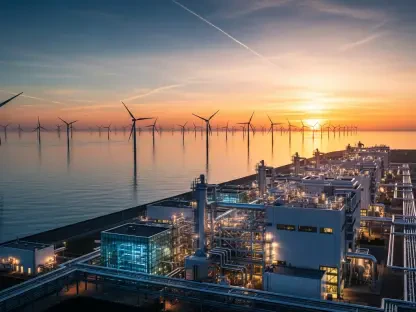

The relentless accumulation of plastic waste in global ecosystems has long demanded a solution that goes beyond traditional sorting and washing. At the Porvoo refinery in Finland, Neste has officially launched a facility that changes the narrative of industrial waste by treating discarded plastic as a high-value resource rather than a burden. This massive investment proves that the transition to a circular economy is no longer a distant theoretical goal but a functioning reality on a massive scale.
A Landmark Achievement in Global Industrial Sustainability
The commissioning of the world’s largest upgrading facility for liquefied waste plastic marks a decisive moment for the energy sector. By integrating this plant into its existing refinery infrastructure, Neste has successfully bridged the gap between experimental technology and commercial viability. This €111 million project demonstrates how heavy industry can pivot away from fossil-based foundations toward more sustainable, carbon-conscious business models.
Shifting chemical recycling from small-scale pilot projects to this industrial operation represents a strategic turning point for global manufacturing. It provides a blueprint for other nations to follow, showing that existing industrial hubs can be repurposed to support a circular economy. The facility acts as a beacon of innovation, proving that substantial capital investment in green technology can yield significant operational results.
From Linear to Circular: The Foundation of Neste’s Innovation
Traditional mechanical recycling has significant limitations, as it often fails to process multi-layer films or heavily contaminated plastics. These materials usually end up in landfills or are lost to incineration, resulting in the permanent loss of valuable hydrocarbons. Neste’s approach addresses this failure by utilizing liquefied waste plastic technology to break down complex materials into their core molecular components.
The Porvoo refinery provides the ideal setting for this technological leap, offering the specialized infrastructure and expertise required to handle complex chemical processes. By leveraging decades of refining experience, the company has created a system where waste is continuously cycled back into the production loop. This transformation turns a linear “take-make-waste” model into a sophisticated circular system that preserves the value of materials indefinitely.
Key Features and Technological Milestones of the Porvoo Facility
The success of the Porvoo facility is rooted in its specific technical capabilities and ambitious production targets. It is not merely a processing plant but a highly specialized refinery that treats chemical waste with the same precision applied to traditional fuels.
Unprecedented Processing Capacity
The facility is engineered to process 150,000 tons of liquefied waste plastic every year, a volume that dwarfs previous efforts in the field. This massive capacity ensures that the plant can handle significant portions of regional plastic waste, effectively diverting it from the environment. Such scale is essential for making chemical recycling a standard part of the global supply chain.
Transformation of Low-Quality Waste
Through advanced chemical processing, the plant converts low-quality pyrolysis oil into high-grade feedstock suitable for the demanding petrochemical industry. This purification process removes contaminants that would otherwise prevent the reuse of plastic in high-performance applications. Consequently, the output meets the stringent requirements of manufacturers who need reliable, high-purity raw materials.
Production of Neste RE™
The facility produces Neste RE™, a “drop-in” solution that allows manufacturers to replace virgin fossil materials without changing their existing production lines. This recycled feedstock maintains the same quality and performance standards as traditional plastics, ensuring safety and durability. It provides a seamless transition for brands looking to improve their sustainability profile without compromising product integrity.
What Sets Neste’s Upgrading Plant Apart
A defining characteristic of this facility is the integration of chemical recycling into existing workflows through a mass balance approach. This allows the refinery to blend recycled content with traditional feedstocks while keeping a precise digital account of the sustainable volumes produced. Such an approach maximizes efficiency by utilizing existing equipment rather than requiring the construction of entirely new, separate supply chains.
The plant also possesses the unique ability to handle “hard-to-recycle” materials, such as those used in complex food packaging or medical devices. Because the chemical process returns the plastic to a molecular state, the resulting material is safe for sensitive applications that are typically off-limits for mechanically recycled plastics. This capability opens up new markets for recycled content that were previously impossible to reach.
Current Operations and the Roadmap to Full Production
Since the completion of the facility at the end of 2025, operations have moved into a critical phase of optimization. The team is currently focused on synchronizing the processing of waste plastic with traditional crude oil refining to ensure a steady, reliable output. This period of refinement is essential for proving that the technology can maintain peak performance under constant industrial stress.
The production ramp-up starting in 2026 is designed to be a controlled, gradual increase to full capacity. This phased approach allows engineers to monitor every aspect of the upgrading process and make real-time adjustments as the volume of feedstock grows. By carefully managing this transition, the facility ensures long-term stability and consistent product quality for its global partners.
Reflection and Broader Impacts
The environmental benefits of this facility are substantial, yet they exist within a complex landscape of logistical and political variables. Balancing the need for rapid industrial change with the realities of global waste management remains a central theme of the project’s evolution.
Reflection
The strengths of the Porvoo facility are reflected in its environmental performance, notably a 70% reduction in fossil resource consumption. Furthermore, the process achieves a 35% decrease in greenhouse gas emissions compared to the traditional incineration of plastic waste. However, the industry still faces significant hurdles regarding European Union regulations and the need for standardized rules on how recycled content is calculated.
Broader Impact
This facility serves as a catalyst for global industry trends by demonstrating that chemical recycling is a commercially viable enterprise at an immense scale. It provides a tangible model for mitigating the environmental impact of plastic waste on a global level, encouraging other regions to invest in similar infrastructure. As more facilities like this come online, the pressure on natural resources will continue to diminish.
Leading the Charge Toward a Post-Fossil Future
The opening of the world’s largest plastic waste upgrading plant has established a new benchmark for industrial-scale innovation. By successfully converting unrecyclable waste into high-quality feedstock, the facility has proven that the petrochemical industry can play a central role in the circular economy. This achievement highlights the importance of bold investments and technical expertise in meeting international sustainability targets during this decade.
Moving forward, the success of such technologies was largely dependent on creating a supportive legislative environment that recognizes the value of chemical recycling. Decision-makers were encouraged to view these facilities as essential components of a modern waste management strategy. For those interested in the future of circular chemistry, exploring the detailed performance metrics and life-cycle assessments of the Porvoo operations provided a clear look at the path toward a more sustainable industrial era.