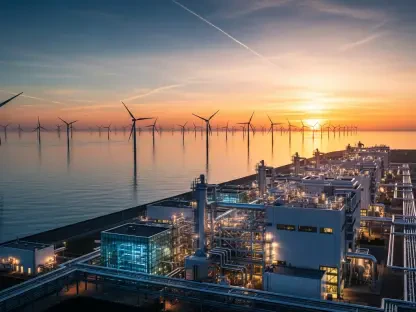

With the world’s second-largest maritime area at its disposal, France is strategically positioning itself to transform its vast coastal potential into a powerhouse of renewable energy, creating a seismic shift in the European offshore wind landscape. The nation has laid out an ambitious roadmap, signaling to the global market that it is no longer a sleeping giant but an active and formidable contender in the race for green energy dominance. This national strategy, backed by significant political will and substantial investment, aims to harness the power of the Atlantic and Mediterranean, unlocking gigawatts of clean electricity and fostering a new era of industrial growth. The sheer scale of this undertaking is attracting intense international interest, as companies and investors seek to understand the opportunities emerging from one of Europe’s most promising new markets. The key question now is not if France will succeed, but how quickly it can scale its operations to meet its monumental goals.
Forging a Path with Policy and Partnerships
At the core of France’s strategy is a set of clear and aggressive national energy targets that serve as the engine for its market expansion, with the government mandating the installation of 18 GW of offshore wind capacity by 2035 and an immense 45 GW by 2050. This long-term vision provides the stability and predictability that the industry requires for large-scale investment. To achieve these figures, the country is advancing a diverse portfolio of projects, encompassing both mature bottom-fixed wind farms in shallower waters and pioneering floating wind technologies for the deeper Mediterranean Sea. Recognizing the complexity and capital-intensive nature of this build-out, France is actively cultivating international partnerships to import expertise and accelerate development. A particularly strong alliance is being forged with Denmark, a global leader in wind energy. By seeking Danish solutions, technology, and services, France aims to leverage decades of experience to streamline its own development process, avoid common pitfalls, and ensure its projects are built to the highest standards of efficiency and reliability.
The Industrial Heartland Powering the Transition
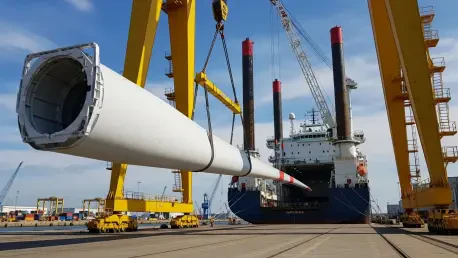
The success of this national ambition hinges on the strength of its regional industrial ecosystems, with the Pays de la Loire region emerging as a critical hub for the entire offshore wind supply chain. Centered around its capital, Nantes, the region leverages a rich heritage in maritime industries, shipbuilding, and advanced manufacturing to provide the foundational support for the burgeoning renewables sector. This industrial prowess is complemented by world-class infrastructure, most notably the Port of Nantes–Saint-Nazaire. This major port has been repurposed into a primary logistics center, adept at handling the massive scale of wind turbine components, from blades and nacelles to foundations and towers. Its strategic location on the Atlantic coast makes it an ideal staging ground for the numerous bottom-fixed projects planned for the region. The synergy between established industrial capacity and purpose-built infrastructure makes Pays de la Loire not just a participant but a key driver of France’s clean energy transition, demonstrating how localized strengths can power a nationwide revolution.
A Blueprint for a Green Future
The comprehensive analysis of France’s offshore wind sector revealed a meticulously crafted strategy poised for significant growth. The investigation showed that the convergence of ambitious political targets, a favorable policy framework, and robust regional industrial capabilities created a powerful magnet for global investment and technological collaboration. It became evident that the strategic partnership with established wind energy nations like Denmark was not merely an option but a cornerstone of France’s plan to rapidly scale its capacity and expertise. The examination of the Pays de la Loire region underscored the critical role that localized supply chains and port infrastructure played in translating national goals into tangible projects. The insights gathered from industry events and policy discussions pointed toward a market defined by both immense opportunity and the practical challenges of navigating complex tender processes and supply chain logistics, solidifying France’s position as a pivotal new frontier in the global energy transition.