
Christopher Hailstone brings decades of specialized experience in energy management and utility infrastructure to the table, offering a seasoned perspective on how global commodity shifts intersect with national security. As the world watches Indonesia’s aggressive pivot toward renewable domestic energy, his insights into grid reliability and the complexities of the palm oil trade provide a crucial roadmap for understanding the future of biofuels. This conversation explores the logistical hurdles of record-breaking export volumes, the fiscal tightrope of the B50 biodiesel mandate, and the delicate balance required to satisfy both international trade partners and domestic energy goals.
The palm oil sector has seen a massive surge, with exports hitting $4.69 billion in early 2026. How do these shipment volumes influence global price stability, and what logistics are necessary to maintain this momentum?
The recent jump in export value, which is up 26.4 percent from the previous year, signals a robust global demand that can actually act as a double-edged sword for price stability. When you move 4.54 million tonnes of product in just two months, you are effectively anchoring the international market, but such a 36.26 percent increase in volume puts immense pressure on shipping corridors and storage facilities. To maintain this momentum, the industry must move beyond simple extraction and focus on high-efficiency midstream processing to ensure that derivatives reach markets like China and India without bottlenecking. We are seeing a 70-month trade surplus streak that depends entirely on this logistical fluidity, requiring a seamless handoff between plantation yields and maritime transport.
With the B50 mandate launching this July to cut fossil fuel use by 4 million kiloliters, how can the industry avoid cannibalizing exports while production remains stagnant?
This is the central challenge because current production levels are essentially plateauing, creating a zero-sum game between domestic tanks and international ships. By diverting a massive portion of crude palm oil to reach that 50 percent blend, the industry faces a structural trade-off where every kiloliter used for local energy is a kiloliter taken away from the $2.40 billion monthly export revenue. To prevent cannibalization, there must be an immediate and aggressive shift toward improving plantation productivity, as simply expanding land is no longer a viable or sustainable path. Without a significant uptick in yield per hectare, the government will be forced to choose between its energy independence goals and the foreign currency reserves generated by the 2.30 million tonnes of monthly exports.
Transitioning to a 50 percent blend could save $2.8 billion in subsidies, but the program relies on export levies. What happens to the funding model if export volumes drop due to higher internal consumption?
The fiscal math behind the B50 program is incredibly tight because the Rp 48 trillion in projected savings is predicated on the program being self-sustaining through export levies. If the domestic mandate successfully absorbs more oil, the resulting drop in export volumes naturally shrinks the very pot of money used to fund the biodiesel transition. This creates a potential sustainability crisis where the program could become a victim of its own success, requiring the government to find alternative funding or risk a deficit in the subsidy pool. We have to watch the trade surplus closely, which widened to $1.27 billion in February, because any significant contraction there could signal that the levy-based funding model is beginning to fray.
Major markets like China, India, and Pakistan depend on consistent supplies. How should trade agreements evolve to prevent supply shocks given the new domestic requirements?
Trade agreements must transition from simple buyer-seller contracts to more integrated strategic partnerships that account for Indonesia’s internal energy mandates. These partner nations are accustomed to a specific flow of crude palm oil derivatives, and any sudden shift to prioritize the B50 mandate could trigger price volatility and supply chain panics across Asia. Negotiators need to emphasize long-term volume guarantees while perhaps offering preferential access to refined products rather than just raw crude. Maintaining these relationships is vital, especially considering that these three nations are the pillars that helped sustain Indonesia’s trade surplus for over five years.
Agricultural yields are currently plateauing despite the push for higher biodiesel percentages. What innovations are necessary to boost productivity, and how is the energy infrastructure being adapted for B50?
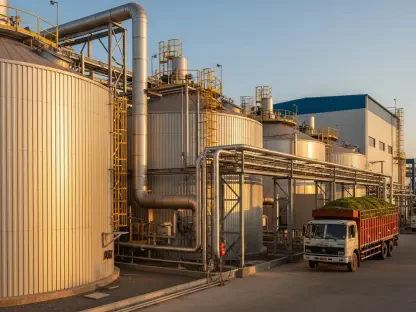
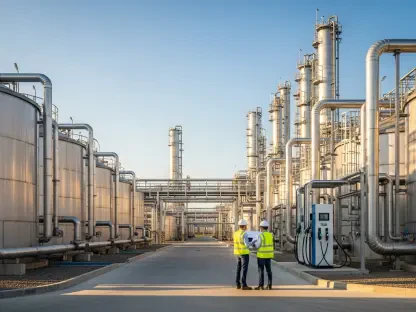
The plateau in production is a flashing red light for the industry, meaning we can no longer rely on the old methods of simple land expansion to meet our targets. Innovations in seed technology and precision agriculture are no longer optional; they are the only way to squeeze more value out of the existing 4.54 million tonnes of output. On the infrastructure side, firms like Pertamina are having to recalibrate their entire delivery system to handle the chemical properties of a 50 percent blend, which can be more corrosive or prone to moisture than standard diesel. It is a massive technical undertaking that requires upgrading storage tanks and distribution pipelines to ensure that the 4 million kiloliters of fossil fuel being replaced don’t result in a degradation of engine performance or grid reliability.
What is your forecast for Indonesia’s palm oil industry?
I foresee a period of intense consolidation and technical refinement where the industry’s success will no longer be measured by how much land is cleared, but by the sophistication of its internal value chain. The transition to B50 will likely cause a temporary tightening of global supplies, which may ironically drive up prices and help offset the lower export volumes through higher value-per-tonne. However, the long-term viability of the sector hinges entirely on whether the $2.8 billion in subsidy savings is reinvested into plantation productivity. If Indonesia can break the production stalemate, it will cement its role as a global green energy leader; if it fails to innovate, it risks losing its competitive edge in the very markets that have fueled its 70-month trade surplus.