
Christopher Hailstone brings a wealth of knowledge in grid security and energy management, offering a unique perspective on the evolving landscape of alternative fuels. In this conversation, we explore how Dimethyl ether (DME) is poised to revolutionize the energy sector as a sustainable, domestic alternative to traditional liquefied petroleum gas. We discuss the technical breakthroughs in catalyst development, the logistical shift toward localized production using coal and biomass, and the engineering of versatile burners that bridge the gap between current infrastructure and future fuel sources.
Dimethyl ether is often described as a seamless “drop-in” replacement for LPG that works with existing infrastructure. How does the chemical similarity between these fuels allow for this, and what safety benchmarks were prioritized during testing at the LPG Equipment Research Centre?
The beauty of Dimethyl ether lies in its physical properties, which closely mirror those of traditional LPG, allowing it to remain a liquid under relatively low pressure. This similarity is why we can use the exact same steel cylinders, rubber hoses, and regulators that are already sitting in millions of kitchens without fear of equipment failure. When the technology was put through its paces at the LPG Equipment Research Centre in Bengaluru, the focus was heavily on the integrity of gaskets and seals to ensure no leakage occurred over prolonged use. We wanted to be absolutely certain that the chemical interaction between the fuel and the existing hardware wouldn’t lead to degradation or safety hazards. Seeing the fuel perform so reliably under these rigorous benchmarks gives us immense confidence that the transition for the end-user will be virtually invisible.
With domestic coal reserves and agricultural residues serving as the primary raw materials, could you explain the step-by-step conversion process and how localized production stabilizes fuel prices?
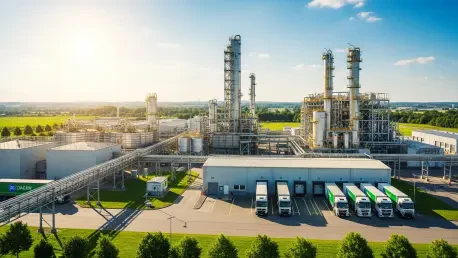
The journey begins with the gasification of dry biomass or coal, where these raw materials are converted into a synthesis gas that eventually becomes methanol. Once we have methanol, it undergoes a dehydration process to transform into DME, a fuel that can be produced right in our own backyard. By shifting production to local facilities, we effectively insulate our energy market from the volatile price swings caused by geopolitical tensions involving the United States, Israel, and Iran. Instead of being at the mercy of global supply chain disruptions that drive up import costs, we can rely on a steady, predictable flow of fuel derived from our own natural resources. This move toward self-reliance is not just about engineering; it is about creating a financial buffer that protects everyday consumers from the unpredictability of international relations.
Developing a patented, indigenous catalyst became a priority after international technology sharing stalled. What were the specific technical hurdles in engineering this catalyst, and how does it improve efficiency compared to previous methods?
When several European nations and China declined to share their catalyst technology, it forced our scientists to innovate from the ground up to close that technical gap. The primary hurdle was creating a material that could facilitate the methanol-to-DME conversion with high selectivity and minimal waste, all while maintaining stability over thousands of operating hours. Our team at the National Chemical Laboratory successfully engineered a patented indigenous catalyst that operates more efficiently than older iterations, ensuring that nearly every drop of methanol is utilized. This breakthrough was a turning point, moving us away from dependence on foreign intellectual property and proving that we could sustain a high-tech energy industry internally. It was a proud moment for the Council of Scientific and Industrial Research to see this catalyst outperform the very technologies we were once denied.
National standards already permit blending DME with LPG for various uses. What are the ideal blending ratios for daily household cooking, and how does the new burner prototype manage these fluctuations?
The Bureau of Indian Standards has already cleared the path for blending, and while DME can be used as a standalone fuel, starting with specific proportions allows for a smoother market entry. For daily cooking, we are looking at various blend ratios that maintain the heating value and flame stability consumers expect when they turn on their stoves. The real engineering triumph is the new burner prototype developed at NCL, which is designed to be fuel-agnostic, meaning it can handle pure LPG, pure DME, or any mixture of the two. It automatically compensates for the different combustion characteristics of these gases, ensuring the flame remains consistent and efficient regardless of the specific blend in the cylinder. This versatility is crucial because it means the public won’t have to worry about the technical details of what is inside their tank; they just get a reliable flame every time.
Scaling technology from a pilot plant to an industrial demonstration facility involves significant hurdles. What are the primary logistical requirements for this expansion, and what is the timeline for commercial production?
Moving from a successful pilot plant to a full-scale industrial demonstration facility requires a massive coordination of chemical engineering and heavy infrastructure. We are currently working with process engineering partners to design systems that can handle the high-volume throughput needed to make DME a viable commercial product. This involves securing consistent supply chains for biomass and coal residues, as well as building out the specialized reactors that house our new indigenous catalyst. While scaling up is a complex endeavor, the current progress suggests that we are laying the groundwork for commercial production to reach the general public in the near future. Our goal is to ensure that by the time this fuel hits the mass market, the entire production and distribution chain is as robust and efficient as the technology itself.
What is your forecast for dimethyl ether?
I believe Dimethyl ether will become a cornerstone of our national energy security, eventually capturing a significant share of the domestic cooking and transport fuel markets. As global oil and gas prices continue to fluctuate due to overseas conflicts, the economic pressure to adopt a cheaper, home-grown alternative like DME will only intensify. Within the next decade, I expect to see widespread adoption of DME blends in households across the country, supported by a network of regional gasification plants that turn waste into clean energy. We are moving toward a future where our energy is no longer a casualty of international politics, but a product of our own innovation and natural abundance. This transition will not only save billions in foreign exchange but also provide a cleaner-burning, more sustainable legacy for the next generation of energy consumers.