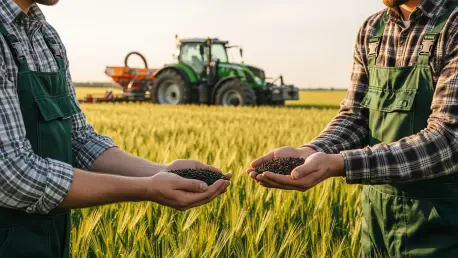

The transformation of Indian agricultural fields from chemical-dependent landscapes into thriving hubs of organic productivity has reached a monumental milestone as sales of bio-based fertilizers surged to 16.72 lakh metric tonnes this February. This rapid evolution, moving away from a previous baseline of just 56,058 metric tonnes, signals a profound shift in how the nation perceives the value of its rural waste. By converting the silent potential of organic refuse into high-grade soil nutrients, the government has begun engineering a more resilient and self-sufficient agricultural economy.
Transforming Agricultural Waste into National Wealth
The strategic repurposing of agricultural residuals is no longer just an environmental goal; it has become a cornerstone of national economic stability. By treating the byproducts of biogas production as a vital resource rather than a disposal burden, India is effectively addressing the twin crises of soil depletion and expensive energy imports. This circular economy model ensures that every quintal of waste returned to the soil as fertilizer contributes to a stronger, more sustainable food supply chain for the future.
Furthermore, this shift helps insulate domestic farmers from the volatile pricing of international synthetic fertilizer markets. As global supply chains face increasing pressure, the ability to generate potent soil enhancers locally provides a necessary buffer. The government is not merely managing waste but is actively building a framework where rural prosperity is directly linked to the health of the land, ensuring that long-term farming remains viable amidst changing climatic conditions and a growing national population.
The GOBARdhan Framework: A Shift toward Sustainable Soil Health
At the heart of this movement is the GOBARdhan initiative, a comprehensive policy designed to catalyze the conversion of organic waste into wealth. This framework prioritizes integrated nutrient management, which seeks to restore the natural biology of the soil that has been eroded by decades of intensive chemical usage. By incentivizing the production of biogas, the program creates a steady stream of nutrient-rich manure that serves as the foundation for a more natural approach to large-scale crop production.
Beyond the immediate environmental benefits, the initiative fosters a cultural change among the farming community regarding soil stewardship. The focus has moved toward long-term fertility and carbon sequestration, which are essential for maintaining productivity in an era of unpredictable weather patterns. By providing a structured path for waste utilization, the policy aligns the interests of energy producers with those of traditional growers, creating a symbiotic relationship that strengthens the rural infrastructure.
Mechanics of the Market Development Assistance Scheme
The Market Development Assistance (MDA) scheme functions as the primary financial driver of this transition, offering a targeted subsidy of ₹1,500 per metric tonne to bridge the price gap between organic and synthetic inputs. This assistance specifically supports high-value products such as Fermented Organic Manure (FOM) and Phosphate-Rich Organic Manure (PROM). To ensure transparency and efficiency, 120 production plants are now fully integrated into the digital Integrated Fertilizer Management System, allowing for real-time tracking of supply and demand across the country.
To ensure these products actually reach the field, the government facilitated 44 strategic partnerships between biogas operators and established fertilizer marketing firms. These agreements leverage existing distribution networks to get organic products into the hands of farmers who were previously reliant on traditional retailers. This logistical alignment, combined with the financial incentive, has effectively democratized access to high-quality organic inputs, making them a competitive and attractive choice for the average grower.
Measuring Impact: Fiscal Data and Scientific Research
With a total government expenditure reaching ₹111.72 crore, the scale of this intervention is supported by a commitment to rigorous scientific oversight. It is not enough to simply sell the product; the government is determined to prove its efficacy through empirical evidence. Consequently, the Indian Council of Agricultural Research (ICAR) has launched a two-year field study to quantify exactly how these fermented manures perform across diverse soil types and varying climatic zones, ensuring that the transition is backed by hard data.
Simultaneously, NITI Aayog is conducting a formal impact evaluation to measure the broader socio-economic changes triggered by the scheme. This analysis looks beyond simple sales figures to examine improvements in farmer income, soil organic carbon levels, and the overall reduction in chemical runoff. By combining fiscal transparency with high-level research, the administration provides a clear roadmap for the continued expansion of the program, ensuring that every rupee spent contributes to a measurable improvement in national agricultural health.
Practical Strategies: Integrating Organic Manure into Farming
Transitioning to organic inputs requires a specialized understanding of application timing and dosage to achieve optimal results. To address this, a massive outreach campaign involving over 15,000 farmer education camps was executed, providing growers with the practical knowledge needed to switch from chemical-heavy systems to integrated nutrient management. These sessions emphasized the importance of local soil testing and the precise calibration of fermented manure application to maximize crop yields while minimizing costs.
Moving forward, the focus shifted toward establishing permanent localized support centers where farmers can receive ongoing technical guidance. The integration of organic manures was treated not as a temporary fix, but as a long-term investment in the biological capital of the farm. By empowering the rural workforce with scientific techniques and a reliable supply of subsidized inputs, the government ensured that the move toward sustainable agriculture became both an environmental necessity and a profitable reality for the individual producer.