
While the global community continues to debate the feasibility of a complete energy transition, India has moved into a phase of rapid industrial execution where the traditional coal-fired power grid is systematically being dismantled in favor of cleaner, smarter alternatives. This shift is not merely a collection of environmental aspirations but a massive logistical and engineering feat currently being realized across the subcontinent. At the heart of this transformation is KPI Green Energy Limited, a company that has successfully pivoted from managing a theoretical pipeline to delivering operational megawatts at an unprecedented scale.
The importance of this transition cannot be overstated, as India seeks to balance its surging industrial demand with strict decarbonization targets. KPI Green has emerged as a critical player by proving that domestic firms can match the speed and complexity required for utility-scale energy projects. By hitting milestones ahead of schedule and securing a robust portfolio, the firm provides a clear blueprint for how the private sector can stabilize the national grid while reducing carbon intensity.
The Accelerated Push Toward a Carbon-Neutral Grid
The landscape of power generation in India is currently undergoing a high-speed transformation that favors agility and execution over traditional slow-moving infrastructure. KPI Green Energy Limited has positioned itself at the center of this change by moving beyond the role of a project developer to become a powerhouse of operational reality. The firm’s ability to secure a massive portfolio and hit commissioning targets early has set a new standard for how energy companies operate in a post-fossil fuel economy.
This momentum is driven by the urgent need to meet national decarbonization goals without compromising industrial growth. By focusing on utility-scale contributions that are ready for immediate grid integration, the company demonstrates that the transition to a carbon-neutral grid is already underway. This operational shift provides the necessary proof of concept that renewable energy can serve as a primary power source rather than just a supplementary one.
Transitioning From Development Potential to Operational Reality
The true value of a renewable energy enterprise is measured by the electricity it actually pumps into the grid, not the capacity it has on paper. As of March, KPI Green has successfully energized 965 MWp of its total 2.17 GWp Independent Power Producer portfolio. This represents a significant leap forward in utility-scale contributions, moving the company from a development-heavy phase into a dominant operational position.
Supporting this rapid growth is a foundation of long-term financial stability. Much of this progress is backed by Power Purchase Agreements, primarily with Gujarat Urja Vikas Nigam Limited. These agreements provide the revenue visibility and cash flow necessary to fund the remaining capacity of the pipeline. By securing these long-term contracts, the firm mitigates market volatility and ensures that its expansion remains sustainable and bankable for years to come.
Strategic Execution Through Hybridization and Early Commissioning
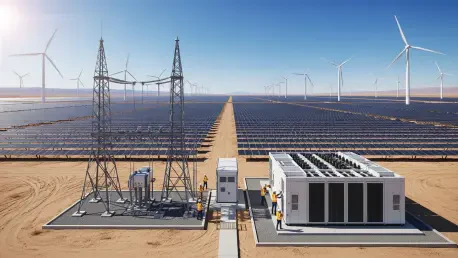
Leadership in the modern energy market is defined by the ability to optimize land use and beat construction deadlines through innovative configurations. KPI Green has utilized a strategy of hybridization, integrating solar and wind assets to create a more consistent and reliable power supply. The early commissioning of its 92.15 MWp hybrid project serves as a prime example of this efficiency, proving that complex energy systems can be delivered well ahead of their original July targets.
Furthermore, the early power injection from the 240 MWp Khavda Solar Park project highlights a sophisticated logistical capability. By reducing the time-to-market for clean electrons, the company maximizes the return on invested capital and strengthens the grid’s resilience. Moving away from solar-only models allows for a better balance of seasonal and diurnal energy variations, making the company’s contribution to the national energy mix far more dependable than traditional intermittent renewables.
Future-Proofing the Grid With Battery Energy Storage Systems
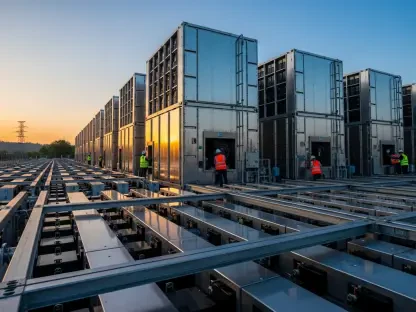
As renewable penetration increases, the industry is reaching a tipping point where generation capacity alone is no longer enough to guarantee stability. Storage has become the critical link required to manage the inherent variability of wind and solar power. Recognizing this, KPI Green, through its subsidiary Sun Drops Energia Limited, committed to a massive 445 MW / 890 MWh Battery Energy Storage Purchase Agreement to ensure that clean energy remains available regardless of weather conditions.
Chairman Dr. Faruk G. Patel has emphasized that the move into storage is a deliberate effort to solve the intermittency issues that have historically plagued green energy. By investing in utility-scale battery systems, the firm is essentially future-proofing the grid. This integration ensures that the power generated during peak production hours can be dispatched during periods of high demand, providing a level of reliability that was once only possible with thermal power plants.
A Roadmap for Sustainable Growth in the Green Energy Market
The trajectory of KPI Green offers several key lessons for stakeholders navigating the shift toward a greener economy. Prioritizing execution speed and revenue visibility through state-backed agreements has proven to be a successful strategy for scaling rapidly. Moreover, the focus on technical synergy—combining solar, wind, and storage into a single operational framework—creates a comprehensive solution that addresses the complex needs of a modern industrial society.
Looking ahead, the disciplined execution of the remaining capacity in the multi-gigawatt pipeline suggests a steady growth path through 2027. The industry began prioritizing integrated energy solutions that moved beyond simple generation to include sophisticated grid management. Companies that successfully adopted this holistic approach paved the way for a more resilient and sustainable energy infrastructure, effectively decoupling economic progress from carbon emissions.