
Christopher Hailstone has extensive experience with energy management, renewable energy, and electricity delivery. As a seasoned utilities expert, he provides critical insights into grid reliability, security, and the global shift toward sustainable power. His perspective is shaped by years of analyzing how policy intersects with technological innovation to bring electricity to the world’s most remote regions.
The transition to solar energy is no longer just a climate goal; it has become a primary driver of global economic equity. In this discussion, we explore the expansion of the International Solar Alliance, the strategic policy frameworks that have propelled India to a leadership position with 136 gigawatts of solar capacity, and the decentralized solutions like rooftop programs and solar irrigation that are changing lives at the grassroots level. We also examine the integration of artificial intelligence in grid management and the financial mechanisms necessary to empower the Global South.
The International Solar Alliance has grown into a coalition of over 120 nations. How does this partnership bridge the gap between developed and emerging economies, and what specific milestones define its success in bringing clean power to underserved communities?
The International Solar Alliance acts as a vital bridge by treating sunlight not just as a resource, but as a democratic public good that should be accessible to every nation, regardless of its wealth. By fostering a “one family” philosophy, we have seen over 120 countries collaborate to shift the center of gravity for energy investment toward emerging markets. One of the most tangible milestones is the solarization of healthcare centers and schools, ensuring that life-saving medical equipment and digital education tools remain functional without the threat of blackouts. We are seeing real-world impacts where solar-powered cold storage is preventing crop waste, directly strengthening food security for thousands of families. These interventions aren’t just technical achievements; they are the foundation for a more inclusive energy transition that prioritizes people-centered development.
India’s solar capacity has reached nearly 136 gigawatts, representing almost half of its renewable energy. What policy frameworks were essential to achieving this scale, and how is domestic manufacturing being strengthened to support future growth?
Reaching the 136-gigawatt mark was the result of a deliberate, step-by-step evolution of policy that moved from broad vision to granular implementation. The initial phase focused on building a robust national framework that signaled long-term commitment to investors, followed by the ambitious target of 500 GW of renewable energy by 2030. To support this, we’ve integrated domestic manufacturing incentives that allow us to build the hardware of the future right here at home, reducing reliance on external supply chains. By empowering citizens through direct participation and providing clear regulatory pathways for large-scale parks, the government has created an environment where solar is the most viable path forward. This sustained policy commitment has effectively de-risked the sector, inviting the massive capital inflows necessary for such an expansive rollout.
Initiatives like solar-powered irrigation and household rooftop programs aim to decentralize energy production. How do these projects impact the daily livelihoods of farmers and rural residents, and what logistical steps are required to scale these solutions nationwide?
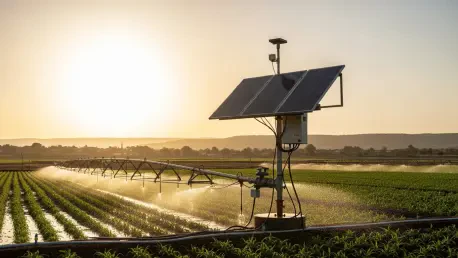
Decentralized programs like PM Surya Ghar and PM-KUSUM are revolutionary because they turn passive consumers into active energy producers, fundamentally changing the economic landscape for rural families. For a farmer, a solar-powered irrigation system means no longer waiting for expensive diesel or erratic grid power; it provides the autonomy to water crops exactly when needed, which significantly boosts yields. On the household level, rooftop solar offers “Muft Bijli” or free electricity, which frees up disposable income that was previously swallowed by utility bills. To scale this nationwide, we have focused on simplifying the installation logistics and providing structured financial support to lower the entry barrier for low-income households. Seeing a village light up for the first time or watching a community thrive because they have reliable power for local businesses is a powerful reminder that energy is the bedrock of prosperity.
Global solar deployment is accelerating, with the focus shifting toward the Global South. What financial mechanisms are being used to unlock this potential, and how can these regions leverage abundant solar resources to leapfrog traditional energy pathways?
The Global South is uniquely positioned to bypass the era of fossil fuels entirely, much like many regions bypassed landline telephones for mobile technology. To unlock this, we are deploying innovative financing platforms like the Global Solar Facility and the Africa Solar Facility, which provide the necessary capital and risk mitigation for projects in developing regions. These mechanisms help attract private sector investment by offering a bridge between high-potential solar markets and the financial institutions looking for sustainable returns. By leveraging their abundant solar resources, these nations can build resilient, localized grids that support sustainable growth without the environmental or economic baggage of coal or gas. The private sector’s role is crucial here, as their expertise and capital are what ultimately turn these high-level policy goals into operational power plants.
Artificial intelligence and digital technologies are becoming central to building smarter energy systems. In what ways will AI optimize grid resilience, and how will the new Green Hydrogen and Storage Challenge foster the innovation needed for energy security?
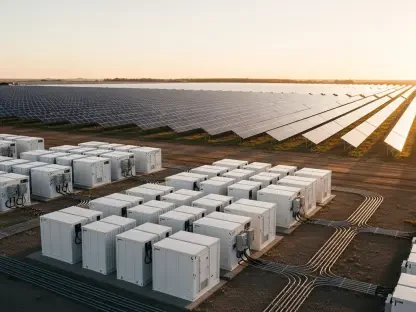
We are entering a sophisticated new phase where AI will serve as the “brain” of our energy systems, predicting demand spikes and managing the intermittent nature of solar power to ensure the grid remains stable. Through the Global Mission on AI for Energy, we are developing algorithms that can optimize power flow in real-time, making our infrastructure far more resilient against failures. Parallel to this, the Green Hydrogen and Storage Start-up Challenge 2026 is designed to find the next generation of pioneers who can solve the long-term storage puzzle. These startups will receive mentoring and access to international markets, ensuring that when the sun goes down, we have the hydrogen and battery technologies ready to keep the world running. The expected outcome is a seamless, high-tech energy ecosystem where technology transfer across borders happens at a much faster pace.
What is your forecast for the global solar energy landscape over the next decade?
While it took twenty-five years for the world to install its first 1,000 gigawatts of solar capacity, my forecast is that we will achieve the next 1,000 gigawatts in a fraction of that time, likely within the next few years. We are moving toward a world where solar energy is the most democratic and abundant public good available, driven by a massive shift in investment toward the Global South. As storage technologies become more affordable and AI-driven grids become the standard, I expect solar to move from being a “supplemental” power source to the undisputed backbone of the global energy system. We will see millions more households becoming self-sufficient energy producers, fundamentally reshaping the relationship between citizens and their utilities. This next decade will be defined by an inclusive, high-speed transition that finally closes the energy access gap for the remaining underserved populations of the world.