
As India navigates the complex challenge of powering its burgeoning economy while simultaneously pursuing ambitious renewable energy targets, a massive transformation of its national power infrastructure is underway. In this critical transition, Adani Energy Solutions Ltd. (AESL) has emerged as a formidable force, orchestrating a multi-billion-dollar expansion aimed at building a more resilient, efficient, and green-centric national grid. The company’s strategy extends beyond simply adding capacity; it involves a comprehensive overhaul of energy transmission, a deep dive into grid digitalization through smart technology, and a steadfast commitment to increasing the share of renewables in power distribution. This holistic approach is rapidly reshaping how energy is moved and managed across the subcontinent, positioning the company at the heart of India’s clean energy revolution. By aggressively scaling its operations and investing in next-generation technologies, AESL is not just supporting but actively accelerating the country’s journey toward a sustainable energy future.
Building the Backbone for Renewable Power
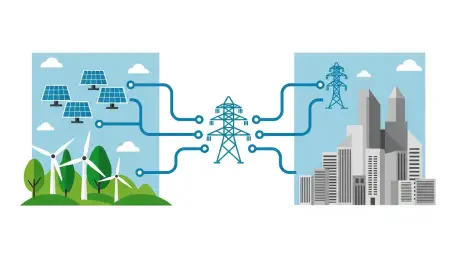
A robust and expansive transmission network is the essential skeleton for any modern power system, and AESL is reinforcing this backbone at an unprecedented rate to accommodate the massive influx of renewable energy. The company has dramatically scaled its ambitions, with its project pipeline recently doubling from Rs 300 billion to an impressive Rs 600 billion. This financial commitment is translating into tangible assets, with its transmission network now stretching across 26,705 circuit kilometers and boasting a transformation capacity of 97,236 MVA. A landmark achievement in this expansion is the securing of the Rs 250 billion Bhadla–Fatehpur transmission project. This monumental undertaking is specifically designed to evacuate 6,000 MW of renewable power from solar and wind farms, directly addressing the critical challenge of connecting remote clean energy sources to urban demand centers. Through such strategic projects, AESL has solidified its position as the nation’s largest private transmission utility, commanding a significant 28% national market share and playing an indispensable role in ensuring that green electrons can travel wherever they are needed.
Digitalizing the Grid for a Smarter Future
Beyond the physical expansion of wires and towers, the future of the energy grid lies in its intelligence and responsiveness, a domain where AESL is making significant technological strides. The company is at the forefront of a nationwide smart metering initiative, deploying an astonishing 25,000 to 27,000 smart meters daily. Having already installed 7.4 million units, it is on a clear path to surpass its target of 10 million units by March 2026. This rapid digitalization is not merely a modernization effort; it is a fundamental requirement for managing a grid with a high penetration of variable renewable energy sources like solar and wind. Smart meters provide real-time data on energy consumption and grid stability, enabling utilities to balance supply and demand with far greater precision. This level of granular control is crucial for preventing blackouts and ensuring efficiency, transforming the traditional one-way power grid into a dynamic, two-way system capable of integrating intermittent renewables seamlessly and empowering consumers with greater control over their energy usage.
The company’s comprehensive strategy was further illuminated by the performance of its distribution arm and its forward-thinking sustainability initiatives. Its Mumbai-based distribution subsidiary, recognized as a top-ranked utility, successfully reduced technical and commercial losses while setting an ambitious goal to elevate its renewable energy supply share from 45% to 70% by 2030. This commitment extended to pioneering low-carbon solutions, including an innovative energy-efficient district cooling project aimed at reducing the carbon footprint of urban areas. Furthermore, AESL actively supported industrial partners in their transition to cleaner power sources, reinforcing its role as an enabler of decarbonization across the economy. These efforts, combined with internal sustainability goals like achieving zero waste to landfill and eliminating single-use plastics, demonstrated a holistic vision that connected large-scale infrastructure development with tangible environmental and consumer benefits.