
The global energy map is undergoing a radical reconfiguration as industries seek to decouple their heavy power requirements from the traditional carbon-intensive infrastructure. Green ammonia has emerged as the most viable candidate for this role, acting not just as a chemical precursor for fertilizers but as a high-density liquid battery for the planet. By converting volatile wind and solar energy into a stable, transportable liquid, this technology solves the primary hurdle of renewable energy: storage over long distances. As of 2026, the shift from theoretical pilot programs to multi-billion-dollar industrial realities marks the beginning of a new commodity era.
The Fundamentals of Green Ammonia and its Role in Decarbonization
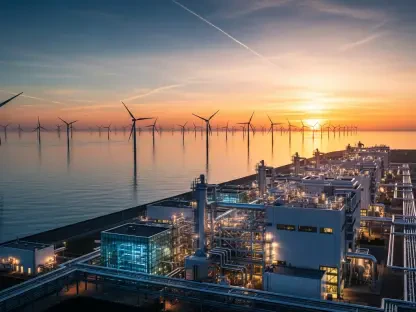
Green ammonia represents a fundamental shift in chemical engineering, replacing the fossil-fuel-reliant steam methane reforming process with water electrolysis. In this system, renewable electricity splits water into oxygen and green hydrogen, which is then combined with nitrogen harvested from the atmosphere. This molecular synthesis creates a carbon-free fuel that can be handled using existing global port infrastructure, making it a “drop-in” solution for a world that cannot wait for a entirely new hydrogen pipeline network.
The unique value proposition of this technology lies in its energy density compared to gaseous hydrogen. While hydrogen requires extreme cooling or high-pressure tanks, ammonia liquefies at manageable temperatures, allowing for efficient bulk transport across oceans. This capability is what enables resource-rich nations to export their sunlight and wind to energy-scarce industrial hubs, effectively creating a bridge between local renewable production and global energy demand.
Core Components of the Integrated Green Ammonia Value Chain
Domestic Manufacturing and Electrolyzer Technology
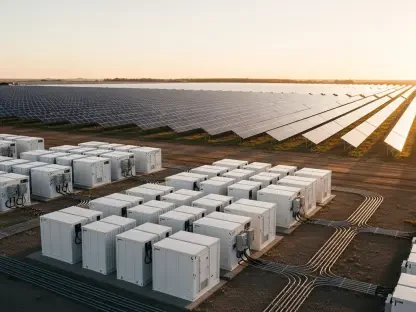
A robust supply chain is no longer just about the chemical output; it is defined by the indigenization of the hardware that creates it. By building internal “gigafactories” to produce solar modules and battery energy storage systems, developers can insulate themselves from global price volatility and supply bottlenecks. This vertical integration ensures that every component, from the electrolyzer membrane to the power inverter, is optimized for the specific environmental conditions of the production site, driving down the levelized cost of hydrogen.
Furthermore, the advancement of electrolyzer technology—specifically the shift toward more efficient proton exchange membranes and alkaline pressurized systems—allows for more flexible operations. Unlike traditional Haber-Bosch plants that require constant, steady inputs, modern green ammonia facilities are designed to ramp up and down in synchronization with the intermittent nature of renewable grids. This technological agility is the “secret sauce” that makes green ammonia economically competitive with its “gray” or fossil-based counterparts.
Strategic Off-take Agreements and Export Logistics
The financial backbone of this emerging sector is built upon long-term Supply and Purchase Agreements (SPAs). These are not merely contracts but foundational financial instruments that guarantee demand for fifteen to twenty years, providing the bankability required for massive capital investments. Such agreements, like the landmark deals seen between Indian producers and South Korean corporations, signal to the global market that green ammonia is no longer a niche experiment but a core component of national energy security strategies.
Recent Trends in Large-Scale Green Energy Partnerships
The industry is gravitating toward a “pit-to-port” ecosystem where a single entity or a tight consortium controls the entire value chain. This strategy eliminates the “middleman” costs and technical mismatches that often plague decentralized projects. By aligning the interests of the renewable energy provider, the chemical manufacturer, and the international shipping firm, these partnerships create a seamless flow of energy from a desert solar farm to a distant industrial furnace.
However, the complexity of these 15-year binding agreements reflects a broader trend in contract innovation. These deals now include sophisticated mechanisms for carbon credit accounting and price indexing based on the evolving global carbon tax landscape. This evolution in commercial structuring is just as critical as the physical engineering, as it provides the stability needed for the sustainable fuel sector to scale to a gigawatt level of production.
Industrial Applications and Sector-Specific Implementations
The most immediate impact of green ammonia is felt in the maritime sector, where it serves as a primary carbon-free fuel to meet increasingly stringent international emission standards. Shipping vessels, which account for a significant portion of global emissions, are being retrofitted with dual-fuel engines capable of burning ammonia. This transition is far more practical than battery-electric shipping, which is limited by the weight and volume of current battery technology for long-haul transoceanic routes.
In the power sector, ammonia co-firing is gaining traction as a method to reduce the carbon footprint of existing thermal power plants. By mixing green ammonia with traditional fuels, utility companies can meet decarbonization targets without stranding their existing assets. Simultaneously, the fertilizer industry is returning to its roots but with a sustainable twist, ensuring that the global food supply chain is no longer tethered to the price and availability of natural gas.
Technical and Economic Obstacles to Widespread Adoption
Despite the rapid progress, the sector must overcome significant efficiency losses inherent in the double-conversion process—converting electricity to hydrogen, and then hydrogen to ammonia. Each step sheds energy, meaning that green ammonia requires a massive surplus of renewable generation to be cost-effective. Moreover, while ammonia is a familiar industrial chemical, its toxicity poses safety challenges when handled in high volumes near populated port areas or as a fuel in civilian maritime environments.
Regulatory fragmentation also remains a hurdle. Without a harmonized global standard for what constitutes “green” certification, there is a risk of market confusion and “greenwashing.” Investors and off-takers require a transparent, verifiable chain of custody to justify the premium price of green ammonia over fossil-based alternatives. Solving these safety and certification issues is essential for moving the technology from specialized industrial zones into the mainstream global economy.
The Future Landscape of Sustainable Fuel Networks
The trajectory for the coming years points toward the commoditization of green ammonia, with regions possessing high solar irradiance and wind speeds, such as India, becoming the “new oil” exporters. Future developments will likely focus on solid-state ammonia synthesis and advanced catalysts that operate at lower temperatures and pressures. These innovations could further decouple production from the massive, centralized Haber-Bosch plants of the past, allowing for modular, distributed ammonia production closer to the point of use.
Synthesis of Findings and Industry Outlook
The maturation of green ammonia supply chains was characterized by a move toward total vertical integration and long-term commercial certainty. The transition proved that the technical challenges of hydrogen storage could be bypassed by utilizing a century-old chemical process reimagined for a zero-carbon era. Stakeholders recognized that the value of these projects lay not just in the fuel itself, but in the creation of a resilient, self-sufficient manufacturing base that reduced reliance on external supply chains. Moving forward, the industry must prioritize the standardization of safety protocols and the refinement of electrolyzer efficiency to ensure that green ammonia remains the cornerstone of the global energy transition.