
Christopher Hailstone is a seasoned authority in energy management and utility grid reliability, bringing years of expertise in navigating the complexities of renewable energy transitions. As a key advisor on grid security, he has witnessed firsthand the evolution of decentralized fuel sources and their critical role in stabilizing national energy infrastructures. In this discussion, we explore the strategic financial maneuvers behind India’s biofuel surge, the logistical mastery required to manage hundreds of simultaneous clean energy projects, and the shifting geopolitical landscape that makes domestic organic waste a vital national asset. Our conversation covers the rise of large-scale biogas complexes and the technological leap toward sustainable aviation fuels that will define the next decade of green innovation.
How does securing INR 500 million in mezzanine funding specifically alter the development timeline for nationwide compressed biogas infrastructure?
The injection of INR 500 million in mezzanine funding serves as a powerful catalyst for the Arya platform, allowing for a level of financial agility that traditional senior debt often lacks. This capital structure is essential for bridging the gap between early-stage development and the massive one-billion-dollar capital outlay we are currently managing for our broader project pipeline. By securing these funds from institutional players like Axis AMC, we can significantly compress the construction timelines for our joint ventures with public sector giants like Indian Oil Corporation and Bharat Petroleum. It ensures that we aren’t just planning for the future but actively building a nationwide network of plants that can immediately begin to lower greenhouse gas emissions. This type of specialized credit is exactly what is needed to move from fragmented projects to a cohesive, scalable infrastructure that meets the demands of a growing economy.
Global energy markets are currently facing significant price hikes and supply disruptions due to geopolitical instability in West Asia. How does shifting to domestic organic feedstock for fuel production insulate the economy from these shocks?
India’s position as a net importer of natural gas has historically left our economy vulnerable to the tremors of global conflict, particularly the volatility currently seen in West Asia. When trade routes are disrupted, the common citizen feels the immediate impact through rationing and sudden price hikes on their daily LPG cylinders. Shifting to domestic organic feedstock creates a “structural insulation” because the raw materials—our agricultural and municipal waste—are sourced right here on Indian soil and are not subject to international tariffs or blockades. Biomethane and compressed biogas are strategic energy security assets because their pricing remains steady, unbothered by the geopolitical storms that usually drive up the cost of imported fossil fuels. This transition essentially transforms our waste into a reliable shield that protects the national economy from external energy shocks while fostering local employment.
Managing a pipeline of over 200 biogas projects across various geographies requires significant technical and organizational coordination. What are the primary logistical challenges of executing these large-scale facilities simultaneously?
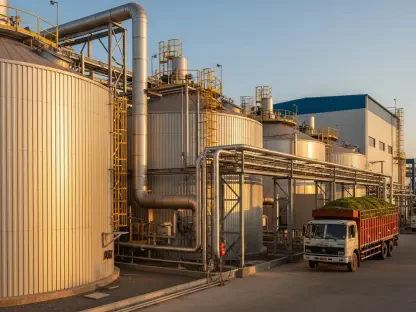
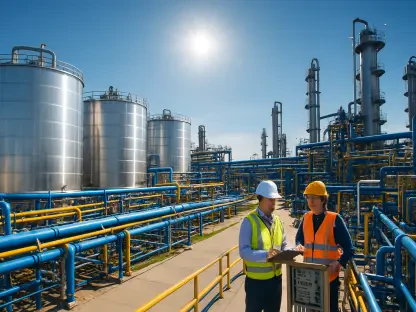
Orchestrating the development of over 200 projects simultaneously is a massive logistical puzzle that requires the coordination of an 800-member team of experts across design, engineering, and operations. We aren’t just building plants; we are integrating complex software and advanced engineering across incredibly diverse Indian landscapes, from urban centers to rural agricultural hubs. Maintaining high speed is vital—as we saw with our Barabanki facility, which became the world’s fastest-executed plant—but it cannot come at the cost of the quality standards expected by our public sector partners. The challenge lies in harmonizing the supply chains for multiple feedstocks while ensuring each facility is optimized for its specific environment. By leveraging our full-stack capabilities, we can replicate the success of landmark projects like the Indore municipal solid waste plant across every corner of the country without losing operational rhythm.
Large-scale complexes, like the upcoming 70-ton-per-day facility in Kakinada, represent a significant shift toward massive biogas output. Beyond compressed biogas, how are advancements in technology enabling the move into other alternative fuels like Sustainable Aviation Fuel?
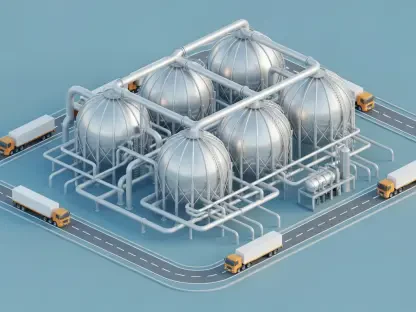
The scale we are achieving at the Kakinada complex, which is set to produce between 67 and 70 tons of compressed biogas per day, is the foundation for a much broader technological evolution into diverse biofuels. This massive output provides the consistent volume of biomethane necessary to begin exploring the production of Sustainable Aviation Fuel, which is a critical frontier for global decarbonization. As we refine our production processes and expand our capacity, we are looking at how these existing plants can serve as the primary feed for high-performance fuels that can power commercial jets. The integration process involves leveraging our deep engineering expertise to pivot from road-based fuels to aviation alternatives, ensuring our infrastructure remains future-proof. This transition is not just about changing the end product; it is about creating an integrated energy ecosystem where waste can power everything from a local tractor to an international flight.
Public sector partnerships are essential for decarbonization, yet they involve complex regulatory and operational frameworks. What are the core benefits of forming joint ventures with major oil marketing firms?
Forming joint ventures with major oil marketing companies like IOCL and BPCL is a strategic masterstroke that provides the necessary muscle to overcome the traditional barriers to entry for clean energy startups. As the only Indian company to hold joint ventures with both of these giants, we gain access to established distribution networks and the institutional credibility needed to scale at an unprecedented rate. These collaborations allow us to navigate complex regulatory landscapes and land-acquisition challenges with a level of support that a standalone private entity could never achieve. By aligning our technological innovation with their massive operational reach, we create a symbiotic relationship that accelerates the decarbonization of India’s energy grid. It effectively turns what were once seen as niche green experiments into massive, state-backed infrastructure projects that define the nation’s energy future.
What is your forecast for the compressed biogas industry in India over the next decade?
Over the next decade, I expect the compressed biogas industry to transition from an emerging sector to a primary pillar of India’s national energy independence strategy. We will see a shift where massive complexes, similar to our Kakinada project, become the industry standard rather than the exception, supported by a robust network of over 200 operational facilities nationwide. The integration of biogas with other clean technologies, such as Sustainable Aviation Fuel, will likely position India as a global leader in biofuel innovation and a net exporter of green technology. Ultimately, as institutional recognition grows and flexible funding models like mezzanine debt become more common, the financial barriers will fall, allowing us to fully harness domestic organic waste to power the nation’s growth. I believe we are standing on the precipice of a total energy redesign where waste is no longer a liability but the very fuel that drives our industrial and economic progress.