
The sheer magnitude of the global shift toward electric mobility is best measured not in the number of cars on the road, but in the millions of tonnes of raw materials required to power them. Recent projections indicate that by 2036, the demand for battery materials will reach a staggering 22.2 million tonnes annually. This massive volume represents a tectonic shift in industrial requirements, signaling that the era of the internal combustion engine is rapidly receding into the rearview mirror.
The 22-Million-Tonne Milestone: A Paradigm Shift in Automotive Logistics
Crossing the threshold of 22 million tonnes marks the definitive end of the “early adopter” phase of electrification. This volume of material demand necessitates a total overhaul of global supply chains, moving away from the fluid logistics of oil and toward the rigid, mineral-heavy requirements of solid-state and liquid-electrolyte storage. The scale of this transformation suggests a permanent decoupling from traditional automotive manufacturing processes that have defined the last century.
As the industry matures, the logistical challenge shifts from simply sourcing materials to managing a high-velocity flow of minerals across borders. This shift is not merely an incremental change; it is a fundamental reorganization of how value is created in the automotive sector. Manufacturers who once focused on engine displacement and transmission efficiency are now becoming experts in chemical sourcing and mineral processing to ensure their production lines remain active.
Beyond Passenger Cars: The Diversifying Landscape of Electrification
While the initial surge in battery demand was driven by consumer sedans and SUVs, the next decade will see a broader diversification across the transportation sector. Heavy-duty trucks, long-haul freight, and public transit buses are increasingly adopting electric powertrains to meet stringent urban emission regulations and global climate targets. Each of these vehicle classes brings a unique set of requirements, from the high-cycle life needed for city buses to the extreme energy density required for freight.
Furthermore, the rise of micro-EVs in dense urban environments and light commercial vehicles for last-mile delivery is creating a fragmented but massive secondary market for battery materials. These diverse vehicle profiles dictate varied material needs, ensuring that no single battery chemistry will dominate every niche. This diversification acts as a hedge for the industry, allowing for different material streams to be optimized based on the specific duty cycle of the vehicle in question.
Strategic Divergence: Comparing Regional Material Preferences and Chemistry
A fascinating split has emerged between Eastern and Western manufacturing philosophies regarding battery chemistry. China has solidified its position as a global leader by championing Lithium Iron Phosphate (LFP) technology, which offers a lower cost point and greater thermal stability. This strategic choice allowed the Chinese market to scale rapidly, with electric vehicles capturing more than half of new car sales by 2024, setting a pricing benchmark that the rest of the world is now forced to acknowledge.
In contrast, Western markets in Europe and North America have historically leaned toward high-performance Nickel Manganese Cobalt (NMC) and Nickel Cobalt Aluminum (NCA) chemistries to satisfy consumer demand for longer range. However, economic realities are sparking a pivot. To remain competitive and reduce the retail price of entry-level EVs, Western automakers are increasingly integrating LFP batteries into their fleets, bridging the gap between high-end performance and mass-market affordability.
Breakthroughs in Material Innovation: Cathodes, Anodes, and Enclosures
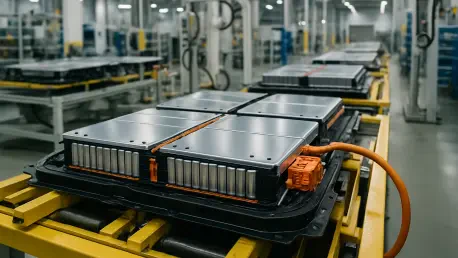
Innovation at the cellular level remains the primary engine of the EV revolution, with over 70% of a battery pack’s material demand concentrated within the cells themselves. To mitigate the high costs and ethical concerns surrounding cobalt, cathode chemistry is rapidly evolving toward “high-nickel” formulations. These advancements allow for higher energy density and longer driving ranges, though they require sophisticated thermal management systems to maintain safety and longevity over the vehicle’s lifespan.
On the anode side of the equation, the long-standing dominance of graphite is being challenged by the emergence of silicon-based additives. Silicon offers a theoretical capacity far beyond that of traditional graphite, promising faster charging times and more compact battery footprints. Beyond the chemistry, the physical structure of the battery is also changing; manufacturers are moving away from heavy steel enclosures toward lightweight polymer composites and glass fiber-reinforced plastics to shave precious kilograms off the total vehicle weight.
Navigating the Volatility: Expert Insights on Supply Chain Stability
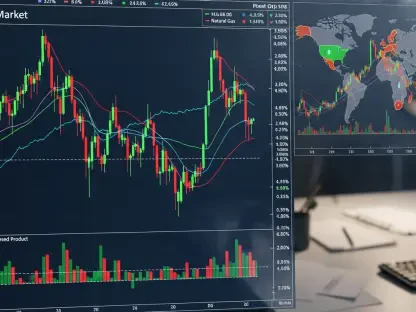
The path to 2036 is paved with the volatility of raw material pricing, particularly concerning the “big two” of battery minerals: lithium and cobalt. Sharp fluctuations in the market prices of these commodities can derail production schedules and erase profit margins overnight. Understanding these market dynamics is no longer optional for automotive executives; it is a core competency required to navigate a landscape where supply often struggles to keep pace with an insatiable global demand.
To ensure stability, the industry is looking toward long-term offtake agreements and direct investments in mining operations to secure their pipelines. The focus is shifting toward “material management” as a competitive advantage, where the ability to recycle and recover minerals from end-of-life batteries becomes just as important as extracting them from the ground. This circular approach is becoming a necessity as the gap between available supply and projected demand continues to tighten in a high-growth environment.
Frameworks for Success in the Future Battery Market
Achieving success in this high-stakes environment required a delicate balance between energy capacity, cycle life, and cost-effectiveness. Manufacturers had to look beyond the cell chemistry and consider the entire lifecycle of the battery, from the initial mineral extraction to the final repurposing of the pack for stationary storage. The integration of advanced lightweighting strategies, such as replacing aluminum components with reinforced composites, provided the marginal gains necessary to extend range without adding prohibitive costs.
Forward-thinking organizations prioritized the diversification of their supply chains to avoid over-reliance on a single region or mineral. By adopting flexible manufacturing platforms capable of utilizing both LFP and high-nickel chemistries, they successfully insulated themselves against localized supply shocks. Ultimately, the winners in this race were those who viewed battery materials not as a simple commodity, but as a strategic asset that required constant innovation and rigorous management to sustain long-term growth.