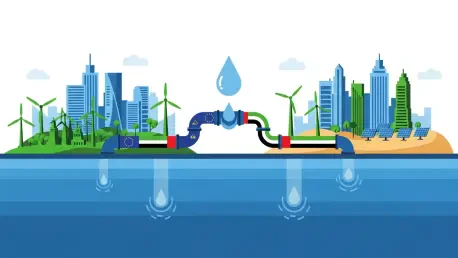

In a decisive move to address one of the most pressing challenges of climate change, the European Union and the United Arab Emirates have signaled a powerful new era of cooperation, placing water security at the very heart of the global green transition. The recent 2nd EU–GCC Finance & Investment Forum in Abu Dhabi served as the stage for this landmark commitment, where leaders established a unified strategy to channel joint investments into sustainable water infrastructure. This collaboration moves beyond traditional financial agreements, creating a strategic partnership aimed at leveraging shared expertise and resources to build climate resilience. By focusing intensely on the water sector, both entities acknowledge its fundamental role not just in sustainable development but as a critical enabler for progress in renewable energy, food security, and overall environmental health, setting a new precedent for international climate action.
Forging a Strategic Alliance on Water Security
Defining a Collaborative Framework
The forum in Abu Dhabi crystallized a shared vision for a sustainable future, culminating in a clear and unified strategy for enhanced cooperation between the European Union and the Gulf Cooperation Council, with a specific focus on the United an Arab Emirates. At the core of the discussions was the mutual exploration of joint financing and investment opportunities designed to accelerate the green transition, with a pronounced emphasis on the water sector as a cornerstone of sustainable development and climate resilience. High-level dialogues featuring EU Commissioner Dubravka Šuica, EIB Vice-President Ioannis Tsakiris, and UAE officials like H.E. Abdulla Balalaa moved beyond diplomatic pleasantries to outline a concrete, collaborative path forward. The parties articulated a firm intention to jointly invest in and innovate across the entire spectrum of the water value chain, signaling a comprehensive and long-term commitment to tackling one of the most significant challenges posed by climate change.
A dominant theme that resonated throughout the high-level discussions was the unwavering mutual commitment to advancing water security through tangible, impactful action. This collaborative spirit is set to manifest in a broad range of initiatives, including the ambitious modernization of existing water supply and sanitation infrastructure to meet the demands of growing populations and a changing climate. Furthermore, the partnership will prioritize the advancement of cutting-edge desalination and wastewater treatment technologies, seeking to enhance efficiency and reduce the environmental footprint of these critical processes. A key pillar of this cooperation is the promotion of greater water-use efficiency across all sectors, from agriculture to industry. This focused effort on water is strategically situated within a much broader context of deepening strategic partnerships on climate finance, renewable energy, hydrogen, and the development of robust clean-tech supply chains, all guided by influential initiatives like the Pact for the Mediterranean and the EU Water Resilience Strategy.
A Synergy of Expertise and Resources
An overarching consensus that emerged from the forum was the recognition that combining the European Union’s vast technological expertise and financial resources with the UAE’s sophisticated, integrated approach to the “water-energy-climate-nexus” can create a powerful and unprecedented synergy for sustainable growth. This partnership is designed to generate benefits that extend far beyond their respective borders, fostering a ripple effect of positive change across the wider Gulf and Mediterranean regions. The EU brings to the table decades of experience in developing and implementing stringent environmental regulations, advanced water management technologies, and innovative financing models through institutions like the European Investment Bank. This established framework provides a solid foundation for deploying capital effectively and ensuring that projects meet the highest standards of sustainability and long-term viability, de-risking investments for all stakeholders involved in these complex, large-scale projects.
In parallel, the United Arab Emirates contributes its own formidable strengths, including significant investment capital and a proven track record of pioneering large-scale infrastructure projects in challenging arid environments. The nation’s integrated strategy for managing the interconnected challenges of water, energy, and climate offers a valuable, holistic model for sustainable development that is particularly relevant for water-scarce regions. By pooling these complementary capabilities, the EU and UAE aim to co-develop and deploy next-generation solutions that are not only technologically advanced but also commercially scalable and adaptable to diverse local contexts. This synergy is expected to accelerate the transition to a green economy, demonstrating a powerful new model for international cooperation that aligns economic development directly with ambitious climate goals, ultimately creating a replicable framework for other nations to follow in their own sustainability journeys.
Charting a Course for a Resilient Future
Mobilizing for Global Impact
The strategic dialogue in Abu Dhabi also placed significant emphasis on leveraging this bilateral partnership to influence future global milestones, particularly the upcoming 2026 United Nations Water Conference, which will be co-hosted by the UAE. This high-profile event was identified by all parties as a critical and timely opportunity to showcase the tangible results of their collaboration and to mobilize a broader coalition of international support for water-centric climate action. By presenting a united front and a portfolio of successful joint investment projects, the EU and UAE aim to set a powerful example for the global community. The conference will serve as a platform not only to share best practices and technological innovations but also to advocate for the greater integration of water security into international climate finance frameworks. This forward-looking approach transforms the partnership from a regional initiative into a potential catalyst for systemic change on a global scale.
The 2026 conference represents more than just a reporting milestone; it is envisioned as a pivotal moment to translate the shared ambitions forged at the forum into a new wave of tangible, impactful initiatives. The collaboration is geared toward using this global stage to attract further public and private sector investment into the water sector, addressing a critical funding gap that has long hindered progress in many parts of the world. The leadership role of the UAE as a co-host, combined with the political and financial weight of the EU, creates a unique dynamic capable of driving the international agenda. The goal is to build momentum for a more water-secure and climate-resilient future, ensuring that the commitments made are not merely aspirational but are backed by concrete financial mechanisms and a clear implementation roadmap, thereby solidifying water as a top priority in the global fight against climate change for years to come.
A Foundation for Enduring Collaboration
The forum successfully solidified the commitment of all participating parties to work collaboratively and persistently toward their shared climate and development goals. The intensive discussions and strategic alignments achieved in Abu Dhabi went beyond mere declarations of intent, establishing a concrete foundation for joint action and long-term investment. This consensus marked a significant maturation of the EU-GCC relationship, elevating it to a strategic partnership focused on tackling one of the most complex and critical challenges of the modern era. The agreements reached provided a clear roadmap for mobilizing joint investments and channeling them into projects designed to deliver a more water-secure and climate-resilient future. The event concluded with a palpable sense of shared purpose, having successfully transformed high-level dialogue into a tangible and actionable agenda for the years ahead.