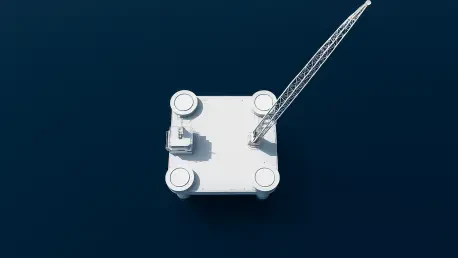

The quest for American energy independence has moved from the plains of Texas to the deep waters of the Atlantic, where a steel titan now commands the horizon. Stretching 472 feet long and featuring a crane boom capable of hoisting 2,200 tons, the first American-made wind turbine installation vessel has finally reached the Virginia coast. This massive “jack-up” ship was specifically engineered to navigate the complexities of federal maritime law while facilitating a landmark wind farm project twenty-seven miles out at sea. By serving as the primary tool for erecting turbines, the vessel acts as a critical test case for whether the United States can successfully establish a domestic supply chain for offshore renewables. The emergence of this vessel marks a major turning point for the nation’s energy infrastructure, signaling a shift away from reliance on foreign expertise and toward a self-sustaining maritime economy that supports clean energy goals through 2028 and beyond.
Engineering Stability and Legal Necessity
Overcoming Oceanic Volatility: Jack-Up Technology
To install turbine components as large as residential houses onto narrow towers hundreds of feet in the air, a vessel must remain perfectly stationary. Standard ship hulls are subject to constant wave motion, which is magnified at the tip of a crane boom, making precision lifting impossible. Even a slight sway of a few inches at sea level can translate into a dangerous multi-foot swing at the top of a three-hundred-foot tower. The solution is the jack-up design, featuring four retractable steel legs that descend to the seafloor and lift the entire hull out of the water. This transformation from a floating ship to a fixed platform creates a stable environment, allowing heavy lifts to be performed with the same accuracy as if the crane were on solid ground. This engineering feat is essential for handling the new generation of massive turbine blades and nacelles, ensuring that the components are seated with millimeter-level precision regardless of Atlantic swells and tidal currents.
The Legal Mandate: Navigating the Jones Act
The primary driver for this multi-billion dollar investment is the Jones Act, a century-old law requiring that cargo transported between domestic points be carried by American-built and crewed ships. Because the seabed of the Outer Continental Shelf is legally considered a U.S. point, developers cannot use the existing global fleet of foreign-built installation vessels to move components from American ports to offshore sites. As wind turbines have grown in size and weight, surpassing the ten-megawatt threshold, the previous workaround of using smaller barges to shuttle parts to foreign ships has become too dangerous and inefficient. This protectionist mandate forced the industry to innovate within its own borders, leading to the construction of a vessel that is uniquely broad to accommodate its massive lifting legs. It is more than just a piece of equipment; it is a forced engineering evolution designed to comply with domestic regulations while meeting the extreme mechanical demands of modern clean energy.
Construction Milestones and Operational Realities
Operational Scale: Capacity and Logistic Efficiency
The resulting vessel is a massive feat of maritime innovation, built to handle the sheer volume of parts required for a utility-scale wind farm. Its expansive deck space allows for the transport of several full sets of turbine components in a single trip, significantly reducing the logistical headaches of shuttling parts back and forth from the port. This efficiency is vital because every hour spent in transit is an hour that the massive crane remains idle. Despite these impressive specs, the timeline from the first piece of steel cut in the early 2020s to its arrival in Virginia illustrates the immense capital and time required to build a specialized maritime industry from the ground up. This vessel represents the first successful attempt to scale American shipbuilding to meet the specific requirements of offshore renewables, proving that domestic yards can handle the complexity of modern construction while creating a specialized workforce for future projects.
Project Sustainability: Economic Risks and Future Fleet
While the Virginia wind farm moved toward completion with a high rate of turbine installation, the project’s financial realities highlighted the fragility of the nascent sector. The budget climbed to over $11 billion, and the timeline for completion was pushed to 2027 due to maintenance requirements and the unpredictable weather windows of the Atlantic. The industry faced a critical question regarding whether this single ship would remain a solitary outlier or become the first of a fleet. Relying on a single vessel created a significant schedule risk, as mechanical failures or delays threatened to stall the national offshore wind pipeline. Stakeholders ultimately determined that the lessons learned during this construction cycle provided a necessary template for standardized designs that could lower costs for subsequent ships. The successful deployment of this vessel established a roadmap for securing long-term contracts that justified the building of additional ships to ensure industry resilience.