
The Strategic Pivot Toward Biofuel Integration in the Asian Energy Landscape
The traditional reliance on imported crude oil has long left Asian economies vulnerable to global market volatility and supply chain disruptions. In response, a transformative shift is occurring across the continent as governments pivot toward ethanol blending as a dual-purpose solution for energy sovereignty and economic stability. By leveraging domestic agricultural outputs to power the transport sector, nations are not merely adopting a green initiative; they are fundamentally restructuring their energy profiles. This transition balances environmental goals with the urgent need for price stability in a fluctuating global market.
Analyzing Regional Roadmaps and Feedstock Dependencies
India’s Aggressive Leap Toward the E20 Benchmark
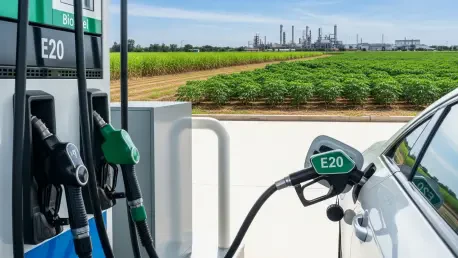
India emerged as the regional vanguard, rapidly compressing its timeline to achieve a 20% ethanol blending rate. This acceleration is a tactical maneuver designed to soak up surplus sugar production, providing a vital safety net for the domestic agricultural sector while curtailing massive import bills. By aligning food production cycles with fuel requirements, India demonstrates how a robust policy framework turns agricultural surplus into a strategic energy asset.
Indonesia and the Struggle Between Ambition and Supply Realities
While Indonesia remains a massive gasoline consumer, its journey toward the E10 mandate illustrates the friction between legislative intent and infrastructure. The postponement of mandatory blending to 2028 highlights a critical bottleneck: the gap between production capacity and the 0.80 million kilolitres required to saturate the market. This delay underscores that energy security requires massive capital investment to scale supply chains properly.
Southeast Asian Incentive Models: From Thailand’s Subsidies to Vietnam’s Mandates
Thailand and Vietnam offer contrasting yet complementary approaches to adoption. Thailand utilizes a sophisticated oil fuel fund to subsidize E20, steering consumer behavior through price incentives. Meanwhile, Vietnam is executing a regulated nationwide transition, making E10 mandatory this year. These models reveal that whether through subsidies or edicts, the regional trend moves toward a standardized, high-blend fuel economy.
The Philippines and the Voluntary Transition Paradox
The Philippines presents a case of cautious expansion, where the long-standing E10 mandate is supplemented by the voluntary introduction of E20. This incremental approach reflects a regional anxiety regarding vehicle compatibility and feedstock reliability. By allowing the market to test higher blends before enforcement, the government prioritizes domestic supply stability, seeking a middle ground in the energy security debate.
Navigating the Path to a Resilient Biofuel Infrastructure
The momentum behind ethanol in Asia is undeniable, but success hinges on more than just setting targets. To bridge the gap between policy and practice, nations must prioritize the modernization of refinery infrastructure and the diversification of feedstocks beyond sugar—incorporating materials like cassava to avoid food-security conflicts. Strengthening regional cooperation and sharing technical standards will be essential for creating a cohesive market that can withstand global shocks.
The Future of Asian Energy Sovereignty Through Biofuel Innovation
The acceleration of ethanol blending across Asia signified a maturation of energy policy, where environmental goals were increasingly aligned with hard-nosed economic security. While the pace of adoption varied based on domestic resources, the collective trajectory moved toward a more self-reliant energy mix. As nations refined these strategies, the lessons learned in balancing agricultural output with fuel demand provided a blueprint for other emerging economies. Future efforts should focus on cross-border logistics and next-generation feedstock development to ensure long-term independence from fossil fuel volatility.