Christopher Hailstone joins us to break down the seismic shift in Arizona’s utility regulation following the recent repeal of the state’s renewable energy mandates. With decades of experience navigating the complexities of grid reliability and renewable integration, he provides a critical lens on the financial and structural implications of the Arizona Corporation Commission’s decision. This conversation explores the multi-billion dollar legacy of the REST surcharges, the transition to a technology-neutral procurement model, and the potential economic risks of moving from state-mandated standards to voluntary corporate goals.
The discussion covers the long-term financial burden of historical solar contracts on household power adjustors and the concerns voiced by tech industry leaders regarding regional competitiveness. We also examine the mechanics of all-source requests for proposals and how these changes might reshape the state’s energy landscape in the years to come.
Since 2006, utilities have collected over $2.3 billion in surcharges to meet specific renewable mandates. How do these accumulated costs currently impact consumer utility bills, and what specific financial shifts should households expect to see now that these requirements have been eliminated?
The $2.3 billion collected by major utilities like Arizona Public Service, Tucson Electric Power, and UniSource Energy Services represents a significant long-term investment that has been pulled directly from the pockets of every customer class. For nearly two decades, these Renewable Energy Standard and Tariff (REST) surcharges appeared as persistent line items on monthly statements, effectively acting as a premium paid for the acceleration of green infrastructure. By repealing these rules on March 4, 2026, the commission is signaling an immediate move to strip away these specific administrative costs which they argue are no longer justified. Households should eventually see a reduction in the surcharge portion of their bills, but the “dramatic” changes in the energy landscape mean the primary benefit is the cessation of further mandated collections. It is a fundamental shift from a policy-driven billing model back to one theoretically dictated by the raw cost of generation and delivery.
Utilities are often locked into above-market solar contracts signed years ago to comply with previous state mandates. How do these legacy agreements continue to influence power adjustor rates, and what steps can be taken to mitigate their long-term impact on overall grid affordability?
These legacy agreements are essentially financial anchors that continue to drag on the system because they were signed when solar technology was far more expensive than it is today. Because the REST rules forced utilities to meet specific quotas by certain dates, companies like APS were often “saddled” with contracts at prices that would never be accepted in a truly competitive modern market. These costs don’t just disappear; they flow through to the consumer via the purchased power adjustor, which is a mechanism that allows utilities to recover the costs of the energy they buy on behalf of customers. To mitigate this, the focus is shifting toward all-source procurement, but the reality is that these high-priced contracts remain legally binding for years to come. The most effective mitigation strategy moving forward is to ensure that all new generation is procured at current market rates to gradually dilute the impact of those expensive older assets on the total rate base.
With the transition from mandatory standards to voluntary utility goals, how can the state ensure consistent progress toward energy modernization? What mechanisms exist to prevent these commitments from changing abruptly, and how does this shift specifically affect the confidence of private clean-tech investors?
The shift to voluntary goals introduces a layer of unpredictability that has many industry observers, including those at the Arizona Technology Council, feeling quite uneasy. While utilities currently claim they will pursue clean energy targets on their own, the concern is that voluntary commitments can “change overnight” without the backstop of state law to enforce them. Without a clear and consistent policy framework, there is a legitimate fear that private investment in renewables and efficiency will lose the momentum required by a growing economy. The state’s primary mechanism for oversight now rests with the commission’s ability to review utility integrated resource plans, but this is a much more reactive approach than the previous mandates. Investors generally crave the long-term certainty that mandates provide, and removing that “finger on the scale” might lead to a more cautious deployment of capital in the Arizona market.
The new regulatory framework relies on all-source requests for proposals to identify the most reliable and lowest-cost energy solutions. How does this technology-neutral bidding process function in practice, and what safeguards are necessary to prevent it from inadvertently favoring older generation methods over emerging technologies?
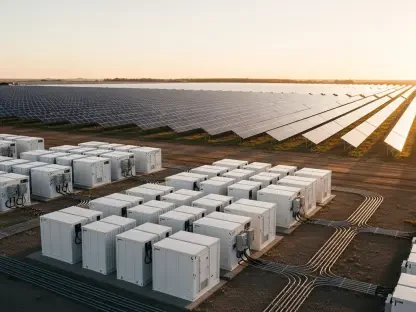
An all-source request for proposals (RFP) is designed to be a blind audition for energy generation where the primary metrics are reliability and price rather than the specific type of fuel used. In practice, this means a battery storage project must compete directly against a natural gas plant or a solar farm on a level playing field to see which provides the best value to the ratepayer. To keep this from favoring older, depreciated technologies like coal or traditional gas, the RFP process must include strict criteria regarding long-term environmental compliance costs and grid flexibility. Vice Chair Rachel Walden has championed this approach as a way to find the “lowest-cost solutions” without government interference, but the safeguards must include rigorous modeling of future fuel price volatility. If the RFP process is truly transparent and considers the full lifecycle cost of the energy produced, modern clean technologies should be able to win on their own merits without the need for a mandate.
Removing a clear policy framework could potentially weaken the competitive advantage for the local clean technology sector. How do you quantify the risk to the regional economy, and what alternative strategies can be used to maintain the state’s appeal to high-growth, tech-focused businesses?
The risk to the regional economy is quantified by the potential diversion of “clean-tech” capital to neighboring states that maintain more rigid or predictable renewable standards. When tech-focused businesses look to relocate, they often seek out regions where they can meet their own corporate sustainability goals through the local grid, and a repeal like this can “inject uncertainty” into those long-term plans. To maintain Arizona’s appeal, the state must pivot toward highlighting its low overall energy costs and the reliability of its diverse energy mix, even without the mandates. We must also look at market-driven strategies, such as green tariffs or direct-access programs, that allow large businesses to procure the specific types of energy they want without requiring a statewide mandate. Maintaining a high-growth economy requires a delicate balance between the regulatory freedom that the commission is currently pursuing and the ESG requirements that modern global corporations demand.
What is your forecast for Arizona’s energy landscape?
The landscape will likely become a battleground between market efficiency and long-term planning stability as we navigate the absence of the REST rules. In the short term, I expect utilities to continue their current renewable projects because they have already become cost-competitive, but the pace of new project announcements may slow down as companies re-evaluate their portfolios without the pressure of state-enforced deadlines. We will see a much heavier reliance on the all-source RFP process, which will put immense pressure on solar and storage developers to keep their costs down to compete with traditional baseload generation. Ultimately, while the $2.3 billion in past surcharges provided a jumpstart for the industry, the future of Arizona’s grid will be defined by how well it can integrate new technology while keeping the “purchased power adjustor” rates under control. Success will depend on whether the commission can maintain a truly competitive bidding environment that rewards innovation rather than simply defaulting to the oldest and cheapest possible fuel sources.