
Christopher Hailstone joins us today to discuss the evolving friction between massive data center expansion and grid reliability. As a seasoned expert in energy management and utility regulation, Christopher offers a critical perspective on recent high-stakes moves within the PJM Interconnection, the nation’s largest wholesale electricity market. His insights come at a pivotal moment as federal regulators weigh the sale of the 216-MW Morgantown facility and its potential removal from the public market. We explore the balance between private industrial growth and the public’s right to affordable, reliable power.
In regions where energy grids are already under significant strain, how does removing established generating units for private use affect local reliability, and what specific criteria should regulators apply when deciding if a resource must remain in the public market?
Removing units like the four oil-fired ones at Morgantown creates a direct threat to stability in regions already facing power scarcity. In Maryland, we see a constrained zone where every megawatt counts toward keeping the lights on for the general public, and losing 216 MW of capacity can be the difference between a stable system and one prone to outages. Regulators must look at whether a resource is essential for local reliability before allowing it to be privatized for a single user’s data center needs. The principle should be clear: if a plant is vital for public supply, it cannot simply be pulled from the market to serve a private interest without leaving the community in the dark. It feels like a high-stakes gamble where the residents are the ones holding the losing hand if the grid loses its reserve margins.
Some developers propose projects that combine gas-fired generation and battery storage with data center loads to act as net generators. How can this hybrid model alleviate grid pressure, and what technical hurdles arise when attempting to bring such complex facilities online by 2028?
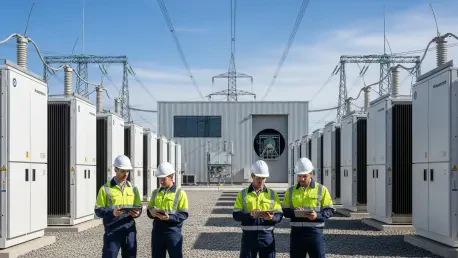
The concept of a site operating as a net generator is ambitious, especially when you consider the scale of 500 MW of gas-fired generation paired with 250 MW of battery storage. This hybrid approach aims to shave peak load and provide a buffer for the PJM grid, essentially adding capacity rather than just draining it from the existing infrastructure. However, hitting a late 2028 deadline is an immense technical and regulatory lift that requires navigating complex interconnection queues and fuel supply logistics. There is a visceral tension in trying to build out such massive infrastructure while the ground beneath us is still recovering from old industrial uses. It is a race against time to ensure these facilities can actually contribute more than they consume while the grid remains under heavy pressure.
Major tech firms have pledged to acquire new generation to meet their growing energy needs. How can authorities ensure these private deals do not shift infrastructure costs to everyday ratepayers, particularly when the purchasing companies are operating with substantial financial losses?
Protecting everyday families from bearing the brunt of industrial expansion is the primary duty of regulators like FERC, especially when the financial health of the developers is in question. We have seen a “ratepayer pledge” signed by industry giants like Microsoft and Google, but the reality is more complicated when companies are operating with substantial financial losses. For instance, a developer reporting a $661.4 million loss in 2025 creates a palpable sense of anxiety regarding their ability to maintain long-term infrastructure commitments without defaulting. If these private deals fail or shift hidden costs to the public, it is the ordinary consumer who sees their monthly bill spike to cover the gaps. We must see concrete evidence that these companies are funding their own power needs through equity and debt rather than through the pockets of the local population.
When repurposing sites that previously housed coal or oil units, what specific remediation steps are necessary to address legacy pollution, and how should developers balance the costs of site cleanup against the urgent need for new energy capacity?
Repurposing a site like Morgantown, which previously housed coal and oil units totaling 1,260 MW that were shuttered in 2022, involves peeling back layers of industrial history and addressing deep-seated environmental scars. Developers must be held accountable for remediating coal-related pollution, ensuring that the ground and water are safe for the surrounding community before any new construction begins. It is a delicate balancing act to fund these expensive cleanups while simultaneously investing in the high-tech infrastructure needed for modern data centers. The smell of old fuel and the sight of rusted structures are reminders that the transition to new energy must not leave behind a toxic legacy. Failure to address these environmental concerns early can lead to legal battles that stall the very projects meant to stabilize our energy future.
In constrained zones where power demand is high but supply is limited, what strategies are most effective for integrating massive industrial loads, and how can policy encourage the construction of entirely new generation rather than the mere acquisition of existing plants?
In highly constrained zones, the most effective strategy is to mandate that massive new loads must be accompanied by entirely new generation resources that didn’t exist before. Simply acquiring existing plants—like the 216-MW facility in question—doesn’t solve the underlying supply problem; it just shifts the existing deck chairs while the ship takes on more water. We need policies that incentivize companies to build out “behind the meter” power while also contributing extra capacity back to the broader public grid to satisfy the National Energy Dominance Council’s principles. This ensures that the arrival of a massive industrial load becomes a catalyst for grid expansion rather than a drain on a system already struggling to keep pace. The goal is to create a symbiotic relationship where the data center brings its own light to the table rather than blowing out everyone else’s candles.
What is your forecast for the integration of data centers into the PJM power grid?
I forecast a period of intense regulatory friction where the “net generator” model becomes the only viable path forward for large-scale data center developers in the PJM territory. We are likely to see FERC and state regulators take a much harder line against the acquisition of existing plants, effectively forcing companies like TeraWulf to prove they are adding new capacity before they can draw a single watt. This will lead to a surge in hybrid projects that combine gas and battery storage, as the grid simply cannot survive the loss of 216 MW or more to private interests in constrained zones. Ultimately, the success of this integration will depend on whether these firms can turn their massive losses, like the $661.4 million reported recently, into stable infrastructure that serves both their servers and the public good. The hum of the data center must be matched by the roar of new generation, or the public backlash will be insurmountable.