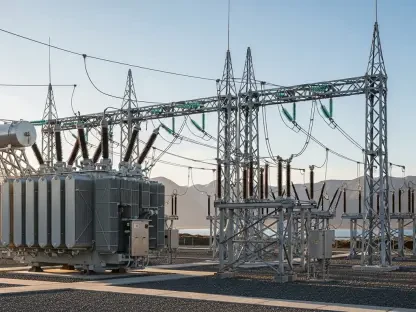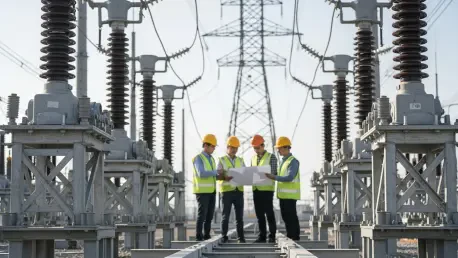

Christopher Hailstone is a seasoned veteran in the field of energy management and power delivery, serving as a primary expert on the intricate workings of the North American power grid. With a career focused on grid reliability and the seamless integration of renewable resources, he has become a leading voice on how regional transmission organizations collaborate to move electricity across state lines. This interview explores the latest joint efforts between the Midcontinent Independent System Operator (MISO) and the Southwest Power Pool (SPP) to fortify their shared borders. We dive into the technical and economic complexities of a proposed multibillion-dollar investment aimed at stabilizing the energy supply across Arkansas, Louisiana, Oklahoma, and Texas.
The discussion focuses on the strategic choice between two major investment paths, the operational shifts local utilities can expect, and the regulatory hurdles that must be cleared to get these projects off the drawing board.
Two proposed paths for the southern seam involve a $1.3 billion investment or a more robust $3.6 billion version. How do you weigh the trade-offs between immediate congestion relief and long-term optionality? What specific metrics should be prioritized when choosing between these two different investment scales?
When we look at these two options, we are essentially choosing between a agile, expandable framework and a comprehensive, heavy-duty overhaul. The $3.6 billion “Core+” plan is the powerhouse option; it is specifically designed to provide the greatest congestion relief by 2034, which is vital for long-term price stability. It offers a massive jump in reliability by fixing more internal MISO and tie-line issues right out of the gate, making it the preferred choice for immediate impact. On the other hand, the $1.3 billion “Core” path is about keeping our options open in an era of unpredictable load growth. We prioritize import capability metrics here, especially for MISO, but the real value is the flexibility to expand the system incrementally as the grid evolves.
These transmission upgrades target the border regions of Arkansas, Louisiana, Oklahoma, and Texas. How will the increased transfer capacity, specifically the projected 1.1 GW to 3.4 GW import gains, change daily operations for local utilities? What technical challenges arise when integrating 500-kV lines across these diverse state jurisdictions?
Boosting import capacity by up to 3.4 GW for MISO and 1.1 GW for SPP fundamentally changes how dispatchers manage the daily flow of electrons across these four states. For local utilities, this extra breathing room means they can tap into cheaper, more diverse power sources from neighboring regions during peak demand, which significantly lowers the risk of rolling blackouts or price spikes. Technically, stringing 500-kV lines across state lines is an immense undertaking that requires harmonizing different physical standards and regional operational protocols. You are dealing with varying terrain and weather patterns from the Oklahoma plains to the Louisiana bayous, all while ensuring that these massive high-voltage lines don’t create new “bottlenecks” or stability issues where the two grids meet.
Previous attempts to expand interregional analysis have faced significant regulatory hurdles at the federal level. What specific tariff enhancements or cost-allocation models are now necessary to ensure these projects move forward? How do you coordinate the disparate interests of two separate grid operators to reach a final agreement?
The regulatory landscape has been tough, especially after FERC previously rejected plans to broaden our analysis scope, but we are moving forward with a focus on “tariff enhancements” for interregional cost allocation. The goal is to file a proposal with FERC in the second half of this year that clearly defines how the $1.3 billion or $3.6 billion price tag is split based on the actual benefits each region receives. Coordinating between MISO and SPP requires a constant feedback loop through the Interregional Planning Stakeholder Advisory Committee to ensure both sides feel the “business case” is fair. We have to prove that these 500-kV projects aren’t just a cost burden, but a necessary investment that provides mutual reliability gains that neither operator could achieve on their own.
Rapid load growth is putting immense pressure on the current grid infrastructure along the seam between major regions. How do the proposed reliability improvements specifically address tie-line issues compared to internal grid fixes? Can you walk through the step-by-step process of how these projects facilitate a more stable grid?
The beauty of these interregional projects is that they address “tie-lines”—the critical handshake points between SPP and MISO—rather than just patching up internal holes. By strengthening these borders, we create a more robust “bridge” that allows electricity to bypass local congestion and reach areas of high demand more efficiently. The process starts with identifying the most stressed points along the southern seam and then deploying these 500-kV solutions to act as high-capacity bypass valves. Once these lines are energized, they provide a buffer against sudden plant outages or extreme weather, essentially allowing the two regions to lean on each other’s surplus power instantly.
Stakeholders are currently reviewing the draft report before final approvals are sought later this year. What are the primary concerns regarding “steel in the ground,” and how can developers mitigate the risks of project delays? What economic impacts will consumers see if these interregional projects fail to gain approval?
The phrase “steel in the ground” represents the ultimate finish line, but getting there means navigating a minefield of siting permits, supply chain lead times, and local opposition. Developers can mitigate these risks by engaging with communities early in Arkansas and Texas and by securing long-term contracts for materials before the final board approvals in late 2026 or early 2027. If these projects fail to get the green light, consumers will be the ones feeling the heat through higher utility bills caused by persistent grid congestion. Without this expanded 1.1 GW to 3.4 GW of import capacity, we remain vulnerable to “energy islands” where prices skyrocket because we simply can’t move power to where it is needed most.
What is your forecast for interregional transmission development?
I anticipate a significant acceleration in interregional development as the reality of rapid load growth forces the hands of regulators and grid operators alike. While the CSP process has historically struggled to identify projects that meet the strict benefit-valuation criteria of joint operating agreements, the sheer scale of the 500-kV projects currently on the table shows a shift toward more aggressive regional cooperation. We are moving toward a more interconnected national energy landscape where the artificial boundaries between operators like MISO and SPP become less of an obstacle. In the coming years, I expect the success of these southern seam projects to serve as a blueprint for other regions, proving that massive capital investments are the only way to ensure a reliable and affordable carbon-neutral future.