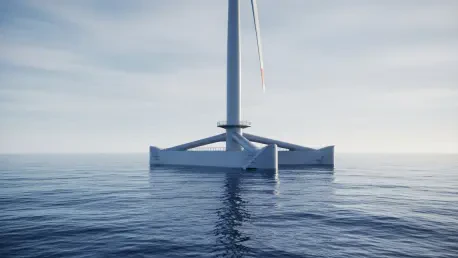

The turquoise waters of the Mediterranean and Aegean seas hold a latent power capable of reshaping the industrial destiny of a nation standing at the crossroads of three continents. As the country shifts away from a historical reliance on onshore turbines, the government has pivoted toward a comprehensive 120 GW renewable energy master plan. This ambitious roadmap identifies offshore wind as a critical pillar for achieving long-term energy independence and technological sovereignty.
Central to this maritime ambition is a targeted 5 GW offshore capacity, which represents a massive leap in technical complexity compared to existing terrestrial projects. Key institutional stakeholders, including the Ministry of Energy and Natural Resources and industry advocates such as DURED and ENSIA, are coordinating efforts to transform the Aegean and Marmara regions into the primary hubs of this new industrial era. By domesticating the entire value chain, the nation aims to secure its position as a regional leader in marine energy technology.
Mapping the Blue Frontier: Türkiye’s Strategic Pivot to Marine Energy
The transition from a land-based energy strategy to a marine-focused one requires a total reconfiguration of the national grid and industrial priorities. While onshore wind has provided a steady foundation, the higher and more consistent wind speeds found at sea offer the promise of much larger energy yields. This strategic pivot is driven by the necessity to diversify the energy mix and reduce the vulnerability of the national power supply to fluctuating global gas prices.
Moreover, the focus on the Aegean and Marmara regions is not accidental, as these areas are close to major industrial consumers. By establishing maritime power generation hubs near Istanbul and Izmir, the government can facilitate a more direct supply of clean energy to the country’s economic heartland. This proximity reduces the need for long-distance transmission lines and helps the nation move closer to its goal of a sustainable and self-sufficient electricity market.
Market Dynamics and the Evolution of Turkish Wind Power
Identifying Growth Drivers: Site Selection and Technological Shifts
The geographical blueprint for this expansion focuses on high-potential zones such as the Gulf of Saros, Gökçeada, Bozcaada, and Edremit. These sites are not merely chosen for their wind patterns but also for their accessibility to coastal infrastructure. This strategic placement ensures that the generated power can be efficiently channeled into the national economy, supporting the growing demand for low-carbon electricity from both residential and commercial sectors.
Transitioning from onshore to offshore manufacturing requires a significant evolution in domestic capabilities. While the country already possesses a robust base for producing turbine blades and towers, offshore environments demand specialized corrosion-resistant materials and larger-scale engineering solutions. Furthermore, the rising appetite for green electricity among industrial giants, facilitated through corporate Power Purchase Agreements, is creating a stable market demand that encourages manufacturers to retool their facilities for sea-based technology.
The Statistical Forecast: Reconciling Official Targets with Market Realities
Despite the 5 GW target set for 2035, independent analysts point toward a more conservative trajectory of approximately 1.3 GW within that same timeframe. This statistical divergence highlights the massive logistical and financial hurdles associated with first-of-a-kind projects in deep-water environments. Current models suggest that the first offshore electrons will likely enter the national grid around 2032, marking the beginning of a gradual integration process into the power mix.
Reconciling these figures requires an honest assessment of the pace of development and the availability of capital. Even at the more modest projection of 1.3 GW, the sector could provide an estimated 2.7 TWh of annual output, significantly offsetting the reliance on imported liquefied natural gas. The real challenge lies in accelerating the learning curve to bridge this capacity gap and move closer to the more aggressive aspirations outlined in the national energy strategy.
Overcoming the Operational and Economic Hurdles of Deep-Water Projects
Marine projects are inherently more complex than their land-based counterparts, primarily due to the unique topography of the Aegean and Marmara seabeds. Deep-water depths and seismic activity in certain regions necessitate advanced anchoring systems or floating turbine technologies that are still maturing globally. Moreover, the logistics of transporting massive components through narrow straits and constructing foundations at sea require specialized vessels and port facilities that currently need significant investment.
Beyond the technical realm, economic volatility remains a persistent threat to project bankability. High capital intensity, coupled with currency fluctuations and inflation, makes long-term financial planning a delicate balancing act for international investors. Additionally, developers must navigate sensitive ecological zones and negotiate with the tourism and fishing sectors to ensure that industrial expansion does not come at the cost of the nation’s maritime heritage.
Establishing the Rule of Law: Regulatory Frameworks and the YEKA Model
The Renewable Energy Resources Zone (YEKA) tender system serves as the primary mechanism for attracting the necessary billions in foreign direct investment. By centralizing large-scale projects, the government aims to create economies of scale that reduce the overall cost of electricity. However, the success of this model depends heavily on streamlining the bureaucratic maze of maritime permits and environmental impact assessments that have historically delayed major infrastructure developments.
Regulatory clarity is the most sought-after commodity for potential investors. Establishing a transparent 10-year roadmap is essential for providing the long-term confidence required to build localized supply chains. These frameworks must not only ensure compliance with international standards but also incentivize technology transfer, ensuring that the domestic workforce becomes proficient in the specialized maintenance and operation of offshore assets over the coming decades.
The Road Ahead: Disruptive Innovations and Global Energy Connectivity
Looking toward the next decade, the integration of hybrid energy systems and green hydrogen production could redefine the value proposition of offshore wind. By using excess wind energy to power electrolyzers, the country could produce carbon-neutral fuel for heavy industry and shipping. This technological synergy would maximize the utility of offshore zones, turning the seas into multifaceted energy refineries that support a broader national decarbonization strategy.
The nation is also uniquely positioned to become a net exporter of green electricity to neighboring markets. Leveraging its geographic location through enhanced subsea interconnectors would allow for the monetization of offshore resources beyond domestic consumption. Success in this area will depend on global supply chain resilience and the ability to maintain a competitive industrial base through continuous workforce training and strategic research investments in marine engineering.
Assessing the Feasibility: Recommendations for a Resilient Offshore Sector
The path to bridging the reality gap in the offshore sector required a definitive shift from theoretical planning to concrete execution. It was determined that policy stability and grid modernization were the two most critical levers for unlocking private capital. Without a synchronized effort to upgrade coastal substations and provide fixed-price guarantees, the transition faced the risk of stagnation during the initial phases of deployment.
Stakeholders ultimately found that collaborative frameworks between the public sector and international developers facilitated the necessary technology transfer to local firms. Moving forward, the focus was shifted to ensuring that maritime spatial planning accounted for the long-term coexistence of energy production, commercial shipping, and environmental ecology. By transforming the blue frontier into a cornerstone of sustainable growth, the nation secured a resilient energy future that balanced industrial ambition with ecological stewardship.