
The realization that carbon targets are effectively meaningless without a robust physical supply chain has forced a fundamental recalculation of how the United States approaches its climate goals. To achieve a successful transition to a clean energy economy, the focus has shifted from high-level policy frameworks and abstract emissions reductions to the tangible realities of the factory floor. This industrial evolution requires the nation to build at a scale and speed not seen in decades, transforming traditional manufacturing corridors into high-tech hubs for battery production, grid components, and advanced materials. As the transition accelerates, it is becoming clear that regional manufacturing ecosystems are the primary engines of this change, proving that environmental sustainability and economic growth are not competing interests but are instead two sides of the same coin.
The Strategic Link Between Industrial Production and Climate Goals
The shift toward a decarbonized economy is often depicted as a digital or financial revolution, yet the physical infrastructure required to support it remains the most significant bottleneck. Meeting ambitious climate targets relies on the domestic ability to produce the hardware of the future, ranging from specialized semiconductor chips to massive grid-scale storage systems. This industrial requirement has elevated manufacturing from a secondary economic concern to a primary strategic priority. By retooling existing industrial corridors, the United States is working to ensure that the intellectual breakthroughs occurring in laboratories are translated into physical products that can be deployed at scale across the national energy grid.
The success of this transition depends on a decentralized, region-specific approach that recognizes the unique strengths of different geographic areas. Rather than a monolithic national strategy, the current movement emphasizes the importance of local manufacturing ecosystems that combine specialized labor, existing infrastructure, and academic research. This localized focus allows for greater agility in addressing supply chain disruptions and technological hurdles. As these regional clusters mature, they create a robust network of production that ensures the clean energy transition is built on a foundation of domestic industrial capacity rather than a reliance on volatile international supply chains.
The Evolution of American Industry as Civic Infrastructure
Historically, manufacturing served as the primary anchor for community stability and the backbone of middle-class prosperity across the American landscape. However, the sector has faced heavy headwinds over the last few decades, with industrial employment figures sliding from a peak of 20 million jobs to approximately 13 million today. Despite this quantitative decline, the qualitative importance of the sector has never been more pronounced. Modern manufacturing is being redefined as “civic infrastructure,” a term that elevates industrial capacity to the same level of societal importance as roads, bridges, and public schools. This shift in perception acknowledges that a healthy manufacturing base is essential for the basic functioning and resilience of a modern society.
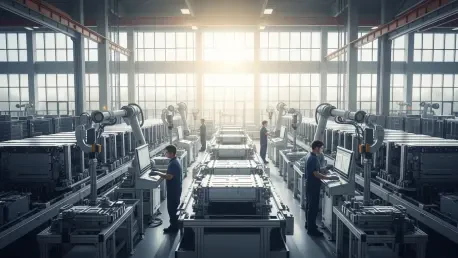
Viewing manufacturing as a form of civic infrastructure changes the way policymakers and investors approach industrial development. It highlights the sector’s role in anchoring local tax bases, funding essential public services, and creating career paths that do not necessarily require a four-year degree but offer high-skill, durable employment. The current push for clean energy hardware is not merely a technological upgrade but a deliberate effort to restore the industrial commons that once defined American economic power. By treating factory floors as public assets, regions are better positioned to weather economic shifts and provide long-term stability for their residents, ensuring that the benefits of the green economy are distributed broadly across the population.
Retooling Regional Strengths for a Sustainable Future
Leveraging Industrial Heritage for Modern Innovation
A vital component of the current industrial shift is the capacity of legacy hubs to pivot their historical expertise toward clean technology. This process does not require building an entirely new economy from the ground up but rather involves the strategic adaptation of existing physical assets and intellectual capital. Pittsburgh serves as a prime example of this phenomenon, having transitioned its deep-rooted identity in steel and heavy industry into a leadership position in robotics and energy innovation. By aligning the research capabilities of major academic institutions with the engineering experience of legacy industrial firms, the region has fostered an environment where clean energy job growth consistently outpaces broader state averages.
This model of innovation demonstrates that the challenges of coordinating fragmented ecosystems can be met by rooting new technologies in a city’s historical strengths. The same logistical networks and engineering mindsets that once powered the height of the industrial age are now being applied to the hardware requirements of a sustainable future. This alignment of past and future ensures that the transition feels like a natural progression rather than a disruptive break from tradition. It allows workers with traditional manufacturing skills to find new relevance in the production of wind turbine components, hydrogen fuel cells, and other critical technologies, bridging the gap between the old economy and the new.
Protecting Industrial Land and Adaptive Reuse
In high-density markets like Los Angeles, the transition toward clean manufacturing faces a significant obstacle in the form of real estate speculation. As the demand for residential and commercial space grows, industrial land becomes increasingly scarce, threatening to push the very factories needed for the energy transition out of the urban core. To combat this, the “Climate Manufacturing Compact” has emerged as a successful strategy for preserving the industrial fabric of the city. By protecting designated corridors from conversion, local governments ensure that clean energy startups have the physical space necessary to scale their operations from prototypes to mass production.
The adaptive reuse of older facilities is a key part of this strategy, allowing for the modernization of the urban industrial landscape without the need for expansive new development. Retrofitting legacy warehouses with high-speed internet, upgraded power grids, and advanced ventilation systems enables these sites to host high-tech clean energy production. This approach preserves the character of industrial neighborhoods while providing the necessary infrastructure for climate-tech firms to thrive. Furthermore, maintaining production within urban centers keeps jobs accessible to a diverse workforce, reducing the environmental impact of long-distance commuting and reinforcing the social benefits of a localized industrial base.
Forging the Battery Belt Through Regional Collaboration
The Great Lakes Corridor, stretching from Chicago to Buffalo, is undergoing a rapid transformation into what industry experts describe as the “Battery Belt.” This region is positioning itself as a global powerhouse for the production of electric vehicles and the semiconductors that power them. The primary challenge in this geographic area is moving past the traditional mindset of state-versus-state competition in favor of a unified regional identity. By treating the entire corridor as a single integrated ecosystem, these states can share resources, shipping routes, and fresh water assets to build a more resilient domestic supply chain that can compete on a global scale.
Success in the Battery Belt requires the development of shared metrics and collaborative policy frameworks that benefit the region as a whole. Instead of fighting over individual plant locations, states are beginning to understand that a supplier in one state benefits the assembly line in another. This collaborative spirit is essential for overcoming the misconception that economic development is a zero-sum game between neighbors. By focusing on the collective strengths of the Great Lakes, the region is creating a dense network of specialized suppliers and skilled laborers, making it a nearly indispensable hub for the future of transportation and energy storage.
Emerging Trends in Decentralized Industrial Revitalization
The future of American industry is increasingly defined by a shift toward decentralized revitalization and the seamless integration of innovation with production. There is a clear move away from “top-down” federal mandates in favor of “bottom-up” regional approaches that address specific local constraints and opportunities. This trend recognizes that a strategy effective for the high-tech landscape of New York may not be applicable to the heavy industrial requirements of the Midwest. Consequently, local leaders are taking the initiative to design customized industrial action plans that leverage their specific geographic and economic advantages to attract clean energy investment.
A significant transformation is also occurring in the financial sector, where the previous “software-only” investment model is being challenged by the necessity for “patient capital.” Financial institutions are beginning to recognize that physical manufacturing requires longer timelines and more flexible debt products than digital products. This has led to the emergence of new funding mechanisms and hardware-focused entrepreneur programs that bridge the “valley of death” between laboratory prototypes and mass-market manufacturing. These financial innovations are ensuring that American inventions are built domestically, preventing the loss of valuable intellectual property to overseas competitors during the critical scaling phase.
Strategies for Building a Resilient Manufacturing Commons
To successfully capitalize on these industrial trends, businesses and policymakers must prioritize the creation of a “manufacturing commons” that supports the entire production lifecycle. A major takeaway from the current market is the importance of aligning public and private capital to support manufacturing startups that face high barriers to entry. Stakeholders should focus on the modernization of physical assets, such as updating ports, rail lines, and utility grids, to meet the massive power demands of modern clean energy production. Investing in these foundational elements ensures that the infrastructure can support the next generation of industrial growth.
For professionals and leaders in this space, the most effective best practice is to foster cross-sectoral collaboration between laborers, innovators, and public institutions. This means creating “mid-scale” production spaces where companies can transition from small batches to full-scale manufacturing without having to relocate to a different region. By providing the space, capital, and workforce training needed at every stage of growth, regions can build a self-sustaining industrial ecosystem. Applying these insights in real-world scenarios involves protecting industrial zoning and streamlining permitting processes to allow for the rapid deployment of new manufacturing technologies, ensuring that the clean energy transition remains on schedule.
Securing the Future Through National Industrial Renewal
In summary, the strategic shift toward regional manufacturing represented a fundamental project of national renewal that successfully bridged the gap between environmental goals and economic necessity. By treating the factory floor as a vital public utility, the United States developed a roadmap for rebuilding its industrial core while simultaneously addressing the urgent demands of the climate transition. The core themes identified throughout this analysis—from the preservation of industrial land in Los Angeles to the collaborative expansion of the Battery Belt—highlighted a durable path toward a more equitable and resilient domestic economy. This topic remained highly significant because the hardware required for a sustainable future was something that had to be physically forged through human ingenuity and industrial grit.
The strategic takeaways from this period were clear: the path toward a sustainable future was paved with the products of regional industrial innovation. Stakeholders recognized that the climate transition was the greatest economic opportunity of the era, provided that the necessary physical infrastructure was in place to support it. By focusing on decentralized production and the integration of innovation with traditional manufacturing, the nation secured its place as a leader in the global clean energy market. This approach not only met the technical requirements of decarbonization but also restored a sense of purpose and stability to industrial communities, proving that the most effective climate policy was one that was built on the foundation of a strong, domestic manufacturing sector.