
A decisive legislative move by the Philippine House of Representatives has just set the stage for a fundamental transformation of the nation’s energy landscape, positioning it to tackle grid instability and accelerate its clean energy ambitions. The overwhelming passage of House Bill 6676, known as the Energy Storage Systems Act, represents a landmark effort to create a comprehensive national policy guiding the development and commercialization of this critical technology. This initiative arrives at a pivotal moment, aiming to formalize the rules of engagement in a burgeoning market and provide the regulatory certainty needed to secure the country’s energy future.
The legislation’s core purpose is to establish a structured framework that will enhance the stability of the national power grid, ensure supply security, and, most importantly, enable the seamless integration of intermittent renewable energy sources. For an archipelagic nation with dispersed power demand across thousands of islands, the bill addresses long-standing challenges by creating a pathway for both on-grid and off-grid applications. Its successful third and final reading in the lower house signals a unified commitment to modernizing an energy sector on the cusp of significant change.
A Nation at the Forefront: The Philippine Energy Storage Landscape
Even before this formal legislative push, the Philippines had already distinguished itself as a leader in energy storage deployment within Southeast Asia. The nation’s unique geography, characterized by numerous islands and isolated grids, makes storage technology not just beneficial but essential for maintaining power quality and supply security. Energy storage systems serve as a vital buffer, absorbing excess power during periods of low demand and releasing it when needed, a function that is indispensable for stabilizing a grid increasingly reliant on variable sources like solar and wind.
This proactive environment has been cultivated by the pioneering investments of key market players. Industry giants such as San Miguel Global Power, Citicore Renewable Energy, and Meralco have already committed significant capital to large-scale battery projects. These early ventures have demonstrated the commercial viability and technical necessity of energy storage, effectively setting the stage for a national policy designed to support and scale up their efforts. Their investments have served as a powerful proof of concept, highlighting the urgent need for a regulatory framework that can keep pace with technological advancement and market demand.
Powering Progress: Market Momentum and Future Growth
Unifying Political Will and Ambitious Renewable Targets
The legislative journey of House Bill 6676 was marked by a remarkable display of political unity, culminating in an overwhelming 192 affirmative votes against only three negative votes. This near-unanimous support in the House of Representatives reflects a deep-seated consensus among policymakers regarding the strategic importance of energy storage for national development. It signals a clear and unambiguous message to investors and developers that the government is fully committed to creating a stable and supportive environment for the technology.
This strong legislative backing is amplified by vocal support from the executive branch, with President Ferdinand Marcos Jr. emerging as a key champion for energy storage. His frequent participation in the inauguration of major storage facilities and public endorsements of the technology underscore its central role in his administration’s energy policy. The President has consistently linked the deployment of energy storage directly to the nation’s ambitious goal of achieving a 50% renewable energy share in its power generation mix by 2040, framing the technology as a critical enabler of this clean energy transition.
From Ambition to Action: Landmark Projects and Auction Milestones
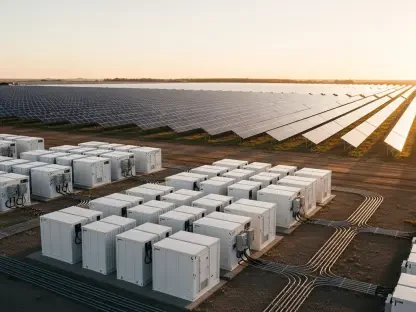
The Philippines’ commitment to energy storage is not merely theoretical; it is backed by a portfolio of landmark projects that are already reshaping the country’s power infrastructure. Noteworthy examples include the groundbreaking for the Meralco Terra Solar project, which is set to feature an immense 3.5 gigawatts of solar capacity paired with 4.5 gigawatt-hours of battery storage. Similarly, Citicore Renewable Energy’s innovative “solar baseload” plant in Batangas, which combines 197 megawatts of solar PV with a 320 megawatt-hour BESS, showcases the growing trend of hybrid power generation.
Further validating this momentum, the Department of Energy’s fourth Green Energy Auction (GEA) marked a significant policy evolution by including integrated renewable and storage systems for the first time. The auction resulted in the award of contracts to 1.19 gigawatts of such hybrid projects, institutionalizing their role in the national energy plan. This move builds upon the existing practice of major power companies using Battery Energy Storage Systems (BESS) to provide essential ancillary services, optimizing the performance of their thermal and hydroelectric assets and enhancing overall grid efficiency.
Navigating an Unstructured Market: Key Challenges and Complexities
Despite the rapid growth and significant investments, the energy storage industry in the Philippines has been operating in a largely unstructured environment. Industry stakeholders have consistently called for a predictable and clearly defined “playing field” to de-risk long-term capital commitments. Without a formal framework, developers face uncertainty, which can stifle innovation and slow the pace of deployment needed to meet national energy goals.
A primary challenge for developers has been the absence of clear market rules governing revenue stacking and cost recovery. The ability to generate income from multiple services—such as frequency regulation, peak shaving, and energy arbitrage—is crucial for the financial viability of storage projects. The lack of standardized guidelines for these revenue streams has made it difficult for investors to build robust business cases. Furthermore, potential external factors, including global supply chain dependencies for batteries and other critical components, present an ongoing risk that a national policy can help mitigate through strategic planning.
Forging a Framework: The New Regulatory and Policy Landscape
The Energy Storage Systems Act is designed specifically to address these gaps by creating a comprehensive national policy for the technology’s development and commercialization. The bill’s core purpose is to establish clear rules, responsibilities, and incentives, thereby fostering a more organized and attractive market for both domestic and international investors. It aims to streamline the entire project lifecycle, from initial planning and permitting to operation and eventual decommissioning.
Under the proposed law, government agencies will have well-defined roles. The Department of Energy (DOE) is designated as the lead implementing agency, responsible for orchestrating the national strategy and ensuring its alignment with broader energy objectives. Concurrently, the Energy Regulatory Commission (ERC) will serve as the primary regulator, tasked with the critical function of crafting the detailed guidelines that will govern the sector.
The ERC’s responsibilities will be extensive, covering the formulation of licensing procedures, the development of transparent pricing mechanisms, and the creation of viable cost recovery models. This includes establishing technical and safety standards to ensure the reliable and secure operation of energy storage systems across the grid. The framework is also expected to introduce incentives tailored to encourage the development of integrated renewable energy power plants with storage, directly supporting the nation’s clean energy targets.
The Dawn of a New Energy Era: Future Outlook and Opportunities
The formalization of a national energy storage policy is set to unlock a wealth of new opportunities across the entire Philippine power value chain. For developers, the regulatory clarity provided by the bill will open up defined pathways for investment in transmission, generation, and distribution-level projects. This will enable a more strategic deployment of storage assets where they are needed most, whether to defer costly grid upgrades, improve the reliability of local networks, or provide firm capacity from renewable sources.
With dedicated incentives and clear market rules, integrated renewable energy and storage systems (IRESS) are poised to become a dominant force in the nation’s energy mix. These hybrid plants, capable of providing clean, reliable, and dispatchable power, will be instrumental in displacing fossil-fuel-based generation. The legislation will likely accelerate the transition toward a system where solar and wind, backed by storage, can provide baseload and peaking power, fundamentally altering the country’s generation profile.
Looking forward, the growth trajectory for the Philippine energy storage market appears exceptionally strong. The combination of a clear regulatory framework, targeted government incentives, and escalating demand for clean power creates a fertile ground for sustained expansion. As the nation progresses toward its 2040 renewable energy goals, energy storage will be the linchpin that ensures this transition is not only successful but also enhances the overall resilience and affordability of the country’s electricity supply.
A Strategic Step Toward Energy Resilience
The passage of House Bill 6676 by the Philippine House of Representatives was a watershed moment that solidified the nation’s commitment to a modern and sustainable energy sector. This legislative achievement marked the culmination of efforts from both the public and private sectors to establish a formal regulatory framework, which was recognized as essential for stabilizing the power supply and maximizing the country’s vast renewable resources.
By clearly defining the rules and responsibilities for the deployment of energy storage, the bill addressed critical market uncertainties that had previously posed barriers to investment. It provided the structure needed to transform ambitious energy targets into actionable projects. In doing so, the Philippines positioned itself to build a more resilient, reliable, and affordable energy future for its citizens, setting a powerful precedent for the entire Southeast Asian region.