
The Current State of Renewable Natural Gas in Heavy-Duty Transport
Heavy-duty trucking has long been the stubborn outlier in the global race toward zero emissions, yet a silent revolution is currently unfolding beneath the hoods of thousands of refuse trucks and transit buses across North America. While electrification captures headlines, renewable natural gas has quietly become the primary alternative to diesel for fleets requiring high uptime and heavy-load capacity. This fuel source is no longer a niche experiment but a cornerstone of modern logistics, particularly within the waste management and public transit sectors where consistency is non-negotiable.
The success of this transition relies heavily on a circular economy model that transforms organic waste from landfills and dairy farms into high-energy transport fuel. By producing fuel domestically, North American operators are insulating themselves from the volatility of global oil markets while simultaneously addressing local methane emissions. This dual-benefit approach has fostered a massive infrastructure network that already supports thousands of vehicles across the continent, offering a level of readiness that competing technologies struggle to match.
Technological reliability remains the strongest argument for this shift, as modern engines provide performance levels nearly identical to traditional diesel powertrains. Fleet managers often find that the transition requires minimal changes to operational workflows, avoiding the significant downtime associated with long charging cycles or the unproven range of hydrogen fuel cells. Consequently, renewable natural gas serves as a bridge that is already built, allowing for immediate decarbonization without the logistical hurdles of a total power grid overhaul.
Market Dynamics: Trends Driving the Shift and Growth Projections
The Rise of the Circular Economy and Sustainable Logistics
Harnessing methane from organic waste has turned what was once an environmental liability into a valuable transportation asset. This shift is driven by the realization that capturing methane at the source provides a double-barreled carbon reduction: preventing a potent greenhouse gas from entering the atmosphere and replacing high-carbon fossil fuels. As corporate sustainability mandates become more stringent, the ability to demonstrate a closed-loop waste-to-fuel cycle has become a significant competitive advantage for logistics providers.
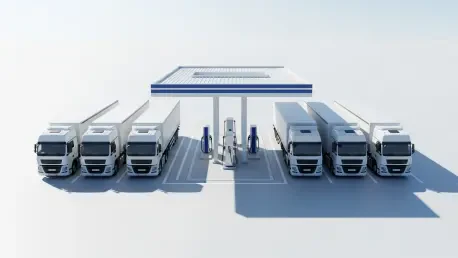
Consumer demand for greener supply chains is pushing companies to seek scalable solutions that can be implemented today rather than a decade from now. This urgency favors existing fueling infrastructure, which can be expanded much faster than a national network of high-voltage charging stations. By leveraging the vast natural gas pipeline system already in place, fuel providers can deliver low-carbon energy to distant fleets with high efficiency and lower capital expenditure than building entirely new energy corridors.
Quantifying the Expansion: Growth Indicators and Fleet Adoption Data
Recent data reveals a surge in multi-million gallon annual agreements, particularly among major waste management entities and regional transit authorities. For instance, partnerships with organizations like Ecology Transportation Services involve millions of gallons of fuel annually to power hundreds of trucks across the Western United States. These are not pilot programs but full-scale operational commitments that underscore the fuel’s maturity.
Growth indicators from the refuse sector are equally telling, with major players overseeing the operation of over eighty stations to support thousands of vehicles. Projections for the remainder of 2026 and into 2028 suggest that market penetration will continue to rise as more municipal fleets in Canada and the United States move away from diesel. This steady adoption is reflected in the expanding volume of fuel being contracted, indicating that the industry has moved past the era of testing into a phase of permanent integration.
Navigating the Obstacles: Challenges and Strategic Solutions
Despite the clear benefits, the path to total decarbonization is not without its hurdles, particularly regarding the scalability of competing energy sources. While battery-electric vehicles are suitable for light-duty tasks, the weight and charging requirements often make them impractical for long-haul or heavy-refuse applications. Strategic maintenance of existing fueling stations is essential to ensure that aging infrastructure continues to meet the rigorous demands of 24-hour fleet operations.
Feedstock availability is another concern that industry leaders are addressing through diversified sourcing. Rather than relying solely on a few waste streams, fuel producers are expanding their reach to include smaller agricultural operations and diverse organic materials. This diversification, combined with sophisticated supply chain management, helps maintain price competitiveness against traditional fossil fuels and ensures a stable supply for even the largest municipal partnerships.
The Regulatory Framework: Policy Drivers for Low-Carbon Fuel Adoption
Federal and state emissions standards have become the primary catalysts for fleet procurement decisions in the current market. Programs such as the Low Carbon Fuel Standard provide necessary economic incentives through credit-based systems, making the switch to renewable fuels financially attractive for private operators. These policies have created a predictable regulatory environment where fleet managers can justify the initial investment in new vehicle technology based on long-term fuel savings and compliance security.
Local sustainability mandates are further accelerating this shift, particularly within public transit and airport logistics. Large hubs, such as Nashville International Airport, are increasingly requiring shuttle and service vehicles to meet strict carbon reduction targets. By securing municipal and private partnerships, fuel providers are ensuring long-term supply stability, which is critical for essential public services that cannot afford disruptions in their energy supply.
The Future Landscape: Innovation and Market Evolution
Innovation in methane capture technology is continuing to refine the production process, making it more efficient to extract high-quality fuel from increasingly diverse waste sources. There is also growing interest in how renewable natural gas might eventually integrate with emerging propulsion systems, such as hybrid-electric or hydrogen-injection engines. These technological synergies could further lower the carbon intensity of heavy transport while maintaining the reliability that operators have come to expect.
Expansion into specialized sectors, including airport shuttle hubs and heavy municipal service vehicles, represents the next frontier for market growth. As more regions prioritize energy independence, the shift toward domestic fuel sources is likely to gain even more momentum. This trend is not just about environmental stewardship; it is also about creating a resilient energy landscape that is less susceptible to global economic shocks and supply chain vulnerabilities.
Concluding Perspective: RNG as a Mature Pathway to Sustainability
The transition toward renewable natural gas proved to be the most viable near-term solution for heavy-duty fleet decarbonization. The industry recognized that waiting for future technologies was no longer an option when a scalable, domestic alternative was already performing at the same level as diesel. Decisions made by major transit and waste management organizations validated the reliability of this energy pathway, demonstrating that environmental goals could be met without sacrificing operational efficiency.
Investing in proven green energy frameworks allowed fleet operators to achieve immediate results while others remained stalled by infrastructure limitations. Analysts recommended that future strategies focus on deepening the integration of waste-to-fuel systems to maximize the carbon-negative potential of these operations. By the end of this period, the focus shifted toward ensuring that supply chains remained robust enough to handle the increasing volume of renewable fuel required by a modernizing transport sector.