
The rapid acceleration of artificial intelligence development throughout the United States has triggered an unprecedented surge in electricity consumption that threatens to destabilize the long-standing economic balance of the national power grid. As tech giants scramble to construct massive data processing hubs, the sheer scale of their energy requirements is forcing a confrontation between industrial ambition and the financial stability of the average American household. This phenomenon is no longer a distant concern for engineers and policy experts; rather, it has become a central point of friction in the national discourse regarding infrastructure and equity. While the promise of AI-driven innovation remains a cornerstone of economic strategy, the physical reality of the power grid means that every new megawatt consumed by a server farm must be accounted for through generation or transmission upgrades. Consequently, the core of the debate focuses on whether the digital revolution will be funded by its billionaire architects or subsidized by the monthly payments of residential utility customers who may never directly interact with these advanced technologies.
Federal Policy: Corporate Responsibility and Ratepayer Protection
The current administration has responded to these mounting concerns by introducing a strategic framework known as the “ratepayer protection pledge,” which seeks to decouple industrial growth from consumer costs. This initiative is built on the premise that the nation’s most profitable technology corporations possess the capital necessary to achieve energy independence rather than relying on the existing public electrical infrastructure. By encouraging firms like Microsoft and Google to invest in their own private power generation facilities, federal officials hope to isolate the massive load requirements of AI from the general supply used by homes and small businesses. Energy Secretary Chris Wright has emphasized that preliminary agreements with several industry leaders suggest a willingness to pursue this path of self-sufficiency. However, these arrangements are currently characterized by a lack of formal legal structures, leading to concerns that they represent symbolic gestures rather than enforceable mandates. Without a rigid framework, the transition to corporate-funded energy remains a tentative solution to a very concrete problem.
Critics of the current federal approach argue that informal handshake deals between the government and Silicon Valley executives provide little protection against the systemic pressures of a tightening energy market. While a technology firm might pledge to build a private power plant, the timeline for such massive construction projects often lags behind the immediate energy needs of their rapidly expanding data centers. In the interim, these facilities frequently draw from the local grid, creating immediate price spikes that state regulators find difficult to mitigate through traditional rate-setting mechanisms. Furthermore, the lack of transparency in these private-sector agreements makes it challenging for consumer advocacy groups to verify that public resources are not being diverted to favor industrial interests. The fundamental tension lies in the fact that electricity is a finite resource, and as long as data centers remain integrated into the national ecosystem, their presence will exert an upward force on pricing. Achieving true ratepayer protection will likely require more than voluntary pledges; it will necessitate a comprehensive overhaul of utility law to ensure that corporate expansion does not come at the expense of the public.
Supply Chain Pressure: The Hidden Cost of Hardware Scarcity
Beyond the direct consumption of electricity, the data center boom has ignited a fierce global competition for the physical components required to generate and distribute power. Natural gas turbines, which serve as the primary solution for providing quick-start electricity to balance intermittent renewable sources, have become the focus of an intense bidding war between tech developers and traditional utilities. Currently, the waiting list for these critical industrial engines extends to the end of the decade, with delivery times often exceeding five years for standard models. This scarcity is compounded by the rising costs of raw materials like copper and high-grade steel, which are essential for both server rack manufacturing and grid maintenance. As a result, when a local utility attempts to replace aging equipment or expand its own capacity, it must compete against the virtually bottomless budgets of the world’s largest technology companies. This environment creates a higher price floor for all infrastructure projects, ensuring that even if a utility does not directly serve a data center, its operational costs will rise significantly.
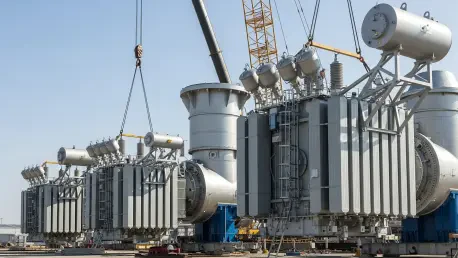
The economic ripple effects of these supply chain bottlenecks are eventually reflected in the line items of residential utility bills through capital expenditure recovery programs. Regulators traditionally allow utility companies to pass the costs of new equipment and maintenance through to the consumer base, provided those expenses are deemed necessary for reliable service. However, the artificial inflation caused by the data center sector’s demand for transformers and switchgear complicates this regulatory process. When a utility pays double the historical price for a turbine due to market competition, the state commission has little choice but to approve the higher rate to maintain grid stability. This dynamic effectively forces residential customers to subsidize the market volatility created by the AI industry’s expansion. Experts note that the strain is not limited to generation equipment alone; it extends to the specialized labor force required to install and maintain high-voltage systems. As tech firms hire away skilled electricians and engineers with lucrative offers, the cost of labor for public utilities continues to climb, further burdening the average ratepayer with indirect but substantial expenses.
Infrastructure Expansion: High-Voltage Transmission and Shared Burden
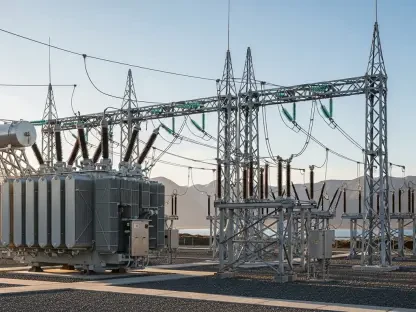
A critical and often overlooked aspect of the data center expansion is the massive investment required for high-voltage transmission lines and grid readiness projects. Even in scenarios where a tech company generates its own electricity, the facility must remain interconnected with the regional grid to ensure redundancy and manage the fluctuations of energy demand. These interconnections require the construction of sophisticated substations and miles of heavy-duty wiring capable of handling the intense heat and load of a multi-megawatt operation. For instance, the PJM Interconnection, which manages the grid for over sixty million people across thirteen states, has already moved to authorize over eleven billion dollars in new transmission infrastructure specifically to accommodate data center growth. Unlike private power plants, these transmission lines are legally classified as part of the shared public network, meaning their construction costs are socialized across the entire customer base. This creates a situation where a homeowner in a rural area may see a rate increase to fund a high-capacity line that exclusively serves a corporate server campus located hundreds of miles away.
The technical complexity of integrating these massive industrial loads into the existing grid architecture also introduces significant operational risks that increase overall system costs. Grid operators must implement advanced software and hardware solutions to protect against the potential for localized surges or outages caused by the concentrated demand of data centers. These “system readiness” upgrades are essential for preventing regional blackouts, yet they represent a massive capital outlay that was not factored into utility budgets just a few years ago. Because the grid must be built to handle the highest possible peak load, the presence of data centers forces utilities to maintain a much higher level of reserve capacity than would otherwise be necessary. The maintenance and operation of this excess capacity are ongoing expenses that persist long after the initial construction is completed. Consequently, the socialized nature of transmission costs remains one of the most significant hurdles to achieving true energy equity. Without a localized cost-allocation model that targets the entities responsible for the demand, the financial burden will continue to be distributed among those least able to afford it.
Financial Safeguards: Mitigating the Risk of Stranded Assets
Regulators are increasingly focused on the long-term economic dangers posed by the inherent volatility of the technology sector, particularly the risk of “stranded assets.” This term refers to the billions of dollars in infrastructure that might be built for a specific data center project only to become obsolete or unused if the company fails or moves its operations elsewhere. To mitigate this risk, some forward-thinking utilities have begun implementing strict financial requirements for industrial developers, such as demanding upfront payments for eighty to eighty-five percent of projected power usage. These “take-or-pay” contracts ensure that the capital invested in substations and lines is recovered from the corporation rather than from the local community in the event of a project cancellation. This shift represents a move away from traditional utility models where risk was almost entirely borne by the public. However, the implementation of these safeguards varies wildly from state to state, creating a patchwork of regulatory environments that some companies may attempt to exploit by choosing locations with the most lenient financial oversight.
The tension between federal objectives and state-level regulation further complicates the landscape of energy finance. While the White House can advocate for national pledges of corporate responsibility, the actual math of a utility bill is finalized by state public utility commissions. These bodies must navigate the intense lobbying efforts of tech firms that argue for “competitive” rates to encourage local job creation and investment. At the same time, they must listen to the concerns of low-income advocates who warn that the cumulative effect of these grid upgrades will drive millions of households into energy poverty. This local regulatory battle is where the true cost of the AI revolution will be decided. Experts suggest that the only way to avoid a significant rise in residential bills is to establish a clear, federally mandated framework for cost allocation that prioritizes the protection of the small-scale ratepayer. Without such a standard, the pursuit of digital supremacy may leave the nation’s power grid more robust, but at a price that many citizens are ill-equipped to pay as the decade progresses.
Future Outlook: Steps Toward Sustainable Energy Equity
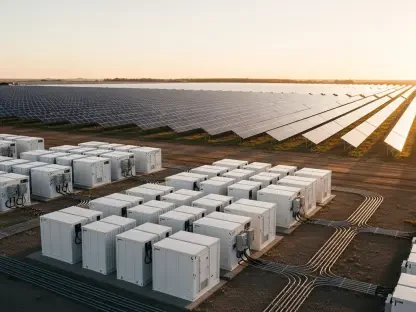
Addressing the financial strain of the data center boom required a fundamental shift in how the nation approached infrastructure funding and corporate oversight. State regulators began to adopt more aggressive cost-segregation models, ensuring that the specialized hardware needed for AI hubs was funded entirely by the developers rather than being rolled into the general rate base. Utilities also shifted toward modular grid designs that allowed for more flexible integration of private generation, reducing the overall need for massive, socialized transmission projects. This transition was supported by new federal standards that mandated transparency in energy agreements, allowing the public to see exactly how industrial demand influenced their monthly costs. Furthermore, the industry saw an increase in the use of onsite energy storage systems, which allowed data centers to buffer their own peak loads and reduce their reliance on the public grid during high-demand periods. These collective actions represented a move toward a more balanced energy ecosystem where technological progress did not inherently come at the expense of consumer affordability.
The resolution of the energy pricing crisis ultimately depended on the ability of policymakers to balance the speed of innovation with the necessity of social protection. Moving forward, the development of localized microgrids and the expansion of corporate-owned renewable energy portfolios will play a vital role in decoupling industrial growth from public utility stability. It became clear that the traditional utility model, designed for a pre-digital age, was no longer sufficient to manage the immense concentrated loads of the AI era. By implementing rigorous financial protections and encouraging technological self-sufficiency among the largest consumers, the energy sector began to stabilize. The focus remained on fostering a landscape where the benefits of artificial intelligence could be realized without compromising the financial security of the average household. This proactive management of resource allocation and cost distribution ensured that the burden of modernizing the national grid was shared equitably, setting a new precedent for how the country handles large-scale industrial transformations in the future.