
The architectural limitations of modern energy storage have long been the Achilles’ heel of the global transition to renewable power, leaving a massive gap between energy generation and consistent delivery. While the world has spent decades chasing the elusive “perfect” battery, a solution has emerged from an unlikely source: the 1901 laboratories of Thomas Edison. By marrying the rugged, indestructible nature of nickel-iron chemistry with the precision of 21st-century nano-engineering, researchers have developed a system that effectively eliminates the degradation issues inherent in current lithium-ion technologies. This review examines how this “rebooted” chemistry is shifting from a historical curiosity to a cornerstone of industrial energy infrastructure.
The Rebirth of Nickel-Iron Chemistry: Origins and Evolution
Thomas Edison originally designed the nickel-iron battery to power the first generation of electric vehicles, valuing its extreme durability and non-toxic components. However, the original design suffered from a low power-to-weight ratio and agonizingly slow charging rates, leading to its eventual displacement by the internal combustion engine and, later, the lithium-ion cell. The core principle involves a nickel-based cathode and an iron-based anode submerged in an alkaline electrolyte, a combination that is nearly impossible to damage through overcharging or deep discharging.
In the current technological landscape, this chemistry has been rediscovered as a sustainable heavyweight. As the industry moves toward 2027 and 2028, the environmental cost of lithium extraction and the fire risks of cobalt-based systems have become significant liabilities. The nickel-iron system offers a “forever battery” alternative that utilizes abundant, earth-friendly materials. By applying modern fabrication techniques to Edison’s foundation, engineers have mitigated the historic sluggishness of the reaction, creating a system that retains its legendary 30-year lifespan while meeting modern performance demands.
Architectural Innovations and Nano-Engineering
Biomimetic Synthesis and Protein-Derived Scaffolding
To solve the conductivity issues of the original iron-nickel design, researchers turned to biomineralization, a process where living organisms use proteins to grow complex structures like bone or mother-of-pearl. By utilizing specific proteins as a biological template, scientists can force metallic ions to assemble into highly ordered, ultra-fine clusters. This scaffolding ensures that the active materials are not just clumped together but are strategically placed at a molecular level to maximize electrical contact.
This approach represents a shift from “top-down” manufacturing to “bottom-up” biological assembly. The proteins act as a guide, preventing the metallic particles from aggregating into large, inefficient masses. This mimics the structural integrity of natural shells, providing a flexible yet robust framework that can withstand the physical stresses of rapid ion movement. The result is a battery electrode that behaves more like a living tissue than a static metal plate, allowing for significantly higher efficiency during high-stress operation.
Graphene-Nickel-Iron Aerogel Structures
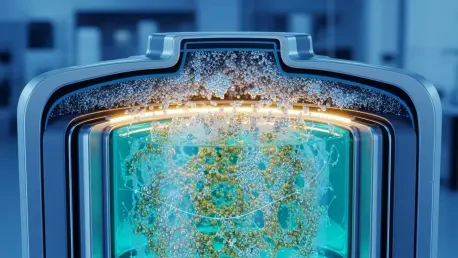
The integration of graphene-based aerogels has transformed the battery’s internal geometry from a dense solid into a porous, three-dimensional network. These aerogels consist of approximately 99% air by volume, creating a vast “internal playground” for chemical reactions. By embedding nickel and iron nanoclusters onto two-dimensional carbon sheets, the total reactive surface area is increased by several orders of magnitude compared to traditional plates.
This structural shift is critical because it reduces the distance ions must travel to complete a circuit. In a standard battery, ions often get “stuck” in the deep layers of the electrode, leading to heat buildup and energy loss. However, the aerogel’s interconnected pathways allow for nearly instantaneous ion transport. This unique architecture not only lightens the overall weight of the system but also ensures that the entire volume of the material, rather than just the surface, is actively contributing to energy storage.
Atomic-Scale Engineering of Nanoclusters
Scaling materials down to five-nanometer clusters or even single-atom sites represents the ultimate frontier of this technology. At this scale, nearly every single atom of nickel and iron is exposed to the electrolyte, meaning almost 100% of the material is utilized. This is a massive leap over conventional batteries, where a significant portion of the internal metal remains “dead weight” that never participates in the energy exchange.
The precision required for this atomic-scale engineering ensures that the chemical bonds are optimized for rapid electron transfer. By controlling the placement of individual atoms, engineers can tune the electrochemical potential of the battery to prevent unwanted side reactions, such as the production of hydrogen gas, which plagued Edison’s original prototypes. This level of control allows the battery to maintain its integrity over thousands of cycles without the typical “fading” seen in consumer electronics.
Recent Breakthroughs in Ultrafast Energy Transfer
The most startling advancement in this field is the transition from charging times measured in hours to “seconds-long” bursts. Modern nano-enhanced nickel-iron units can now achieve a full charge in roughly two minutes, a feat previously reserved for supercapacitors. This leap was made possible by optimizing the interface between the nanocrystals and the carbon support, which allows for a flood of electrons to enter the system without damaging the underlying structure.
Furthermore, the manufacturing process has evolved from using animal-based proteins to sustainable, plant-based polymers. This shift not only reduces the ethical and logistical complexity of the supply chain but also allows for better consistency in the synthetic scaffolding. These plant-derived polymers are more stable under high temperatures, which has enabled the production of batteries that can operate in extreme environments—from desert solar farms to arctic research stations—without the need for complex cooling systems.
Strategic Applications in Modern Infrastructure
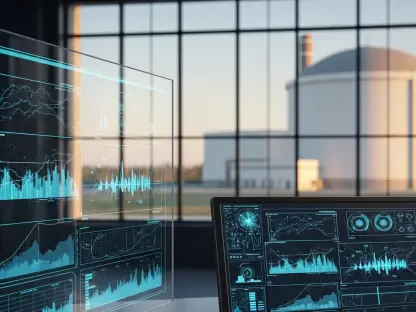
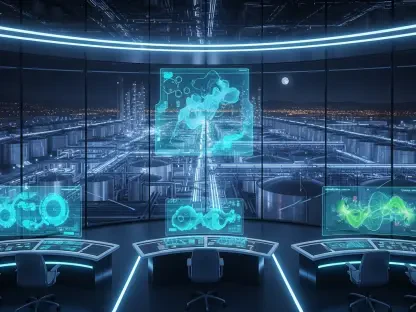
The primary deployment of this technology is currently seen in high-capacity data centers and grid-scale storage. In these environments, the sheer weight of the battery is less important than its safety and longevity. Unlike lithium-ion systems, which require complex fire suppression and can fail catastrophically, the nickel-iron system is inherently non-flammable. This makes it the preferred choice for massive underground storage vaults where a fire would be impossible to extinguish.
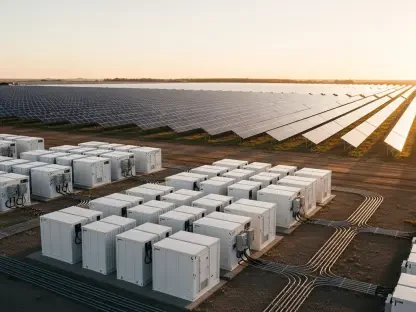
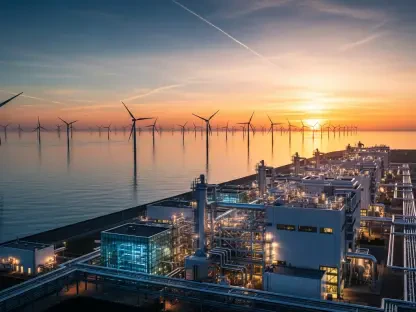
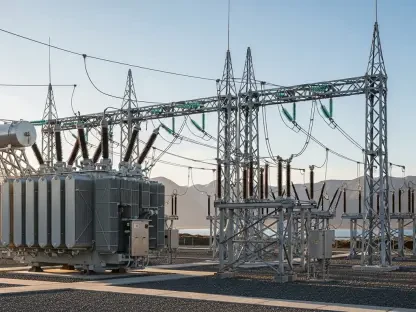
Moreover, the technology is becoming the backbone of stationary grid storage for renewable energy. Solar and wind farms generate power intermittently, necessitating a storage solution that can handle constant, deep cycling every single day. The nano-enhanced nickel-iron battery thrives under these conditions, soaking up excess midday solar energy and releasing it throughout the night. Its ability to endure decades of this treatment without replacement makes it far more cost-effective for utilities than any other high-density chemistry currently on the market.
Addressing Technical and Market Barriers
Despite these breakthroughs, the technology faces a significant hurdle in volumetric energy density. Even with nanotechnology, a nickel-iron battery requires more physical space than a lithium-ion equivalent to store the same amount of power. This limitation largely excludes it from the smartphone and compact electric vehicle markets. However, for stationary applications where space is abundant, this trade-off is often negated by the system’s superior safety profile and lower lifetime costs.
Manufacturing at scale remains another challenge, as the precise fabrication of five-nanometer clusters is more complex than traditional electrode coating. Current development efforts are focused on industrial-scale chemical vapor deposition and automated biomineralization tanks to bring costs down. As these techniques mature through 2027, the price per kilowatt-hour is expected to drop significantly, potentially undercutting the long-term price of lithium-based systems when factoring in the lack of replacement costs over a 30-year period.
Future Outlook: Beyond Lithium-Ion Dominance
The trajectory of this technology points toward a specialized but dominant role in long-duration energy storage. While lithium-ion will likely maintain its grip on mobile devices, the nano-enhanced nickel-iron system is positioned to become the standard for “civilizational” infrastructure. Future breakthroughs are expected to involve the integration of even more conductive carbon allotropes, which could further push the boundaries of power density and thermal stability.
Ultimately, this technology offers a path toward true global sustainability by decoupling energy storage from the scarcity of rare earth minerals. By relying on iron—one of the most abundant elements on Earth—and nickel, the industry can move toward a circular economy where battery materials are easily recycled or even repurposed for structural use after their electrochemical life ends. This shift will significantly reduce the geopolitical tensions currently associated with the battery supply chain.
Conclusion: Assessing the Impact of Nano-Enhanced Storage
The integration of nanotechnology into the nickel-iron framework effectively solved the century-old puzzle of how to make a durable battery fast enough for modern life. By utilizing biomimetic scaffolding and graphene aerogels, researchers managed to bypass the chemical bottlenecks that limited 20th-century iterations. The resulting technology provided a blueprint for safe, long-lasting energy storage that prioritized reliability over the sheer compactness of lithium-based cells.
Looking forward, the success of this technology depended on the aggressive expansion of automated nanomanufacturing to reduce initial capital expenditures. The transition toward iron-based chemistries offered a decisive solution for stabilizing the renewable energy grid, proving that the most sustainable future often required a radical re-engineering of the past. It was through this synthesis of historical chemistry and atomic precision that a carbon-neutral infrastructure became economically viable, fulfilling a vision of clean energy that was first proposed over a hundred years ago.