
The hum of a modern electrical grid is no longer just the sound of burning carbon; it is increasingly the silent, steady pulse of lithium-ion cells waiting to breathe life into the state’s homes and businesses. New Jersey is currently executing one of the most ambitious infrastructure pivots in the nation, moving beyond the theoretical benefits of renewable energy into a phase of massive, tangible implementation. By green-lighting 355 MW of battery storage in a single strategic move and immediately opening the door for 645 MW more, the Garden State is signaling that the era of intermittent energy anxiety is coming to a close. This transition represents a sophisticated shift from a “just-in-time” generation model to a “storage-on-demand” architecture.
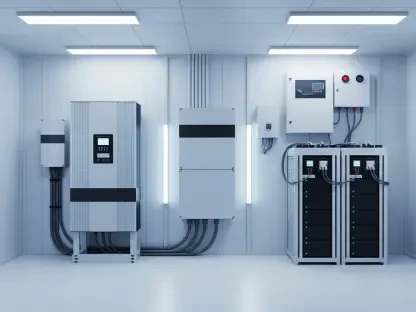
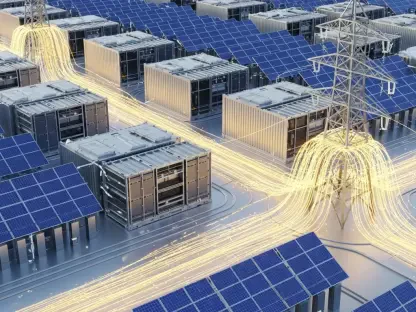
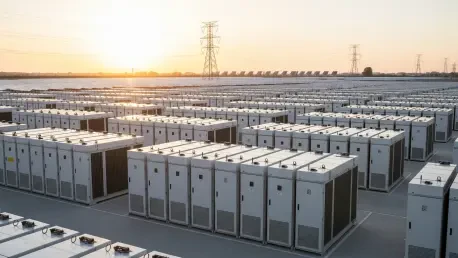
This massive surge in capacity is not merely a technical upgrade; it is a fundamental reconfiguration of how a densely populated state maintains its economic and environmental resilience. The Garden State Energy Storage Program (GSESP) serves as the primary engine for this change, with an immediate target of 1 GW of capacity by this summer and a long-term goal of reaching 2 GW by 2030. These batteries act as the ultimate safeguard for the grid, allowing the state to capture surplus energy during periods of low demand and redistribute it when the system is under the most stress.
Why Energy Storage Is the Missing Piece of New Jersey’s Clean Energy Puzzle
The inherent limitation of renewable sources has always been their lack of synchronization with human activity; the wind often howls at midnight while the sun peaks at noon, yet the highest demand for electricity occurs during the early evening. To bridge this gap, New Jersey must solve the volatility of supply to prevent blackouts and reduce reliance on emergency “peaker” plants that run on fossil fuels. Large-scale storage provides the necessary buffer, ensuring that the clean energy generated by the state’s expanding solar and wind farms does not go to waste when the clouds move in or the breeze dies down.
Moreover, the integration of these systems is essential for achieving the state’s aggressive climate mandates. Without a way to bottle up sunshine and wind, the grid remains tethered to traditional base-load power plants that cannot be easily throttled. High-density battery arrays provide the instantaneous response time needed to stabilize grid frequency and voltage, which are critical for protecting sensitive electronics and heavy industrial equipment. This flexibility transforms the grid into a more intelligent, responsive organism capable of handling the complexities of a modern economy.
Repurposing the Past: Transforming Fossil Fuel Hubs into Green Infrastructure
A defining characteristic of New Jersey’s approach is the strategic reuse of “brownfield” sites, which are locations previously occupied by industrial or energy-producing facilities. The Woods Landing and Two Rivers projects, which combined offer 350 MW of storage, are being developed on the grounds of either defunct or currently operating fossil fuel plants. This choice is incredibly pragmatic because these sites already possess the heavy-duty transmission lines and substation interconnections required to move massive amounts of power. By building on these footprints, the state bypasses the lengthy and expensive process of clearing new land and erecting miles of new towers.
Furthermore, this strategy revitalizes local economies that were once dependent on coal or gas production. Instead of leaving these industrial sites to decay, the state is turning them into the high-tech hubs of the future energy economy. This model minimizes environmental disruption and limits land-use conflicts in a state where open space is at a premium. It demonstrates that the path toward a carbon-neutral future does not always require starting from scratch; often, it involves intelligently retrofitting the infrastructure that defined the previous century.
Leveraging Market Dynamics to Protect Ratepayers and Ensure Stability
While the environmental arguments for storage are clear, the economic strategy behind New Jersey’s push is what truly sets it apart. The New Jersey Board of Public Utilities has carefully timed its solicitations to align with the PJM Interconnection’s capacity auctions, which determine the regional prices for electricity reliability. By injecting hundreds of megawatts of storage into these auctions, the state effectively lowers the wholesale cost of power. Experts suggest this coordinated effort will save New Jersey ratepayers over $169 million by reducing the need for expensive, high-emission energy during peak hours.
This market-driven approach also creates a ripple effect throughout the regional energy sector. By providing clear, long-term financial incentives, New Jersey is attracting global developers who see the state as a stable environment for large-scale capital investment. This regional synergy is part of a growing trend across the Northeast, where states like New York and Massachusetts are also setting bold targets. Together, these states are creating a unified market signal that encourages the mass production of storage hardware, eventually driving down costs for everyone in the Mid-Atlantic corridor.
A Blueprint for Grid Modernization: Practical Strategies for Transition
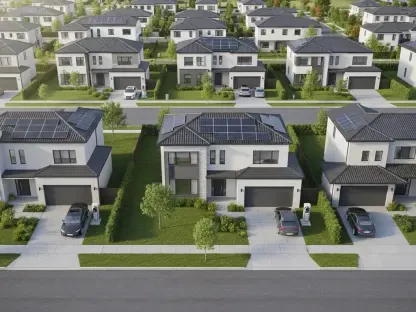
The success of the Garden State’s energy evolution provides a replicable framework for other regions struggling to balance reliability with decarbonization. A key pillar of this strategy is the synchronization of bulk energy storage with decentralized assets like community solar. New Jersey is currently expanding its community solar program by 3,000 MW, ensuring that the energy being stored is increasingly sourced from local, renewable producers. This dual-track approach—scaling up both generation and storage simultaneously—prevents the bottlenecks that have stalled green energy transitions in other parts of the country.
Policymakers and grid operators elsewhere looked to New Jersey as a case study in administrative efficiency and market integration. The state proved that by offering predictable incentives and utilizing existing industrial infrastructure, it was possible to accelerate the deployment of advanced technologies without compromising the stability of the local economy. Developers were given the certainty they needed to break ground, while residents were offered a future with lower emissions and more predictable utility bills. This proactive stance effectively shifted the focus from managing the decline of old systems to engineering the dominance of new, sustainable ones.