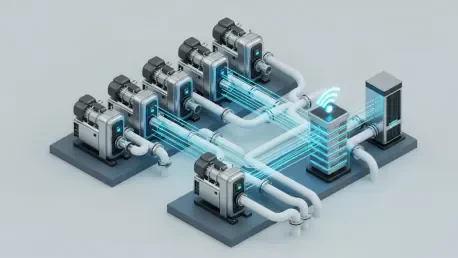

The industrial sector is currently grappling with a quiet but expensive crisis where the machinery powering the modern world is simultaneously draining its financial resources. While often overshadowed by high-profile investments in robotics or software, the humble air compressor—frequently dubbed the “fourth utility” alongside electricity, water, and gas—is undergoing a radical transformation that promises to redefine factory economics. This review examines how the latest generation of energy-efficient screw compressors has moved beyond simple air displacement to become highly sophisticated, data-driven powerhouses capable of slashing overheads in an increasingly competitive global market.
Evolution of Screw Compressor Technology
The journey of the screw compressor began with a straightforward mechanical premise: using two interlocking helical rotors to trap and compress air. In its earliest iterations, this technology was valued primarily for its reliability and its ability to provide a continuous flow of air compared to the pulsating output of older piston models. However, these early systems were notorious for their inefficiency, often running at full speed regardless of actual demand, which led to staggering amounts of wasted electricity and heat. As global industry expanded, the need for a more refined approach became a matter of survival rather than just a preference.
Today, the technology has reached a point where the physical architecture of the compressor is inextricably linked to its digital intelligence. The core principles of rotation and volume reduction remain, but the context has shifted toward a “Total Cost of Ownership” (TCO) philosophy. In a modern industrial environment, the initial price tag of a compressor is dwarfed by the electricity it consumes over its lifespan, which can account for nearly 80 percent of its total operating cost. This realization has pushed manufacturers toward a path of aggressive refinement, turning a basic mechanical tool into a precision instrument that serves as the lifeblood of manufacturing infrastructure.
Core Innovations in Energy Efficiency
Permanent Magnet (PM) Motors and Variable Speed Drive (VSD)
The marriage of Permanent Magnet (PM) motors with Variable Speed Drive (VSD) technology represents perhaps the most significant leap in compressor efficiency. Traditional induction motors often lose significant efficiency when forced to operate at lower speeds or varying loads, leading to energy “leakage” during periods of low demand. PM motors, however, maintain exceptionally high torque and efficiency across their entire operational range. This means that if a factory floor only requires 30 percent of the compressor’s capacity during a night shift, the motor adjusts accordingly without the massive energy losses typical of older hardware.
Furthermore, the VSD acts as the brain of this operation, precisely matching the motor speed to the real-time air consumption. This eliminates the “unload” cycle—a state where the motor continues to spin at full speed even when no air is being delivered. By avoiding these wasteful cycles, businesses can see a direct and immediate reduction in their utility bills. The unique advantage of this implementation is the ability to maintain a steady pressure within the system, which not only saves energy but also reduces the mechanical wear and tear associated with the frequent starting and stopping of traditional units.
Two-Stage Compression Mechanics
To understand why two-stage compression is superior, one must look at the physics of heat. When air is compressed rapidly in a single stage, it generates a massive amount of thermal energy, which increases the resistance against the rotors and lowers the density of the air. This makes the machine work harder to achieve the same result. By dividing the compression workload into two distinct phases with an intercooler in between, the process approaches what engineers call a “near-isothermal” state. The air is cooled after the first stage, making it easier to compress in the second, which significantly reduces the total energy required for the cycle.
This mechanical division of labor does more than just save power; it enhances the longevity of the entire system. Because each stage is responsible for a smaller pressure ratio, the internal components like bearings and seals are subjected to less stress and lower temperatures. This implementation is particularly effective in high-demand environments where the equipment must run 24/7. By spreading the physical burden across two stages, manufacturers have created a system that is both more efficient and more resilient, providing a clear competitive edge over single-stage competitors that struggle with thermal management.
Precision Rotor Profile Engineering
The rotor profile is the “heart” of any screw compressor, and the modern era has seen these components move into the realm of extreme precision engineering. Recent advancements in manufacturing technology have allowed for the development of “third-generation” screw profiles with tighter tolerances than ever before. This is critical because any gap between the rotors allows air to leak back toward the intake, a phenomenon known as “blow-by.” Reducing these clearances ensures that every rotation of the screw maximizes air delivery, minimizing internal turbulence and energy waste.
Moreover, these refined profiles are designed to optimize oil film distribution, which is essential for both cooling and sealing the compression chamber. The integration of advanced thermal management within the rotor housing allows these machines to operate at peak efficiency even in harsh industrial conditions. The result is a machine that produces more cubic feet of air per kilowatt-hour than its predecessors. This level of microscopic refinement demonstrates that even in a digital world, physical engineering remains a primary driver of industrial sustainability and performance.
Current Trends in the Compressed Air Industry
A major shift is currently occurring in the geographic and technological leadership of the compressed air sector, with high-tech manufacturing hubs in regions like China taking a dominant role. These manufacturers are no longer just focused on mass production; they are prioritizing “core technological independence.” By moving away from relying on external suppliers for critical components like the screw host, these companies are able to optimize their designs from the ground up. This vertical integration allows for a much faster innovation cycle and a more cohesive final product that is tailored to specific efficiency standards.
Another defining trend is the democratization of high-performance technology. In the past, advanced features like two-stage compression or PM motors were reserved for high-end, premium-priced models. Today, the global push for carbon neutrality and rising energy costs have made these features the baseline for the industry. Market leaders are now focusing on providing “plug-and-play” solutions that integrate air treatment directly into the compressor unit. This shift simplifies the installation process and ensures that the efficiency gains achieved by the compressor are not lost to poorly designed external piping or filtration systems.
Industrial Applications and Integrated Solutions
The versatility of energy-efficient screw compressors is evident in their wide range of applications, from the high-precision world of electronics to the heavy-duty environments of automotive assembly. In chemical processing plants, where a consistent and clean air supply is non-negotiable, these systems provide the stability required to maintain complex chemical reactions without the risk of pressure drops. Similarly, in the textile industry, where margins are often razor-thin, the energy savings provided by modern screw compressors can be the difference between a profitable quarter and a loss.
A noteworthy development is the rise of integrated air treatment systems. By combining the compressor with built-in refrigerated dryers and high-precision filtration, manufacturers have eliminated the need for complex external setups that often cause significant pressure drops. These integrated systems ensure that the air reaching the tools is dry and free of contaminants, which protects sensitive pneumatic components and reduces downstream maintenance costs. This holistic approach to air system design reflects a broader understanding that efficiency is not just about the pump, but about how the air is managed from intake to the final point of use.
Technical Challenges and Market Obstacles
Despite the clear advantages, the adoption of high-efficiency technology is not without its hurdles. The most prominent obstacle is the high initial capital expenditure required for advanced two-stage or PM motor systems. For many smaller enterprises, the upfront cost can be a deterrent, even if the long-term energy savings guarantee a return on investment within 18 to 24 months. Furthermore, the high-precision nature of these machines requires a more sophisticated level of maintenance. You cannot simply use generic parts or unskilled labor to service a machine with such tight tolerances without risking a catastrophic drop in efficiency.
Another challenge lies in the complexity of the global supply chain. While domestic manufacturing in regions like China has become more robust, the availability of specialized semiconductors and high-grade permanent magnets can still be subject to market volatility. This has led many manufacturers to invest heavily in securing their own supply lines and developing more resilient designs. While these efforts are mitigating the risks, the reliance on advanced materials remains a point of vulnerability for the industry as it moves toward even more complex and efficient designs.
Future Outlook and Intelligent Control
The future of compressed air lies in the transition from “active” machines to “intelligent” systems through the Internet of Things (IoT). We are moving toward an era where compressors are no longer isolated units but part of a centralized, AI-driven network. Smart controllers now monitor hundreds of data points in real-time, from vibration patterns to temperature fluctuations, allowing for predictive maintenance. This means the system can alert a technician to a potential bearing failure before it actually happens, preventing the massive financial losses associated with unplanned downtime.
Looking ahead, the coordination of entire “compressor rooms” will become the standard. Instead of multiple units running independently, a centralized AI will distribute the load across the most efficient machines in the fleet based on current demand. This level of orchestration ensures that the entire facility operates at its peak efficiency point 100 percent of the time. As global energy prices remain volatile and environmental regulations tighten, these intelligent systems will play a pivotal role in helping the industrial sector balance the demands of high-volume production with the absolute necessity of resource conservation.
Summary of Findings
The evolution of energy-efficient screw compressors has demonstrated a clear shift from basic mechanical utility to a strategic asset for industrial sustainability. The integration of permanent magnet motors, variable speed drives, and two-stage compression has effectively dismantled the old trade-off between power and efficiency. These advancements have allowed manufacturers to achieve a near-isothermal compression process that was once purely theoretical. By focusing on the “heart” of the machine through precision rotor engineering and vertical manufacturing, the industry has successfully reduced the total cost of ownership while enhancing operational reliability across diverse sectors.
In the final assessment, the transition to high-efficiency compressed air systems has become an essential strategy for any business looking to insulate itself against fluctuating energy markets. The integration of IoT and predictive diagnostics has further solidified these machines as the cornerstone of the smart factory. Moving forward, the industry must continue to address the challenges of initial capital costs and specialized maintenance requirements to ensure these technologies remain accessible to a broader market. Ultimately, the successful marriage of mechanical precision and digital intelligence has transformed energy conservation from a regulatory burden into a tangible competitive advantage for the global industrial economy.