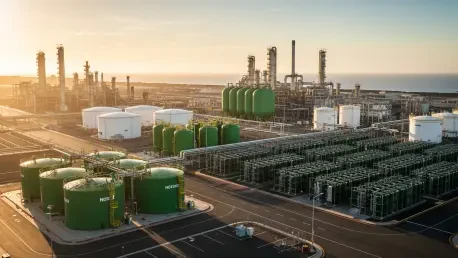

The architectural challenge of powering an island chain sitting two thousand miles from the nearest continent is often hidden behind the aesthetic of a tropical paradise, yet the reality is a high-stakes engineering feat. While national headlines often celebrate Hawaii as a leader in solar adoption, the state operates within a fragmented system of six electrically isolated island grids, each tied to a globalized petroleum supply chain. This isolation creates a unique industry environment where the cost of energy is inextricably linked to the volatility of crude oil markets. Currently, the energy sector is defined by a deep-seated reliance on liquid fuels that dwarfs the progress made in renewable electricity generation. Despite aggressive state goals, the scope of the energy transition extends far beyond the utility pole, encompassing a complex web of marine logistics, refining infrastructure, and heavy industrial demand.
Technological influences are shifting the landscape, with large-scale battery storage and geothermal energy providing new stability to once-fragile grids. Major market players, including Hawaiian Electric and various independent power producers, are navigating a regulatory environment that increasingly penalizes carbon-intensive operations. However, the significance of the current state lies in the realization that electricity is merely the tip of the iceberg. The broader energy ecosystem includes massive industrial applications and a refining sector in Kapolei that serves as the heart of the islands’ fuel distribution. This infrastructure ensures that even as wind and solar farms proliferate, the underlying foundation of the economy remains tethered to a traditional, fossil-fuel-based model.
The Fragmented Reality of Hawaii’s Isolated Energy Ecosystems
The operational reality of the Hawaiian energy market is characterized by a complete lack of inter-island transmission. Unlike the continental United States, where power can be wheeled across state lines to balance supply and demand, each Hawaiian island must function as a self-sustaining energy fortress. This fragmentation means that a surplus of wind energy on Maui cannot assist O’ahu during a peak demand period, necessitating redundant systems and high levels of local reserve capacity. Consequently, the industry is not a single market but a collection of micro-markets, each with its own pricing structures and technical hurdles. This structure places an immense burden on local utilities to manage frequency and voltage stability without the safety net of a larger regional grid.
Regulation plays a decisive role in shaping this ecosystem, as the state has moved toward performance-based regulation to incentivize utilities to transition away from the traditional “cost-plus” model. This shift encourages the integration of customer-sited resources, such as rooftop solar, which has already achieved some of the highest penetration rates in the world. Yet, the industrial backbone remains focused on the central petroleum refinery, which processes approximately 94,000 barrels of crude per day. This refinery acts as the primary clearinghouse for the state’s energy needs, illustrating that while the “grid” is getting cleaner, the “ecosystem” still relies on a single, vulnerable point of entry for its primary energy supply.
Mapping the Divergence Between Population and Power Demand
Demographic Distribution and the Geography of Consumption
Energy demand in Hawaii does not follow a linear path alongside population growth, as geographic and economic factors create distinct consumption profiles across the archipelago. O’ahu, housing roughly 70% of the state’s population, naturally acts as the primary engine of demand, yet it represents only about 62% of total energy use. This discrepancy highlights a significant trend: the neighbor islands, while less populated, are more energy-intensive on a per-unit basis due to the nature of their economies. Emerging technologies in the tourism and agricultural sectors are beginning to alter these patterns, as resorts move toward independent microgrids and smart building management systems to mitigate the high cost of imported power.
Consumer behavior is also evolving as residents respond to some of the highest electricity rates in the nation. This has driven a massive movement toward self-generation, with many households opting for “behind-the-meter” solutions that reduce their reliance on the centralized utility. This trend creates a market driver for residential energy storage systems, which are becoming a standard component of new home construction. However, the concentration of industrial activity on O’ahu means that while residential demand may flatten or decrease through efficiency, the heavy lifting of the energy transition remains centered in the industrial zones where massive amounts of power are required for water pumping, waste management, and manufacturing.
The Statistical Gap: Why Per-Capita Energy Use Varies by Island
Statistical analysis reveals that per-capita energy consumption varies significantly between the islands, with the Big Island and Maui often showing higher usage rates than the more densely populated O’ahu. On the Big Island, the vast distances between communities necessitate higher fuel consumption for ground transport, and the presence of energy-intensive agricultural processing adds to the load. Market data suggests that these regions will see a continued growth in demand for decentralized energy solutions as remote communities seek to insulate themselves from the high costs of fuel transport. Looking toward 2027 and 2028, performance indicators suggest that these islands will prioritize geothermal and hydroelectric expansion to bridge the gap.
Forecasts indicate that while O’ahu will remain the primary consumer of energy in absolute terms, the growth rate of renewable adoption will likely be faster on the neighbor islands where land for large-scale projects is more available. For instance, Kaua’i has already demonstrated a path forward by achieving periods of 100% renewable generation on its grid through a mix of solar and battery storage. This creates a forward-looking perspective where the neighbor islands serve as the experimental laboratories for technologies that will eventually be scaled for the more complex and constrained environment of Honolulu. The data points toward a future where the “per-capita gap” narrows as efficiency measures take hold in the more rural counties.
The Aviation Obstacle and the Dominance of Liquid Fuels
The most formidable barrier to a completely renewable Hawaii is not the electricity grid, but the massive demand for aviation fuel. Because the islands serve as a critical mid-Pacific hub, the energy required to fuel long-haul flights is immense, representing a staggering 80 TWh per year statewide. A single wide-body aircraft departing from Daniel K. Inouye International Airport can consume over 100 tons of fuel, a quantity of energy that current battery technology cannot hope to replace. This creates a technological and market-driven challenge that requires a shift toward sustainable aviation fuels (SAF) or hydrogen, both of which are currently in the early stages of commercial viability within the region.
Furthermore, the existing infrastructure is optimized for liquid fuels, and transitioning away from this model requires a complete overhaul of the supply chain. Ground transportation adds another layer of complexity, as the state consumes roughly 1.5 billion gallons of gasoline annually. While electric vehicle (EV) adoption is rising, it still represents a fraction of the total energy load. The strategy to overcome this obstacle involves a multi-pronged approach: increasing the efficiency of existing fleets, incentivizing the domestic production of biofuels, and investing in the charging infrastructure necessary to make EVs a viable option for all residents, including those in multi-family housing who lack dedicated charging ports.
Decarbonization Mandates and the Statutory Regulatory Landscape
The legislative framework in Hawaii is among the most ambitious in the world, with mandates requiring the state to reach 100% renewable electricity by 2045. These laws have fundamentally altered industry practices, forcing utilities to retire coal-fired plants and transition toward a mix of intermittent renewables and firm capacity. Compliance is no longer optional; it is the primary driver of capital investment. However, these regulations primarily target the power sector, leaving a significant portion of the total energy footprint—specifically transportation and industrial heat—unaddressed by the strictest mandates. This creates a regulatory “blind spot” that policymakers are now beginning to bridge through new carbon-pricing discussions and clean transportation initiatives.
Security measures and reliability standards also play a critical role in the regulatory landscape. As the grid becomes more dependent on weather-dependent resources like wind and solar, the Public Utilities Commission has implemented rigorous standards for grid stability. This has led to the emergence of “grid-forming” inverters and other sophisticated control technologies that allow the system to maintain balance without the traditional spinning reserve of large fossil-fuel turbines. The effect on the industry has been a surge in demand for specialized engineering talent and a shift in focus toward software-defined energy management, ensuring that the transition does not compromise the island’s economic security.
The Future of Hawaiian Energy: Transitioning the Transportation Sector
The next phase of the energy transition will be defined by the convergence of the power and transportation sectors. As ground transportation continues to electrify, the load on the electrical grid will increase, transforming EVs from simple consumers of power into distributed storage assets that can help stabilize the system. Emerging technologies like vehicle-to-grid (V2G) integration offer the potential for car batteries to feed power back into the islands’ grids during evening peaks, providing a market disruptor that could lower overall system costs. This shift will require new consumer preferences to take root, supported by a robust network of fast-charging stations that can handle the high-density traffic of urban Honolulu.
Looking toward the end of the decade, the focus will likely shift to the more difficult-to-abate segments, such as heavy trucking and inter-island shipping. Hydrogen fuel cells are being explored as a potential solution for these applications, as they offer the range and power density that batteries currently lack. Innovations in green hydrogen production, powered by surplus midday solar energy, could provide a dual benefit by solving the problem of “curtailment” while creating a clean fuel source for the maritime industry. These future growth areas represent a significant opportunity for investment, as the state moves beyond the low-hanging fruit of rooftop solar and toward a comprehensive, cross-sector energy strategy.
Synthesis of the 100% Renewable Vision and Strategic Recommendations
The path to a fully renewable Hawaii proved to be far more complex than a simple transition of the electrical grid. While the power sector made significant strides, the overwhelming weight of the transportation and industrial sectors remained a persistent challenge for the islands’ energy planners. The data confirmed that achieving 100% renewable electricity was a necessary but insufficient step toward total energy independence. Analysts realized that the state’s reliance on the central petroleum refinery could only be broken by addressing the 80% of energy consumption that occurs outside the utility meters. This required a fundamental reimagining of how the islands move people and goods, shifting from a model of imported liquid fuels to one of locally generated, high-density energy carriers.
Strategic recommendations for the coming years emphasize the need for a unified energy policy that treats electricity and transportation as a single, integrated system. Investment should be directed toward the development of domestic biofuel production and the infrastructure necessary to support hydrogen and synthetic fuels for aviation. Furthermore, the state must prioritize the hardening of its decentralized grids to ensure resilience against increasingly volatile weather patterns. By focusing on sector coupling and the electrification of heavy loads, Hawaii can begin to close the gap between its statutory goals and its physical reality. The prospects for growth remain strong in the sectors of long-duration storage and smart grid technology, which will be essential for the next decade of progress. Overall, the transition required a shift in perspective, acknowledging that the real victory lies in the total decarbonization of the entire economy, not just the light switch.