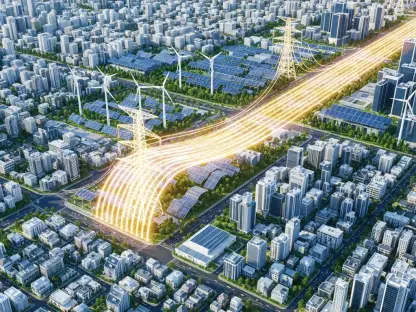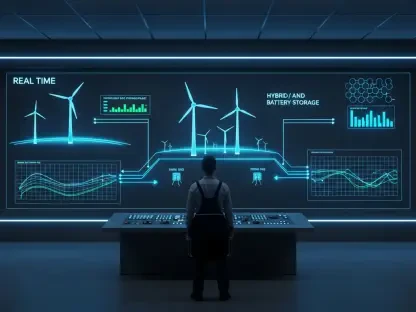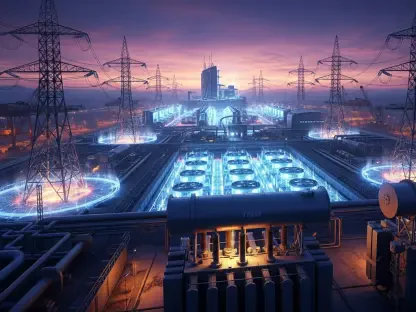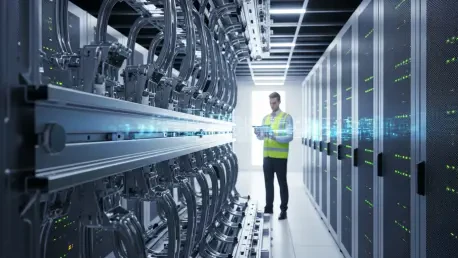

The relentless hunger of artificial intelligence is currently outstripping the ability of the global energy grid to deliver reliable electricity, forcing a radical reimagining of how digital infrastructure is powered. As computational demands skyrocket, the industry is moving away from its historical dependence on centralized utilities toward a model of self-sufficiency. This transformation is not merely a technical adjustment but a survival strategy for developers who find that energy certainty is now the single most important factor in their operational success.
The Great Power Transition in the Global Data Center Industry
The rapid proliferation of artificial intelligence is fundamentally altering the trajectory of digital infrastructure by demanding power densities that were unimaginable just a few years ago. While traditional cloud computing relied on steady, incremental growth, the AI-driven era requires massive, immediate injections of energy to support large language models and real-world processing tasks. This shift has turned the industry away from manageable utility loads toward a landscape where power requirements challenge the very foundations of existing grid capacities.
Market participants, ranging from hyperscalers to specialized colocation providers, are now grappling with a new hierarchy of needs. In this environment, the roles of equipment manufacturers have shifted from providing simple hardware to becoming essential partners in energy management. The primacy of power availability has officially surpassed land acquisition, labor availability, and even water rights as the primary constraint on global data center development. Without a guaranteed megawatt count, even the most strategically located site remains an unusable asset.
The Rise of Megascale Infrastructure and Market Dynamics
Engineering the Gigawatt-Scale Campus
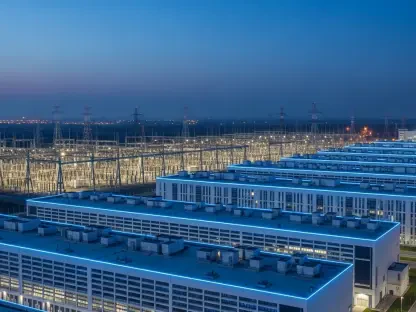
The emergence of city-sized loads is the most visible indicator of this infrastructure evolution, with projections suggesting that one-third of all data center campuses will exceed the gigawatt threshold by 2035. These sites are no longer just buildings; they are massive industrial complexes that consume as much electricity as medium-sized metropolitan areas. This scale requires a complete overhaul of how electricity is managed on-site to ensure that thermal loads do not compromise hardware performance or operational stability.
To meet these demands, developers are adopting next-generation electrical architectures that move away from traditional low-voltage configurations. The adoption of high-voltage central busways and direct current distribution is becoming the industry standard to enhance efficiency and reduce energy loss during transmission. These fundamental redesigns represent a technical evolution beyond simple size, indicating that the future of the industry lies in the sophisticated movement of electricity within the facility.
Data Center Power Projections and Forecasts
The race for time-to-power metrics has become the dominant factor in site selection, as the speed of utility interconnection determines which projects get built and which are shelved. Statistical trends indicate that the traditional geography of the industry is being redrawn by developers chasing power. Texas is a prime example of this trend, with forecasts indicating the market will command over 40 gigawatts of capacity by 2028, representing a massive 142% increase in market share as companies flee grid-locked regions.
This massive influx of capital into new territories is causing a steady erosion of traditional hubs. Established markets like Northern Virginia and Silicon Valley are losing their competitive edge because their aging grids and long permitting cycles cannot keep pace with the aggressive timelines of AI companies. Data-driven insights show that developers are increasingly prioritizing regions with agile grid responses, even if those areas lack the historical prestige of older tech corridors.
Overcoming the Interconnection Crisis and Infrastructure Deficits
A widening gap in utility expectations has created a crisis where interconnection lead times are running up to two years longer than initially promised. This misalignment creates a strategic cost of delay that few companies can afford, as the rapid pace of AI innovation risks making hardware obsolete before it ever receives its first watt of power. The friction between aggressive deployment schedules and the slow pace of utility upgrades has become a primary hurdle for nearly every major infrastructure project.
Navigating this deteriorating grid capacity requires developers to look beyond traditional partnerships and manage the supply chain more aggressively. Shortages of critical electrical components like transformers and switchgear have compounded the problem, making procurement as difficult as the engineering itself. To mitigate these constraints, industry leaders are increasingly securing their own supply lines and investing in labor forces capable of handling complex electrical installations without relying on third-party contractors.
Navigating the Regulatory and Compliance Landscape
Environmental permitting in the gigawatt era is becoming increasingly complex as emissions standards tighten for large-scale power generation. Developers must now balance the need for massive energy volumes with the requirement to meet carbon reduction mandates, often turning to cleaner technologies to satisfy both goals. This regulatory landscape is no longer a secondary concern; it is a core component of the site selection process, particularly in regions with strict air quality and noise ordinances.
Grid stability and regulatory oversight are also increasing as governments respond to the massive load demands AI places on public infrastructure. Energy commissions are scrutinizing how these “super-users” impact the electricity costs and reliability for residential and commercial neighbors. Furthermore, the shift toward decentralized, on-site power environments has elevated the importance of physical and cybersecurity compliance, as these independent energy systems become critical pieces of national infrastructure.
The Future of Energy: Self-Sufficiency and Technical Innovation
Onsite generation has transitioned from a backup strategy to a primary energy production method for entire campuses. This move toward islanded or grid-parallel systems allows developers to bypass utility delays and bring capacity online according to their own schedules. By becoming their own power producers, data center operators are gaining a level of autonomy that was previously reserved for the largest industrial manufacturers, effectively insulating their operations from external grid volatility.
Emerging technologies in distributed energy are facilitating this shift, with Solid Oxide Fuel Cells, reciprocating engines, and mobile turbines bridging the capacity gap. These solutions offer the modularity needed to scale power output as server racks are filled, rather than waiting for a massive substation to be completed. Forward-thinking utilities are recognizing this trend and are evolving their business models to integrate fuel cells and other grid-parallel solutions to maintain their relevance in an increasingly decentralized market.
Summary of the New Power Paradigm and Investment Outlook
The convergence of artificial intelligence and grid constraints necessitated a departure from centralized power models that dominated the industry for decades. As developers sought to secure their digital futures, they moved toward high-density architectures and on-site generation to mitigate the risks of utility stagnation. This transition redefined the competitive landscape, rewarding those who successfully integrated energy production directly into their campus designs. Geographic flexibility became a hallmark of the most successful projects, as capital flowed toward regions that could offer immediate power rather than just empty land.
Innovation in modular power and high-voltage distribution provided the necessary tools to navigate an era of unprecedented energy demand. Investors and developers who prioritized technological agility over traditional grid reliance positioned themselves to lead the market into a new phase of growth. The industry ultimately realized that the ultimate competitive advantage in the gigawatt era was the ability to generate and distribute power efficiently at scale. This fundamental shift ensured that the infrastructure could support the next wave of technological breakthroughs without being throttled by the limitations of the past.