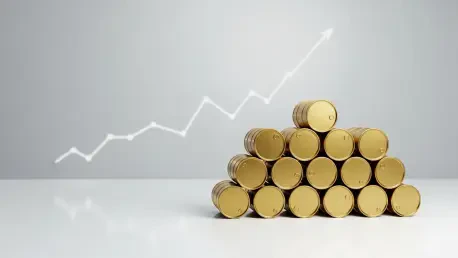

The era of cheap energy acting as a silent stabilizer for the global economy is rapidly fading into the rearview mirror as crude oil prices reclaim their role as a primary driver of financial volatility. For much of the previous year, the steady decline in petroleum costs provided a convenient tailwind for central banks, allowing them to claim victory over the post-pandemic price surges. However, as the calendar turned toward the current months of 2026, the narrative shifted abruptly, transforming what was once a deflationary drag into a brewing inflationary catalyst that threatens to upend delicate market recoveries.
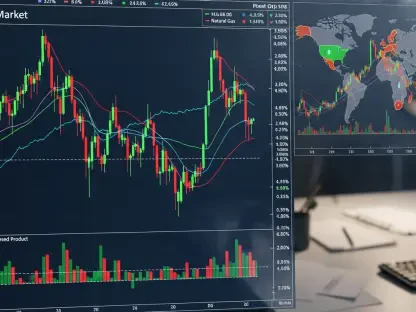
The recent price surge is not merely a statistical anomaly but a reflection of a tightening physical market. With West Texas Intermediate (WTI) crossing the $67 threshold and Brent crude consistently trading above $72 per barrel, the energy tailwind that supported the global economy has officially turned into a headwind. The critical question now facing global markets is whether central banks can realistically maintain their 2% inflation targets when the most basic input for global commerce is becoming significantly more expensive by the week.
Why the Shifting Oil Landscape Demands Immediate Attention
The urgency of this situation stems from the rapid evaporation of base effects, a mathematical phenomenon that previously masked underlying price pressures. Just two months ago, oil prices were trading at nearly a 30% discount compared to the previous year, providing a massive downward pull on headline inflation figures. That discount has now narrowed to nearly zero, meaning that any further increase in crude prices will immediately reflect as a year-on-year surge in Consumer Price Index (CPI) reports, removing the safety net that policymakers have relied upon for quarters.
Understanding the significance of energy in the modern economy requires looking beyond the gas station pump. Energy represents the largest expenditure category in the CPI outside of housing, and its price movements create a ripple effect that touches every corner of the global supply chain. From the cost of harvesting crops to the fuel surcharges applied to international shipping, a spike in energy costs acts as a hidden tax on both manufacturing and service delivery, ensuring that price hikes eventually reach the end consumer.
The Convergence of Geopolitics and Mathematical Reality
The current volatility is driven by a volatile mix of maritime anxiety and hard mathematics. The U.S.-Iran flashpoint has reintroduced a significant risk premium to the market, particularly regarding the Strait of Hormuz, a narrow corridor responsible for nearly 20% of global oil production. Even without a direct physical disruption, the mere threat of conflict in this transit point forces insurers to raise rates and traders to bid up prices, creating an immediate impact on the global energy bill regardless of current inventory levels.
This geopolitical tension is colliding with a fundamental tug-of-war between supply and demand. While global production has reached a staggering 106 million barrels per day, the early part of 2026 has seen a solid upturn in economic activity, particularly in emerging markets. This unexpected demand has tightened a market that many analysts predicted would be oversupplied, proving that even a massive production capacity cannot always buffer against short-term consumption spikes or regional instability.
The mathematical reality for advanced economies is sobering. Historical data indicates that a $10 increase per barrel of oil typically translates into a 0.2 percentage point boost in headline inflation within months. For nations already struggling to bring inflation down from the 3% range to the 2% target, this energy creep represents more than just a minor hurdle; it is a fundamental threat to the price stability that serves as the foundation for long-term economic growth.
Expert Perspectives on the Federal Reserve’s Dilemma
Federal Reserve officials are beginning to acknowledge this reality with a notable hawkish shift in their recent rhetoric. The threat to institutional credibility is high; if the central bank continues to cut interest rates while energy costs are pushing inflation upward, it risks unanchoring inflation expectations. Consequently, the optimistic projections for aggressive rate cuts in the latter half of the year are being replaced by a more cautious higher-for-longer stance as policymakers wait to see if the energy spike is transitory or structural.
Market analysts from major institutions like EY Parthenon and JPMorgan have signaled that the path toward lower interest rates has become increasingly murky. The consensus suggests that the secondary inflationary creep is the real danger. While the Federal Reserve often prefers to look at core inflation, which strips out energy, the persistent pressure of high fuel costs eventually leaks into the prices of services and durable goods, making it impossible for the central bank to ignore the headline figure for long.
Navigating a Volatile Energy and Inflationary Environment
To manage this environment, market participants must learn to track the base effect expiration as a primary indicator of upcoming CPI shocks. By monitoring how current oil prices compare to the twelve-month trailing average, businesses can anticipate when inflationary reporting will likely peak. Furthermore, evaluating countervailing forces like agricultural commodity trends and judicial rulings on trade tariffs will be essential, as these factors may provide a necessary buffer that prevents energy costs from triggering a full-scale inflationary spiral.
Strategic hedging has also become a mandatory framework for industries with high transportation and production sensitivity. Corporations that successfully locked in fuel prices during the lull of late 2025 are now finding themselves at a competitive advantage. Ultimately, the ability to interpret sticky inflation signals before they force a central bank pivot will separate the winners from the losers in this high-stakes economic transition.
The global financial community prioritized resilience over expansion as energy volatility returned to the forefront. Investors recognized that the era of predictable disinflation had ended, leading to a massive reassessment of portfolio exposure to energy-sensitive sectors. Businesses implemented advanced fuel-efficiency technologies and diversified their supply chains to mitigate the impact of the Strait of Hormuz risk premium. Central banks eventually paused their rate-cutting cycles, signaling that protecting the 2% inflation target remained the supreme priority over short-term market stimulus. This collective pivot toward defensive positioning provided the necessary stability to prevent a total inflationary relapse, even as energy costs remained elevated.