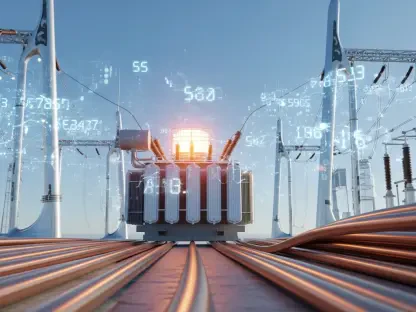

The international community now watches with bated breath as the primary pulse of the world’s power supply thumps with an increasingly erratic and dangerous rhythm. What was once a series of manageable regional frictions has transitioned into a systemic threat that could dismantle decades of global economic progress in a matter of weeks. Industry leadership has recently characterized the current atmosphere as the most significant crisis the regional oil and gas sector has ever faced. This instability is not merely a localized concern; it is a fundamental challenge to the “just-in-time” energy economy that fuels everything from massive cargo ships to the local grocery delivery truck.
The Fragile Balance of Global Energy Security
Modern energy markets operate on remarkably thin margins, leaving the global economy susceptible to even minor ripples in production. While the world has historically relied on various buffers to absorb shocks, those safety nets have worn dangerously thin. The current landscape is defined by a precarious intersection of geopolitical hostility and lean inventories, where a single miscalculation in the Persian Gulf can trigger an immediate and violent reaction in pricing across the Atlantic and Pacific.
This fragility is exacerbated by the fact that the majority of the world’s spare production capacity is concentrated within a handful of nations in the Middle East. Although other regions have increased their output over the last decade, they lack the immediate scalability required to replace a massive loss of Gulf crude. Consequently, the global energy landscape stands at a crossroads where the stability of international trade is tied directly to the security of a few specific geographic points.
Historical Context and the Evolution of Regional Instability
To appreciate the gravity of the current moment, it is necessary to recognize how the nature of energy shocks has changed since the late twentieth century. Previous crises often involved slow-moving embargoes or long-term structural shifts that allowed markets time to adapt or find alternatives. Today, however, the integration of global finance and energy logistics means that a disruption is felt instantaneously at the pump and on the factory floor, leaving no room for a gradual response.
The dependence on this region has persisted despite efforts to diversify sources, largely because of the unparalleled efficiency and volume of Middle Eastern extraction. While the rise of unconventional drilling in North America provided a temporary cushion, the reality remains that the global “energy heartbeat” still resides in the sands and waters of the Gulf. This historical reliance has created a vulnerability that is now being tested by unconventional warfare and shifting diplomatic alliances.
The Geopolitical Chokepoint and Market Vulnerability
The Strait of Hormuz: A Global Economic Arterial
The most significant physical vulnerability in the entire global energy infrastructure is the Strait of Hormuz, a narrow passage through which roughly twenty percent of the world’s oil consumption flows daily. Any credible threat to the free movement of tankers through this lane sends shockwaves through the maritime insurance and logistics industries. Because global oil inventories are currently languishing at five-year lows, the market lacks the physical reserves to withstand a prolonged closure of this waterway.
Strategic analysts point out that the conversation has shifted from theoretical risk to immediate physical danger following projectile strikes on major refineries and direct warnings to maritime operators. Unlike past eras when surplus supply was stored in Western facilities, the modern market relies on continuous, uninterrupted flow. If this arterial is compromised, the lack of immediate alternatives would likely paralyze global trade and send energy prices into an unprecedented vertical climb.
The Interconnected Domino Effect: Across Industries
A spike in crude prices acts as a regressive tax on every sector of the modern economy, triggering what leaders describe as a “drastic domino effect.” When the cost of oil rises, it immediately inflates the price of jet fuel for the aviation industry, feedstock for chemical manufacturing, and essential fertilizers for global agriculture. These costs are inevitably passed down to the consumer, reducing purchasing power and cooling economic growth on a global scale.
Furthermore, the automotive and manufacturing sectors face a dual threat from rising raw material costs and increased logistics expenses. When Middle Eastern supply is throttled, the resulting inflationary pressure often forces central banks to intervene with interest rate hikes, which can inadvertently tip stable economies into recession. This interconnectedness ensures that a localized conflict in the Gulf is, in reality, a shared global financial crisis.
Corporate Resilience: External Volatility
It is a striking paradox that while the world fears an energy collapse, major producers like Saudi Aramco continue to demonstrate immense financial strength. Recent reports indicate an adjusted net income exceeding $100 billion, driven by disciplined capital allocation and operational efficiency despite fluctuations in average crude prices. This internal success provides a deceptive sense of security, as the financial health of a producer does not necessarily translate to the security of the physical supply chain.
Company leadership has been vocal in stating that corporate profitability cannot shield the global market from a systemic failure of infrastructure. While these organizations remain profitable pillars of their respective states, their operational success is increasingly decoupled from the external volatility of the regions they inhabit. This gap highlights the reality that while the companies are resilient, the physical and political environment they operate in is more vulnerable than it has been in decades.
Future Projections and Emerging Disruptions
Looking toward the immediate future, the evolution of this crisis will likely be dictated by the rise of asymmetric threats, including drone technology and cyber warfare. These tools allow regional actors to bypass traditional naval defenses and strike directly at the heart of production facilities or digital control systems. Experts predict that this new reality will force a permanent “risk premium” into oil prices, as the market adjusts to the fact that the free flow of energy is no longer a guaranteed constant.
As we move forward, there will likely be an accelerated push for “near-shoring” energy sources and an even faster transition toward alternative power to mitigate Middle Eastern risk. However, the infrastructure for renewables is not yet robust enough to fully replace a total loss of Gulf oil in the short term. Consequently, the world must prepare for a period of heightened price volatility and a fundamental shift in how energy security is managed on an international level.
Strategic Takeaways for a Volatile Era
For policymakers and business leaders, the current climate necessitates a transition from reactive measures to proactive, long-term survival strategies. Relying on “just-in-time” delivery is no longer a viable model in an era of constant geopolitical friction. Actionable steps include the significant expansion of domestic storage capacities and the diversification of supply chains to include routes that bypass the most vulnerable geographic chokepoints.
Investors must also recognize that energy security is the foundational bedrock of all market stability; without it, traditional hedges may prove ineffective. Securing long-term supply contracts and investing in high-efficiency technologies are no longer just environmental goals but are now essential components of risk management. Consumers, too, should expect a future where energy costs are dictated more by geopolitical headlines than by the traditional laws of supply and demand.
Navigating an Uncertain Energy Future
The question of whether a regional conflict will ignite a global catastrophe was met with a complex reality where the ingredients for disaster were present, yet managed by thin margins of diplomacy. Financial resilience among the largest producers provided a temporary shield, but the underlying systemic risks associated with maritime security and depleted reserves were never fully resolved. The stability of the global economy eventually rested on the delicate balance of regional restraint and the speed of international cooperation.
Strategic diversification became the only viable path forward as the world realized that energy security was a collective responsibility rather than a regional concern. Stakeholders who prioritized infrastructure hardening and supply chain flexibility were better positioned to weather the storms of volatility. Ultimately, the crisis served as a stark reminder that the global economy could only remain secure if it addressed the fundamental vulnerabilities of its primary energy arteries before they were severed by conflict.