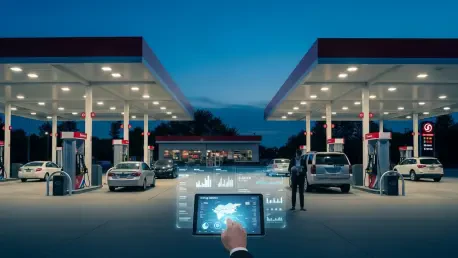

As commuters across forty-four competitive congressional districts pull up to the pump, their smartphones are increasingly delivering a pointed political message before they even unscrew their gas caps. The Democratic Congressional Campaign Committee has launched a sophisticated geotargeted ad offensive, timing digital hits to appear on Facebook and Instagram feeds the moment a voter enters the vicinity of a gas station. This tactical maneuver attempts to transform the immediate sting of a $3.96 national average—and the $6 reality in California—into a decisive ballot-box rebellion. With only three seats standing between Democrats and a House majority, the “pain at the pump” has shifted from a common grievance to the primary theater of the current midterm cycle.
The Digital Battle for the American Gas Pump
Campaign strategists have moved beyond broad television buys, focusing instead on the high-stress environment of the fueling station. By leveraging Meta’s location-based tools, organizers serve ads that target middle-class voters while they actively observe the total on the pump’s display rise. This strategy aims to create a psychological link between the local cost of living and the legislative decisions made in Washington.
Furthermore, the precision of these digital strikes allows the opposition to tailor messages to specific demographics within swing districts. Whether a voter is a suburban parent in Virginia or a logistics worker in Ohio, the core message remains consistent: the current administration is responsible for the financial strain. This hyper-local approach ensures that the political narrative is present at the exact moment economic frustration is most acute.
From Global Conflict to Local Inflation
The current volatility in energy markets is inextricably linked to the geopolitical earthquake that began earlier this year with the outbreak of war in Iran. The subsequent closure of the Strait of Hormuz, a vital artery for global oil shipments, sent shockwaves through the stock market and triggered a sharp spike in domestic fuel costs. This external shock has created a difficult economic climate for the Trump administration, forcing a debate over whether inflation is a byproduct of necessary foreign policy or a permanent fixture of new tariffs.
As the elections approach, the intersection of international instability and household budgeting has become the defining challenge for voters. Many find it difficult to separate national security needs from their own financial survival as the cost of basic goods continues to climb. The administration’s ability to stabilize these markets will likely dictate its political viability in the coming months.
Geopolitics and the Mechanics of the 2026 Price Surge
The closure of the Strait of Hormuz did more than just raise prices; it fundamentally altered the supply-demand equilibrium that American consumers had relied upon for years. While the Trump administration framed the conflict as a definitive move to end decades of Iranian threats, the immediate economic fallout was felt most acutely in “Districts in Play.” Middle-class voters in these areas are historically sensitive to any shift in the cost of living, making them the primary target for both parties.
Democratic leadership seized on this, branding the surge as part of a broader pattern of Republican economic mismanagement. By tying the cost of fuel to specific administrative choices—such as military aggression and trade barriers—the opposition attempted to ensure that the blame for a global energy crisis rested on the shoulders of House Republicans. This mechanical shift in political messaging transformed a global crisis into a local campaign issue.
Perspectives from the Front Lines of Energy Policy
The narrative surrounding the midterms is a clash of two distinct philosophies regarding the price of security. House Minority Leader Hakeem Jeffries was vocal in his critique, labeling the current administration’s policies as a direct assault on American affordability. He argued that the working class should not bear the financial burden of aggressive foreign interventions that lack a clear domestic exit strategy.
On the other side of the aisle, U.S. Energy Secretary Chris Wright viewed the current market turbulence as a short-term period of disruption. From his perspective, these costs were a necessary price for achieving long-term stability in the Middle East and securing future energy independence. While President Trump implemented a five-day pause on strikes against Iranian infrastructure to calm the markets, the persistent “D.C. Republicans Did That!” campaign continued to resonate with a public that saw little relief in their bank statements.
Navigating Political Volatility and Economic Messaging
Voters and campaign strategists alike recognized that the impact of energy costs on the elections required a focus on localized economic sentiment. Campaigns prioritized hyper-local digital outreach to reach swing voters at their most vulnerable financial moments. Observers looked for key indicators such as the duration of the Strait of Hormuz closure and the frequency of strike halts, which served as barometers for both market stability and political favor toward the incumbents.
As the midterms drew closer, the ability of either party to control the narrative at the pump determined which side held the gavel. The transition from global conflict to domestic policy debate showed that economic survival remained the ultimate motivator at the ballot box. Ultimately, the successful party was the one that provided a credible path toward lower costs and regional stability, leaving the other to answer for the volatility of the global market. Moving forward, candidates must address energy resilience as a core component of national security.