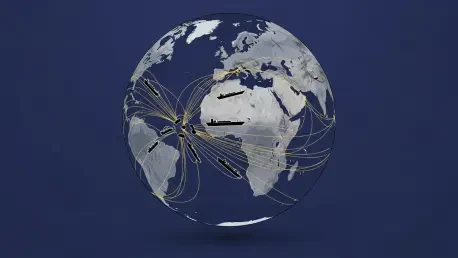

The sudden and complete paralysis of the Strait of Hormuz has sent shockwaves through the global economy, as one-fifth of the world’s oil and liquefied natural gas remains trapped behind a wall of geopolitical tension. Following a series of joint military strikes against Iranian infrastructure in early 2026, the subsequent closure of this vital maritime artery has forced a radical reevaluation of international security responsibilities. President Donald Trump has decisively pivoted away from the decades-old precedent of the United States acting as the sole guardian of the Persian Gulf, insisting that the nations most dependent on these energy flows must now provide the hardware and personnel to secure them. This transactional shift is not merely a tactical withdrawal but a strategic maneuver that leverages American energy independence to redistribute the costs of global stability. As Brent crude prices soar past the hundred-dollar threshold, the world faces a high-stakes standoff where the traditional security umbrella has been retracted, leaving a vacuum that no single power is currently prepared to fill.
The End of the American Maritime Guarantor
The fundamental transformation of the “America First” doctrine has fundamentally altered the role of the United States Navy in the Persian Gulf, challenging the long-standing assumption that Washington must always bear the primary burden of protecting global shipping lanes. The current administration maintains that the United States, having achieved relative energy self-sufficiency, no longer possesses a vital national interest in subsidizing the security of oil routes that primarily benefit economic competitors like China. This pivot marks a definitive transition from a traditional superpower role to a transactional one, where military intervention is no longer guaranteed but is instead treated as a service requiring direct reciprocity from international trade partners. By withholding the routine escort of commercial vessels, the White House is testing the resolve of its allies, forcing them to decide whether the preservation of global trade is worth the risk of a direct naval confrontation with a regional adversary that remains capable of asymmetric warfare despite recent military setbacks.
This strategy effectively utilizes what diplomatic observers describe as “long-term diplomatic memory” as a potent tool of coercion, with the White House issuing stern warnings that future support for international organizations and trade concessions will be directly contingent on a nation’s response to the current crisis. By framing the protection of the strait as a shared responsibility, the administration seeks to dismantle what it perceives as international “free-loading” on the extensive American military infrastructure that has historically patrolled these waters at no cost to foreign beneficiaries. This shift has left many nations scrambling to redefine their national security strategies in an era where American intervention is no longer a foregone conclusion. The administration’s rhetoric suggests that the era of the global policeman has ended, replaced by a system where security is an asset to be purchased or earned through active military participation. This approach has created a deep sense of uncertainty among global markets, as the lack of a clear maritime guarantor prevents the resumption of normal commercial operations.
Allied Hesitation and Trade Friction
Despite the pressing need for renewed energy security, traditional American allies in Europe and Asia are displaying significant reluctance to intervene in the escalating maritime conflict. This hesitation is significantly compounded by recent trade tensions, as the administration’s implementation of steep tariffs over the course of 2026 has eroded the diplomatic goodwill typically required for complex military cooperation. Allies now find themselves in a difficult strategic bind, requiring the waterway to remain open to sustain their domestic economies while feeling alienated by a Washington that has simultaneously targeted their key industries through protectionist policies. The friction between trade and security has created a scenario where the reservoir of trust is at an all-time low, making the formation of a cohesive naval coalition nearly impossible. Leaders in London, Paris, and Berlin are facing domestic pressure to avoid being drawn into a conflict that is perceived as a direct consequence of a unilateral American foreign policy that frequently prioritizes national interests over collective security.
In the Pacific region, a unified front of non-intervention has emerged, with leaders from Japan and Australia explicitly stating that they have no immediate plans for a significant naval deployment to the Middle East. These regional powers are prioritizing their own domestic stability and the avoidance of a broader conflict over the demands of the United States executive branch. This notable gap between Washington’s expectations and the reality of allied capabilities suggests a growing fragmentation in the Western alliance, as nations weigh the high cost of energy against the risk of being drawn into a wider regional war with no clear exit strategy. Prime Minister Sanae Takaichi of Japan has emphasized that any maritime response must be balanced against the need for regional de-escalation, reflecting a cautious approach that contrasts sharply with the aggressive stance of the White House. This reluctance underscores the difficulty of coercing sovereign nations into high-risk military actions, especially when those nations perceive the initial cause of the crisis to be outside their control or influence.
European Energy Vulnerability and Diplomatic Alternatives
Europe faces a particularly dire situation, having spent the period through 2026 moving away from Russian energy sources only to become critically reliant on the Middle Eastern supplies that are currently blocked in the strait. The European Union is currently exploring a range of multilateral diplomatic solutions, such as a safe-passage agreement modeled after the grain corridors successfully used in previous maritime conflicts. However, these diplomatic efforts are severely hampered by the lack of a credible military deterrent to enforce safety, leaving the continent’s energy security in a state of high-risk limbo. European Union Foreign Policy Chief Kaja Kallas has suggested that a diplomatic framework is the only viable path forward, yet without the commitment of naval assets to protect tankers, insurance companies remain unwilling to cover vessels entering the Persian Gulf. This impasse highlights the limitations of European defense autonomy and the difficulty of replacing the security umbrella once provided by the United States Navy, which has historically ensured the free flow of energy to the global market.
While some European leaders have signaled a cautious willingness to engage in collective planning, there remains no clear consensus on the level of military risk they are prepared to accept in the current environment. The fear of direct engagement with Iranian forces continues to deter a robust naval response, even as energy prices soar and industrial production begins to slow across the continent. British Prime Minister Keir Starmer has indicated a willingness to provide specialized naval assets, yet he has echoed the sentiment of many European leaders by insisting that the United Kingdom will not be drawn into a wider regional war. This lack of a unified military mandate has allowed the crisis to persist, as each nation waits for others to take the initial step toward securing the waterway. The resulting paralysis demonstrates the vulnerability of modern economies to maritime disruptions and the failure of existing international frameworks to provide a rapid response when the primary security provider chooses to step back from its traditional global responsibilities.
Strategic Posturing by Global Rivals
Russia and China have utilized the current maritime crisis to further their own geopolitical agendas, often at the direct expense of Western unity and international stability. Moscow has used the shipping standstill to criticize European energy policy, suggesting that the crisis is a direct consequence of Europe’s decision to decouple from Russian oil and gas in favor of more volatile Middle Eastern sources. By framing the situation as a failure of both European Union and United States leadership, the Kremlin seeks to sow discord within the Atlantic alliance and highlight the risks of total dependence on American strategic dictates. Russian officials have pointed out that their own energy exports remain unaffected by the strait’s closure, positioning themselves as a more reliable, albeit controversial, alternative to the current chaos. This narrative strategy aims to weaken the resolve of European nations and encourage a return to more traditional energy partnerships, even as the conflict in the Middle East continues to escalate and threaten the global economic order.
China, meanwhile, has adopted a stance of cautious de-escalation, calling for an immediate end to military operations while refusing to commit its own significant naval assets to the region. Beijing’s refusal to participate in a United States-led security framework reflects its desire to maintain regional stability without being seen as an auxiliary to American power. This creates a narrative conflict with the White House, which views China’s inaction as a calculated attempt to benefit from global trade without contributing to the security of the routes it relies upon most for its industrial energy needs. The Chinese government has instead focused on diplomatic outreach to regional powers, attempting to position itself as a neutral mediator that values stability over military confrontation. However, this hands-off approach does little to alleviate the immediate crisis of the blocked strait, leaving the burden of action on those who are least prepared to take it. The standoff serves to illustrate the deepening divide between the world’s major powers and the erosion of the cooperative security norms that once governed the high seas.
Strategic Imperatives: Global Energy Resilience
The resolution of the maritime standstill necessitated a swift and coordinated transition toward a diversified security model that no longer relied on a single national guarantor. Governments were urged to prioritize the development of regional security pacts that included major energy consumers, ensuring that the cost of protecting vital waterways was shared proportionally among those who benefited from them. The situation demonstrated that maritime security must be integrated into broader trade agreements, creating a formal mechanism for naval cooperation that could be activated during periods of crisis. For private sector stakeholders, the focus shifted toward enhancing energy storage capabilities and investing in alternative transit routes that bypassed traditional chokepoints. These actions provided a necessary buffer against future volatility and reduced the leverage of regional actors seeking to disrupt global markets. By adopting a more proactive and multilateral approach to maritime protection, the international community began to build a more resilient energy infrastructure that was less vulnerable to the shifts in the foreign policy of any single superpower.
Moving forward, the implementation of advanced autonomous maritime surveillance technologies offered a cost-effective solution for monitoring vast stretches of international waters without the need for a massive permanent naval presence. International maritime organizations recommended the establishment of a global fund for waterway security, where a small levy on energy shipments would finance the maintenance of safe corridors and the deployment of rapid-response units. This collective funding model aimed to address the “free-rider” problem that had historically plagued American-led security efforts, ensuring that all beneficiaries contributed to the stability of the global commons. Nations were also encouraged to finalize a new treaty governing maritime conduct in strategic straits, providing a clearer legal framework for intervention and the use of force in the event of illegal blockades. These strategic initiatives represented a fundamental shift toward a more equitable and stable global order, where security was no longer a unilateral gift but a shared responsibility maintained through institutionalized cooperation and technological innovation.