
The global energy landscape has reached a critical inflection point as the 2026 energy crisis forces an unprecedented scale of international intervention to keep the wheels of commerce turning. As military conflicts destabilize traditional supply routes, the reliance on Strategic Petroleum Reserves (SPRs) has shifted from a secondary safety net to a primary instrument of economic defense. This shift highlights the absolute necessity of these stockpiles in stabilizing a modern global economy that remains deeply sensitive to geopolitical turmoil. This analysis delves into the current massive drawdown data, examines how markets are reacting to these historic moves, and evaluates the long-term outlook for global energy security in an increasingly volatile world.
Quantifying the Shift in Reserve Management
Statistical Trends: Coordinated Emergency Releases
In a move that has rewritten the playbook for energy diplomacy, the International Energy Agency (IEA) alongside the United States has initiated a record-breaking release of 572 million barrels of crude oil. This colossal intervention represents the most significant coordinated effort to manage global supply since the inception of the IEA. While the United States pledged 172 million barrels, the broader 32-member coalition contributed the remaining 400 million, signaling a unified front against soaring prices.
The evolution of these interventions shows a marked departure from historical benchmarks like the 1973 oil crisis. Today, the scale of participation reflects a more integrated global response where member nations utilize their reserves not just as individual buffers, but as a collective weapon against economic stagnation. This adoption of a massive, synchronized release strategy demonstrates that the IEA’s coalition has become the primary line of defense for the industrialized world when physical supplies are threatened by regional instability.
Real-World Implementation: Geopolitical Volatility
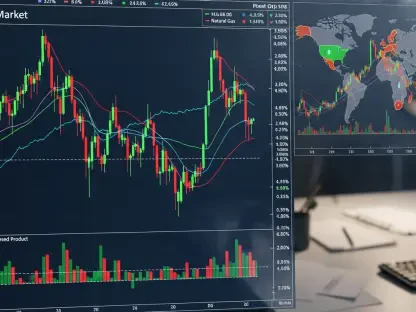
The 2026 application of these drawdowns is a direct response to the closure of the Strait of Hormuz, a maritime chokepoint responsible for a fifth of the world’s daily oil consumption. As military tensions flared, the immediate loss of roughly 15 million barrels of daily production created a vacuum that no single producer could fill. Despite the speed of the reserve releases, the behavior of Brent and WTI crude prices has remained stubbornly high, with Brent hovering near the $100 mark and WTI trailing closely behind at $95.
This pricing disconnect underscores a harsh reality: the logistical challenges of replacing lost physical production often outweigh the financial relief provided by releasing stored oil. When 20 million barrels per day are at risk, a release of several million barrels daily acts more like a temporary bandage than a cure. The market’s reaction suggests that while the reserves provide essential liquidity, they cannot fully insulate the global economy from the physical absence of oil flowing through vital shipping lanes.
Analyst Perspectives: Supply Deficits and Market Stability
Industry experts from organizations like the Rapidan Energy Group and Commonwealth Bank of Australia have observed that these financial maneuvers have distinct limitations during a true physical shortage. There is a growing consensus among analysts that the sheer magnitude of the IEA intervention serves as a grim signal to the market. By deploying such a significant portion of the global stockpile, policymakers are effectively telling the world that they expect the current conflict and the resulting supply disruptions to persist for several months rather than weeks.
Furthermore, there is a looming professional warning regarding the threshold of $150 per barrel. If prices reach this level, the global economy enters the territory of “demand destruction,” where the cost of energy becomes so prohibitive that consumption is forced down by economic hardship rather than policy. For developing nations, this scenario is particularly dangerous, as it often leads to localized fuel shortages and severe inflationary pressure that can destabilize entire regions.
Future Trajectories: Replenishment and Demand Destruction
As the current emergency releases eventually conclude, the global market will face the daunting task of refilling these severely depleted reserves. This secondary demand will likely create a high price floor for years to come, as nations compete to restock their inventories in a market that is already tight. This replenishment phase ensures that even if the immediate military conflict subsides, the economic echoes of the 2026 crisis will be felt long into the future, potentially forcing a structural shift in how businesses and consumers approach energy use.
High costs are already accelerating a fundamental transformation in global economic activity. While the negative outcomes of sustained inflation are evident, there is a potential for a positive acceleration in energy diversification as companies seek alternatives to volatile fossil fuels. The role of the IEA is also evolving; the agency is no longer just a monitor of statistics but a proactive manager of a world where traditional maritime routes are increasingly vulnerable to regional instability.
Summary: Intervention Efficacy and Economic Resilience
The massive 2026 intervention proved that while strategic stockpiles are essential for preventing a total economic collapse, they have inherent limits against massive, systemic supply disruptions. International coordination reached new heights, providing a vital cushion that prevented even more catastrophic price spikes. However, the experience demonstrated that financial intervention alone could not replace the physical volume of oil lost when major transit corridors were blocked.
The global community recognized that true market stability required more than just tapping into reserves; it demanded a focus on military and diplomatic resolutions to secure shipping lanes. Moving forward, the focus shifted toward building more resilient energy infrastructure and diversifying supply chains to reduce reliance on vulnerable chokepoints. This period served as a stark reminder that proactive energy policy must prioritize long-term structural resilience over short-term emergency fixes.