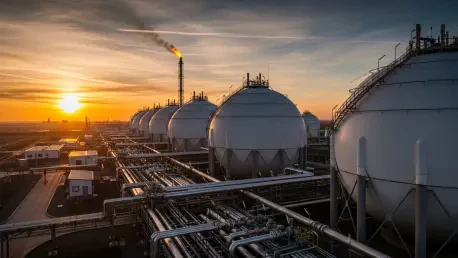

The fragile equilibrium of the international energy market has been shattered as escalating geopolitical hostilities in the Middle East transition from a localized security threat into a full-scale global crisis. When the Iranian Revolutionary Guard issued direct threats against maritime traffic in the Strait of Hormuz, the world realized that twenty percent of the global liquefied natural gas trade was suddenly at risk of total evaporation. This strategic maritime artery, nestled between Oman and Iran, serves as the primary conduit for energy exports that power industrial hubs across two continents. The anxiety intensified significantly following sophisticated drone strikes on the Ras Laffan and Mesaieed Industrial Cities in Qatar, which forced one of the world’s most prolific energy producers to suspend operations indefinitely. Analysts now estimate that this disruption could effectively remove nearly nineteen percent of the near-term global supply, creating a vacuum that existing infrastructure cannot easily fill. As 2026 progresses, the inability to guarantee safe passage through these waters has introduced a permanent risk premium that is fundamentally altering how energy is priced on the global stage.
Market Volatility: The Price of Uncertainty
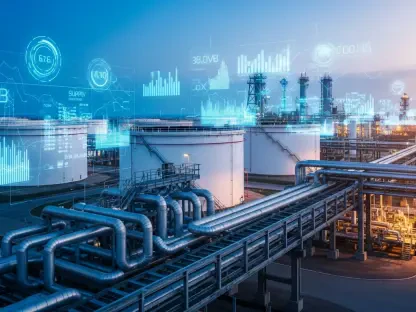
Aggressive price spikes became the defining feature of energy exchanges as the Dutch Title Transfer Facility, the primary benchmark for European gas, experienced a staggering thirty-five percent increase within a single trading session. This volatility pushed prices to over sixty euros per megawatt-hour, reflecting deep-seated fears among traders that a prolonged closure of shipping lanes would lead to an irreversible supply deficit. In Asia, the Japan-Korea-Marker followed a similar trajectory, hitting a one-year high as major economies like Japan and South Korea competed for limited spot cargoes. The suddenness of these market movements suggests that the global gas network is entering a period of extreme tightness, reminiscent of the shocks felt during the 2022 energy crisis. For energy-intensive industries, these pricing benchmarks are no longer just financial indicators but warnings of an impending era of high overhead costs and reduced operational margins. These developments forced many utilities to reconsider their hedging strategies, as the traditional reliance on predictable seasonal price curves has been completely upended by the current geopolitical reality.
A stark divergence has emerged in how global regions are weathering this energy storm, with the United States maintaining a position of relative isolation thanks to its extensive domestic shale gas reserves. While American production provides a substantial buffer against international price swings, European nations find themselves in a far more precarious situation, relying on liquefied natural gas for approximately one-quarter of their total energy mix. The current supply squeeze is particularly acute because a significant portion of the continent’s imports originates from regions now obscured by the shadow of conflict. Market experts have warned that if European prices breach the seventy-four-euro threshold, the continent may see a return to the emergency demand destruction protocols seen in previous years. This could lead to widespread industrial shutdowns and a severe cost-of-living crisis that threatens to derail any fragile economic progress made during 2026. This vulnerability highlights the urgent need for Europe to secure alternative long-term supply agreements and expand its domestic storage capacity to mitigate the impact of future disruptions.
Asian Vulnerabilities: Dependency and Growth Risks
The vulnerability of the Asia-Pacific region is equally pronounced, with heavy hitters like India and Singapore facing significant exposure to Middle Eastern supply chains. Data indicates that India sources nearly fifty-eight percent of its liquefied natural gas from this volatile region, a figure that represents about two percent of the nation’s total primary energy consumption. Without the fiscal flexibility of wealthier Western nations, countries such as India and Turkey are at a high risk of economic destabilization if energy costs remain at these elevated levels for an extended period. Singapore remains similarly positioned, with over a quarter of its energy needs tethered to Middle Eastern exports, making its power sector highly sensitive to disruptions in the Strait of Hormuz. For these nations, the energy crisis is not merely a budgetary concern but a fundamental threat to the stability of their domestic power grids and long-term industrial growth strategies. The resulting pressure on national budgets has already begun to shift focus away from other development goals, as the immediate need to subsidize energy costs takes priority.
China’s economic engine also faces headwinds, as the country continues to source more than twenty-six percent of its natural gas from Middle Eastern producers. Any prolonged obstruction of maritime routes would likely ripple through the manufacturing sectors that define the world’s second-largest economy, leading to increased costs for global consumer goods. Economists have begun projecting a high risk of stagflation—a damaging combination of stagnant growth and high inflation—across major importing regions. Estimates suggest that a sustained ten percent increase in energy prices over four quarters could shave significant percentages off the gross domestic product of both the United Kingdom and the Eurozone. This creates a difficult environment for central banks, which must balance the need to curb energy-driven inflation with the necessity of supporting industrial productivity during a period of declining consumer confidence and rising logistical hurdles. The interconnected nature of modern supply chains means that an energy shock in the Middle East quickly manifests as a slowdown in global trade, affecting everything from electronics manufacturing to heavy chemical production.
Strategic Alternatives: Navigating the Energy Transition
The global community recognized that over-reliance on a single geographic corridor was no longer a sustainable energy strategy. Many nations took decisive action by accelerating investments in floating storage and regasification units to diversify their intake points and reduce dependence on specific shipping lanes. Norway and Switzerland provided successful blueprints for stability, as one utilized its status as a net exporter to bolster regional security while the other relied on a robust mix of nuclear and renewable energy to shield its economy from fossil fuel volatility. This crisis served as a catalyst for a massive shift toward “friend-shoring” energy supplies, where countries prioritized trade with politically aligned partners rather than seeking the lowest possible market price. Strategic reserves were re-evaluated, and new policies mandated higher minimum storage levels to provide a buffer against sudden production halts. These moves represented a fundamental shift from just-in-time energy delivery to a more resilient, security-focused model that prioritized reliability over short-term cost savings.
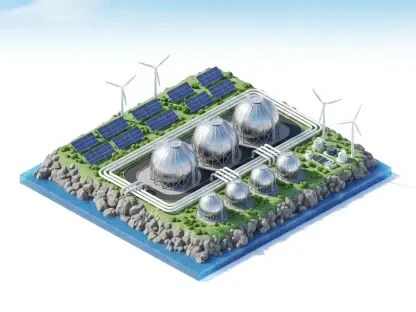
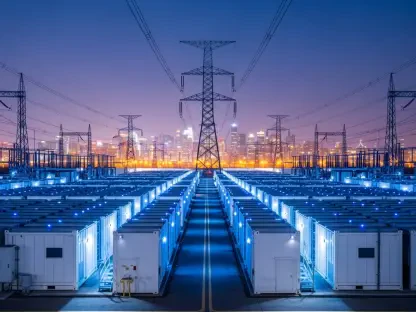
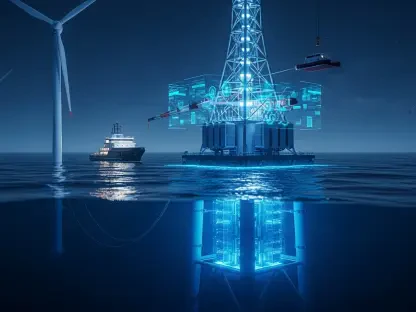
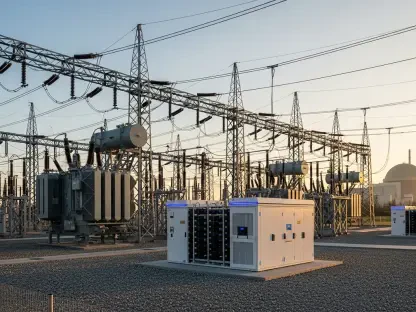
Energy planners focused on the implementation of advanced grid management technologies and the rapid deployment of green hydrogen as a long-term substitute for natural gas in heavy industry. This transition required a coordinated effort between governments and the private sector to fund the necessary infrastructure for a hydrogen-ready economy. Policymakers also emphasized the importance of modular nuclear reactors as a way to provide consistent baseload power that remained unaffected by maritime blockades or foreign drone strikes. By the end of this period, the conversation moved beyond mere crisis management to a comprehensive rethinking of national sovereignty through energy independence. Forward-looking corporations integrated energy resilience directly into their long-term growth plans, recognizing that the ability to operate independently of volatile international benchmarks was a primary competitive advantage. The resolution of the immediate supply crunch provided only temporary relief, as the true lesson learned was the necessity of a diversified and decentralized energy landscape that could withstand the inevitable shifts in global power dynamics.